Category: Tools & Gear

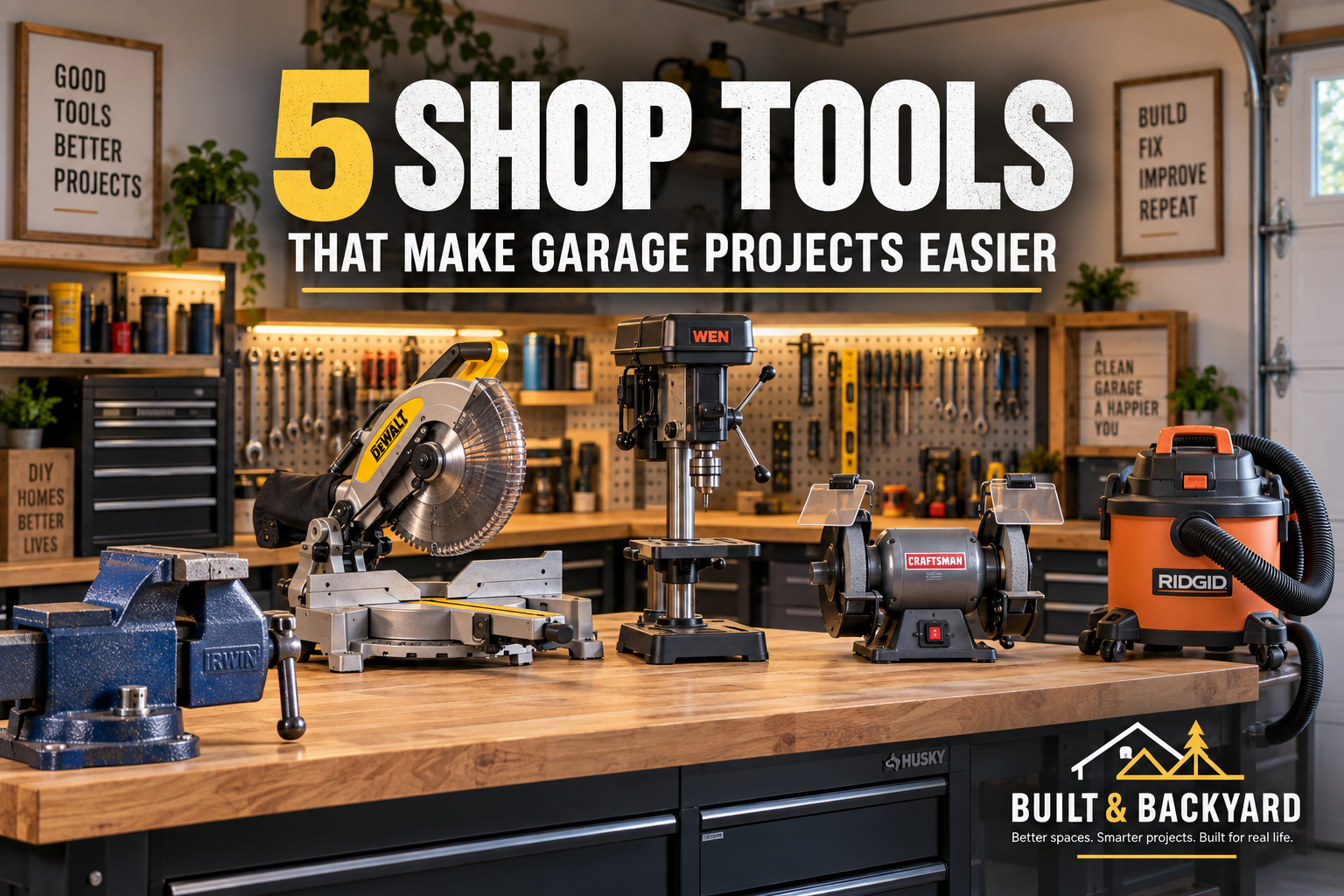
  • 5 Shop Tools That Make Garage Projects Easier

    5 Shop Tools That Make Garage Projects Easier

    You don’t need a huge workshop to make garage projects easier. A few well-chosen shop tools can save time, improve accuracy, and make weekend projects feel much more manageable.

    These five shop tools are especially useful for homeowners who like tackling repairs, builds, and upgrades in the garage.

    1. Bench Vise

    A bench vise is one of those tools that becomes more useful the more projects you take on. It holds materials securely while you cut, drill, sand, bend, or work on small repairs.

    For most homeowners, a medium-size vise mounted to a sturdy workbench is plenty for everyday garage projects.

    Built & Backyard Tip: Make sure the vise is mounted to a solid surface. A strong vise won’t help much if the workbench moves every time you tighten it.

    2. Miter Saw

    A miter saw makes it much easier to get quick, accurate cuts on boards, trim, and other lumber. It’s especially useful for projects like shelving, framing, baseboards, and simple furniture builds.

    For most homeowners, a 10-inch miter saw offers a good balance of cutting capacity, price, and garage-friendly size.

    Built & Backyard Tip: Measure twice and let the blade come to a complete stop before lifting it back up. That helps keep your cuts cleaner and your work safer.

    3. Drill Press

    A drill press is useful when you want cleaner, straighter, and more consistent holes than you can usually get with a handheld drill. It’s especially helpful for woodworking, metal projects, repeated drilling, and jobs where accuracy matters.

    For a home garage, a compact benchtop drill press is usually enough and doesn’t take up much space.

    Built & Backyard Tip: Clamp your material before drilling whenever possible. It helps keep the piece steady and makes your holes more accurate.

    4. Bench Grinder

    A bench grinder is handy for sharpening tools, smoothing rough metal edges, cleaning up bolts, and handling small metalworking jobs around the garage.

    For most homeowners, a basic 6-inch bench grinder is plenty for occasional use and doesn’t take up much room on the workbench.

    Built & Backyard Tip: Keep the tool rest adjusted close to the grinding wheel and use light pressure. Let the wheel do the work instead of forcing the material into it.

    5. Shop Vacuum

    A shop vacuum is one of the most useful tools you can keep in a garage or workshop. It can handle sawdust, dirt, small debris, and many wet messes that a regular household vacuum isn’t designed for.

    For most homeowners, a medium-size wet/dry vacuum gives you plenty of capacity without taking up too much space.

    Built & Backyard Tip: Use the right filter for the job, especially when cleaning up fine dust. It helps protect the motor and keeps more dust from blowing back into the room.

    Build a Garage That Works Better for You

    You don’t need a professional shop to make garage projects easier. A few dependable tools can make your workspace more efficient, help you work more accurately, and save time on weekend projects.

    Start with the tools that match the kinds of projects you actually do, then add to your setup over time.

    At Built & Backyard, we focus on practical tools and garage upgrades that make real projects easier to tackle.

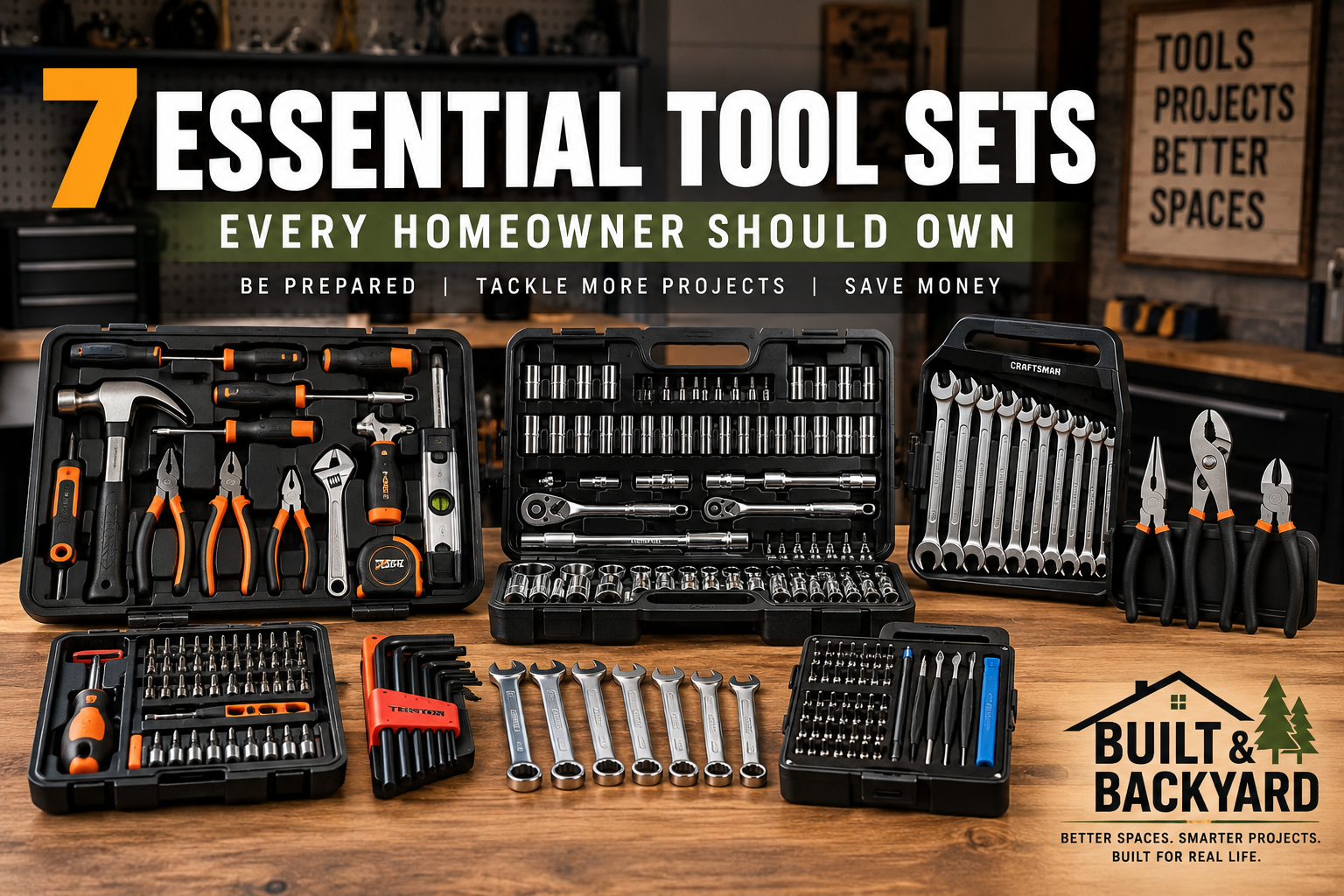
  • Best Budget Tool Sets for Homeowners

    Best Budget Tool Sets for Homeowners

    You don’t need to spend a fortune to build a dependable tool collection. A well-chosen budget tool set can cover everyday repairs, furniture assembly, basic maintenance, and plenty of weekend DIY projects.

    The key is finding a set with the tools you’ll actually use, decent build quality, and a case that keeps everything organized.

    As an Amazon Associate, Built & Backyard earns from qualifying purchases.

    1. Basic Home Repair Tool Set

    A basic home repair set is a great starting point if you don’t already own many tools. These kits usually include essentials like a hammer, screwdrivers, pliers, an adjustable wrench, a tape measure, hex keys, and a small selection of bits.

    For most homeowners, a compact set with the everyday basics is more useful than a huge kit packed with specialty pieces you may never touch.

    Built & Backyard Tip: Pay attention to the quality of the ratchet, screwdrivers, and pliers. Those are usually the tools you’ll reach for most often.

    What to Look For: Choose a set with a hammer, screwdrivers, pliers, tape measure, adjustable wrench, hex keys, and a sturdy carrying case. For a budget-friendly starter kit, focus more on useful everyday tools than on the total piece count.

    Recommended Starter Tool Set

    A compact homeowner tool kit with the everyday basics is usually the best value. Look for a set with solid hand tools, a durable case, and enough variety to handle common repairs without paying for dozens of pieces you may never use.

    Affiliate note: If you purchase through one of our links, Built & Backyard may earn a commission at no extra cost to you.

    2. Mechanics Tool Set

    A mechanics tool set is useful even if you don’t plan on doing major vehicle repairs. These sets usually include ratchets, sockets, extensions, and combination wrenches that can come in handy for lawn equipment, bicycles, furniture, and general garage projects.

    For most homeowners, a smaller set with both SAE and metric sizes will cover a lot of everyday jobs without taking up too much space.

    Built & Backyard Tip: Look for a set with clearly labeled socket sizes and a sturdy case. It makes finding the right piece much faster.

    What to Look For: Choose a mechanics set with both SAE and metric sockets, a solid ratchet, common wrench sizes, extensions, and a durable case that keeps everything organized.

    Recommended Mechanics Tool Set

    A mid-size mechanics set with both SAE and metric sockets is usually the sweet spot for homeowners. Look for a sturdy ratchet, useful extensions, clearly marked sizes, and a case that keeps everything easy to find.

    Affiliate note: If you purchase through one of our links, Built & Backyard may earn a commission at no extra cost to you.

    3. Screwdriver and Bit Set

    A good screwdriver and bit set can handle a surprising number of everyday jobs around the house. From tightening cabinet hardware and assembling furniture to working on electronics and replacing fixtures, it’s one of the most useful sets to keep nearby.

    Look for a kit with both Phillips and flathead options, along with common specialty bits like Torx and hex.

    Built & Backyard Tip: A ratcheting screwdriver can make repetitive jobs much faster and more comfortable, especially when you’re working in tight spaces.

    What to Look For: Choose a set with Phillips, flathead, Torx, hex, and other common bit types. A ratcheting handle, magnetic bit holder, and organized case make the set much easier to use.

    Recommended Screwdriver and Bit Set

    A versatile ratcheting screwdriver set with a wide selection of bits is a great value for most homeowners. Look for clearly labeled bits, a comfortable handle, and a compact case that keeps everything together.

    Affiliate note: If you purchase through one of our links, Built & Backyard may earn a commission at no extra cost to you.

    4. Pliers Set

    A small pliers set is useful for gripping, bending, pulling, cutting, and holding parts in place during repairs. A good starter set usually includes slip-joint pliers, needle-nose pliers, and diagonal cutting pliers.

    These can come in handy for everything from basic electrical work and plumbing fixes to small hardware repairs around the house.

    Built & Backyard Tip: Look for pliers with comfortable, non-slip handles. They’re easier to control and much nicer to use on longer jobs.

    5. Hex Key and Allen Wrench Set

    Hex keys are used on everything from furniture and bicycles to grills, exercise equipment, and shelving systems. A complete set can save you from digging through junk drawers looking for the one tiny wrench that came with a piece of furniture.

    Look for a set that includes both SAE and metric sizes, preferably in a holder that keeps everything organized.

    Built & Backyard Tip: A folding hex key set is convenient for quick jobs, but a full set of individual L-shaped keys usually gives you better reach and leverage.

    6. Combination Wrench Set

    A combination wrench set gives you both an open-end wrench and a box-end wrench in the same tool, making it useful for tightening and loosening nuts and bolts around the garage, yard equipment, furniture, and vehicles.

    For most homeowners, a basic set with both SAE and metric sizes will cover the majority of common jobs.

    Built & Backyard Tip: If you can, choose a set with clearly stamped sizes and a storage rack or roll. It keeps the set organized and makes the right wrench easier to grab.

    7. Precision Tool Set

    A precision tool set is handy for smaller jobs that regular-size tools can’t handle. These kits often include tiny screwdrivers, specialty bits, tweezers, and small pry tools for working on electronics, toys, appliances, glasses, and other detailed repairs.

    You may not use a precision set every week, but when you need one, it can save a lot of frustration.

    Built & Backyard Tip: Look for a set with a magnetic bit holder and clearly labeled bits. Small pieces are much easier to manage when everything has a dedicated spot.

    Build a Useful Tool Collection Without Overspending

    A good tool collection doesn’t have to be expensive. Start with the sets that match the kinds of repairs and projects you actually do, then add better or more specialized tools over time.

    For most homeowners, a few solid hand-tool sets can handle a huge number of jobs around the house, garage, and yard.

    At Built & Backyard, we focus on practical tools that give you real value without paying for extras you may never use.
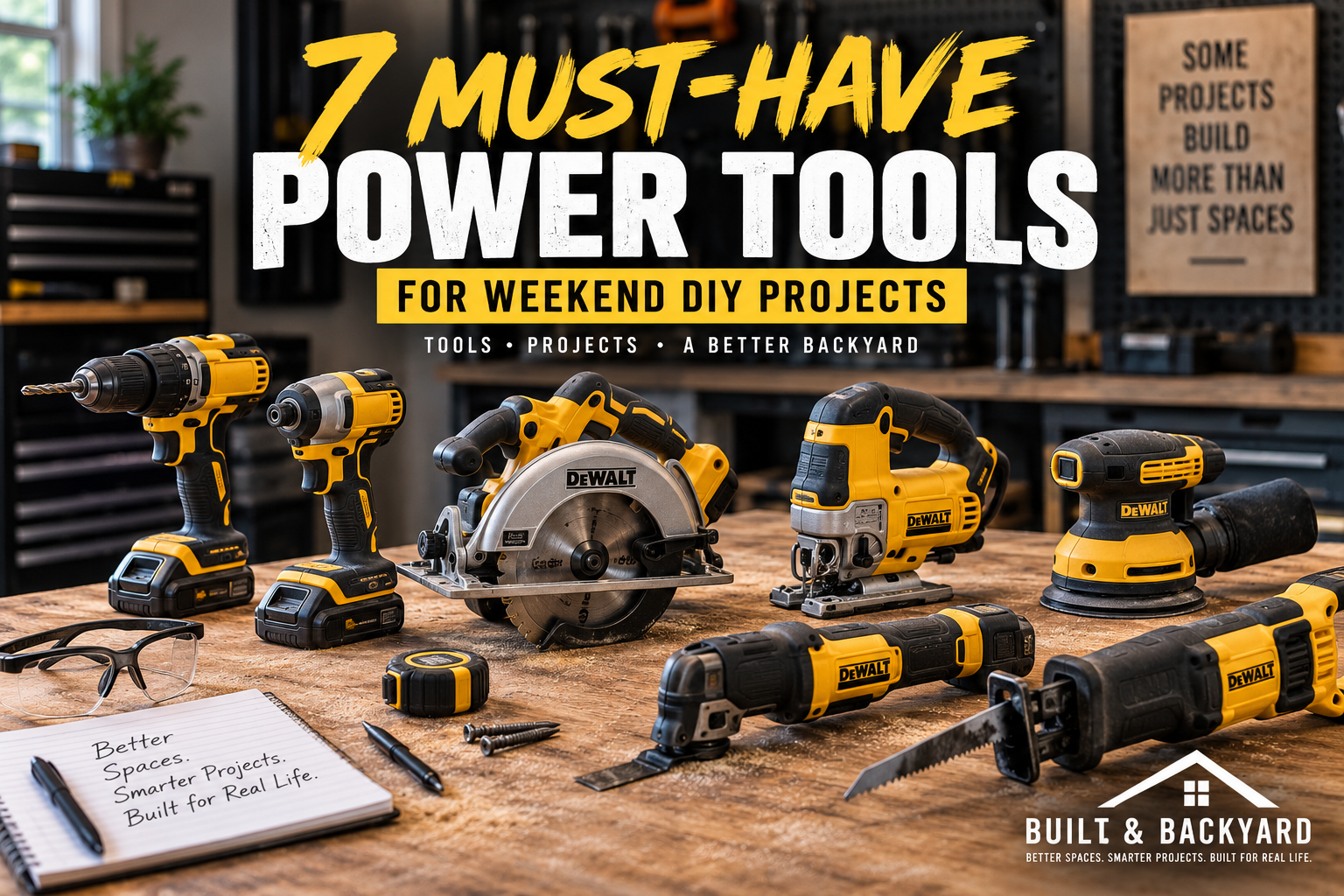
  • 7 Power Tools Worth Owning for Weekend DIY Projects

    7 Power Tools Worth Owning for Weekend DIY Projects

    You don’t need a professional workshop to tackle weekend projects around the house. A few dependable power tools can make DIY jobs faster, easier, and a lot less frustrating.

    These seven power tools are worth considering if you want to build a practical setup for repairs, upgrades, and weekend projects.

    1. Cordless Drill/Driver

    A cordless drill/driver is one of the most useful power tools you can own. It handles everything from drilling holes and driving screws to assembling furniture, hanging shelves, and tackling basic home repairs.

    For most homeowners, an 18V or 20V model is a solid choice. Look for one with variable speed, multiple clutch settings, and a battery system that works with other tools from the same brand.

    Built & Backyard Tip: If you plan to grow your tool collection, pick a battery platform you like and stick with it. Using the same batteries across multiple tools can save money and make your setup much easier to manage.

    2. Impact Driver

    An impact driver is built for driving screws, bolts, and other fasteners with more force than a standard drill. It’s especially useful for deck projects, framing, installing long screws, and working with tougher materials.

    Because it delivers extra torque without requiring as much pressure from you, an impact driver can make bigger DIY jobs feel much easier.

    Built & Backyard Tip: A drill and impact driver make a great pair. Use the drill for making holes and the impact driver for driving screws and fasteners.

    3. Circular Saw

    A circular saw is a versatile tool for cutting lumber, plywood, and other sheet materials. It’s a great choice for projects like building shelves, making simple furniture, repairing decks, or cutting boards to size.

    A standard 7-1/4-inch circular saw is a good all-around option for most homeowners. Look for one with an easy depth adjustment, a comfortable handle, and a clear cutting guide.

    Built & Backyard Tip: Take your time setting up a straight cutting line before you start. A simple guide or straight edge can make a big difference in how clean your cuts turn out.

    4. Jigsaw

    A jigsaw is ideal when you need to make curved cuts, cut openings, or work in places where a circular saw isn’t practical. It’s useful for projects involving plywood, countertops, shelving, laminate, and decorative woodworking.

    For most weekend DIY work, a corded or cordless jigsaw with variable speed will handle plenty of jobs around the house.

    Built & Backyard Tip: The blade makes a big difference. Use a blade designed for the material you’re cutting, and let the saw do the work instead of forcing it through the cut.

    5. Random Orbital Sander

    A random orbital sander can save a lot of time when you’re smoothing wood, refinishing furniture, preparing surfaces for paint, or cleaning up rough edges on DIY projects.

    It moves in a random pattern that helps reduce visible sanding marks, making it easier to get a smooth finish even if you’re not an experienced woodworker.

    Built & Backyard Tip: Start with a coarser grit for rough surfaces, then work your way up to a finer grit for a smoother finish. Don’t press down too hard — let the sander do the work.

    6. Oscillating Multi-Tool

    An oscillating multi-tool is one of the most versatile power tools you can keep around. With the right attachment, it can cut drywall, trim wood, remove grout, scrape adhesive, sand tight spaces, and handle plenty of small repair jobs.

    It’s especially useful for projects where larger saws or sanders simply won’t fit.

    Built & Backyard Tip: Keep a small assortment of blades and attachments on hand. The tool becomes much more useful when you can quickly switch between cutting, scraping, and sanding.

    7. Reciprocating Saw

    A reciprocating saw is made for tougher cutting jobs where precision matters less than speed and power. It’s useful for demolition, cutting through old lumber, trimming branches, removing damaged materials, and breaking down larger pieces during renovation projects.

    For homeowners, a cordless model can be especially convenient because you can use it around the yard, garage, or house without worrying about an extension cord.

    Built & Backyard Tip: Match the blade to the job. Different blades are made for wood, metal, demolition, and pruning, and using the right one makes the saw work much better.

    Build a Power Tool Setup That Fits Your Projects

    You don’t need every power tool on the market to handle most weekend projects. Start with the tools you’re most likely to use, then add to your collection as your projects get bigger.

    A solid drill, saw, sander, and a few versatile specialty tools can cover a huge range of repairs and DIY upgrades around the house.

    At Built & Backyard, we focus on practical tools and gear that help you get more done without overcomplicating the job.

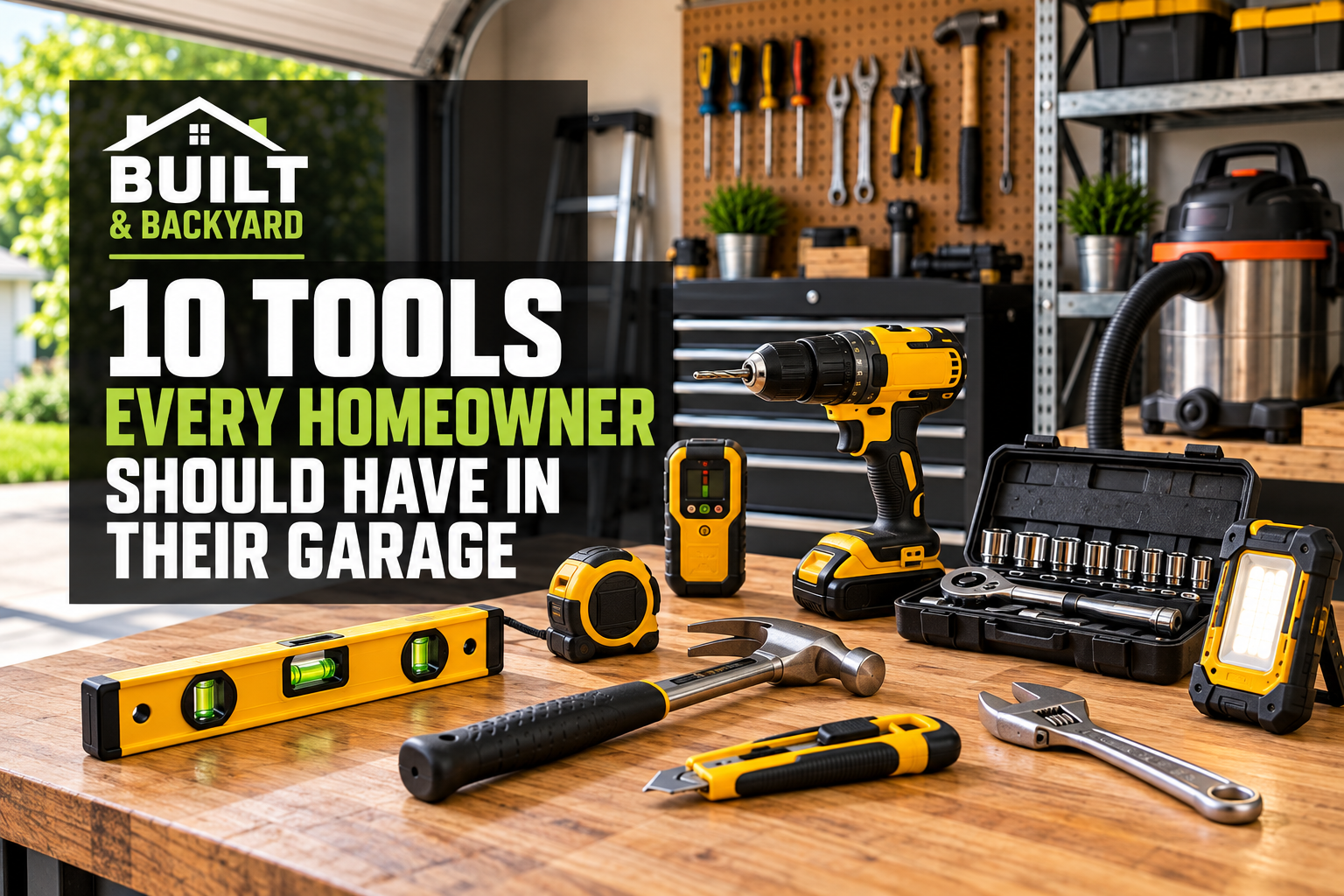
  • 10 Tools Every Homeowner Should Have in Their Garage

    10 Tools Every Homeowner Should Have in Their Garage

    You don’t need a garage full of expensive tools to handle everyday projects around the house. A few dependable basics can cover everything from hanging shelves and assembling furniture to making quick repairs and tackling weekend DIY projects.

    Here are 10 tools every homeowner should have in the garage—and why each one earns its spot.

    1. Cordless Drill

    A cordless drill is one of the most useful tools a homeowner can own. You can use it for hanging shelves, assembling furniture, installing hardware, drilling pilot holes, and handling countless small repairs around the house.

    For most homeowners, an 18V or 20V cordless drill offers plenty of power without being too heavy or complicated to use. Look for one with a rechargeable battery, adjustable clutch settings, and a comfortable grip.

    Built & Backyard Tip: If you’re buying into a cordless tool system, choose a brand that offers plenty of other tools that use the same battery. That can save you money as your collection grows.

    2. Socket and Ratchet Set

    A good socket and ratchet set is useful for everything from tightening loose bolts on furniture to working on lawn equipment, bicycles, and basic vehicle maintenance.

    For most homeowners, a set that includes both standard and metric sockets will cover the majority of everyday jobs. You don’t need the biggest set on the shelf—just one with a solid ratchet, the common socket sizes, and a durable case to keep everything organized.

    Built & Backyard Tip: Look for a set with clearly marked socket sizes. It sounds minor, but it can save a lot of frustration when you’re trying to find the right one quickly.

    3. Tape Measure

    A tape measure is one of those simple tools you’ll use constantly. Whether you’re measuring for furniture, hanging pictures, planning shelves, checking appliance space, or starting a DIY project, accurate measurements matter.

    A 25-foot tape measure is a great all-around size for most homeowners. Look for one with a sturdy blade, easy-to-read markings, and a reliable locking mechanism.

    Built & Backyard Tip: Keep one tape measure in the garage and another inside the house. They’re inexpensive, and you’ll be surprised how often you reach for one.

    4. Claw Hammer

    A claw hammer is a basic tool, but it earns its place in almost every garage. It’s useful for driving nails, pulling nails, light demolition, assembling projects, and making quick repairs around the house.

    For general home use, a 16-ounce hammer is a good all-around choice. Look for one with a comfortable grip and good balance so it’s easy to control.

    Built & Backyard Tip: A straight, smooth-faced hammer is usually the best choice for homeowners because it’s versatile and less likely to damage finished surfaces.

    5. Utility Knife

    A utility knife is one of the most useful small tools to keep nearby. It’s perfect for opening boxes, cutting drywall, trimming carpet, slicing through plastic packaging, and handling dozens of quick jobs around the house.

    Look for one with a comfortable grip, an easy blade-change system, and a secure locking mechanism.

    Built & Backyard Tip: Keep a pack of replacement blades in your toolbox. A sharp blade is safer and works much better than trying to force a dull one through material.

    6. Adjustable Wrench

    An adjustable wrench is a great tool to have when you need to tighten or loosen nuts and bolts but don’t have the exact-size wrench nearby. It’s especially useful for plumbing repairs, furniture assembly, outdoor equipment, and general household maintenance.

    For most homeowners, an 8-inch or 10-inch adjustable wrench is a good all-purpose size. Look for one with smooth jaw adjustment and a comfortable handle.

    Built & Backyard Tip: Adjustable wrenches work best when the jaws are snug against the fastener. A loose fit can round off the edges of a nut or bolt.

    7. Level

    A level helps make sure shelves, pictures, cabinets, and other projects are straight before you permanently attach anything. It’s a simple tool, but it can make a big difference in how finished projects look.

    A 24-inch level is a good general-purpose size for most homeowners. A smaller torpedo level is also handy for tight spaces and quick checks.

    Built & Backyard Tip: Check the level before drilling or fastening anything into place. A few extra seconds can save you from having to redo the job later.

    8. Stud Finder

    A stud finder makes it much easier to safely hang shelves, TVs, cabinets, and other heavier items on a wall. Instead of guessing where the wall studs are, a stud finder helps you locate them quickly.

    For most homeowners, a basic electronic stud finder is enough for everyday projects. Look for one that can detect both the center and edges of a stud.

    Built & Backyard Tip: After locating a stud, mark the spot lightly with a pencil before drilling. It helps keep everything lined up and saves you from having to scan the wall again.

    9. Shop Vacuum

    A shop vacuum is one of the most useful cleanup tools you can keep in the garage. It can handle sawdust, dirt, small debris, and many wet messes that you wouldn’t want anywhere near a regular household vacuum.

    For most homeowners, a medium-size wet/dry vacuum offers a good balance between power, capacity, and storage space. Look for one with a long hose, useful attachments, and wheels that make it easy to move around.

    Built & Backyard Tip: Use the right filter for the job, especially when cleaning up fine dust. It can improve suction and help keep dust from blowing back into your workspace.

    10. Rechargeable Work Light

    A good work light is easy to overlook until you’re trying to fix something in a dark garage, under a sink, in an attic, or outside after sunset. A rechargeable LED work light gives you bright, portable lighting without having to drag around an extension cord.

    Look for one with multiple brightness settings, a rechargeable battery, and a stand or magnetic base so you can position it where you need it.

    Built & Backyard Tip: A magnetic work light is especially useful in the garage because you can attach it to metal shelving, a toolbox, or other surfaces and keep both hands free while you work.

    Build Your Tool Collection One Piece at a Time

    You don’t need to buy every tool at once. Start with the basics you’ll use most often, then add to your collection as new projects come up.

    A dependable set of tools can make everyday repairs easier, save money on small jobs, and give you more confidence when tackling projects around the house.

    At Built & Backyard, we’re all about practical tools, smarter projects, and gear that actually earns its place in your garage.