Built & Backyard is reader-supported: we may earn a commission from qualifying purchases made through links on this page, at no extra cost to you.
Every Thanksgiving disaster story starts the same way: a rock-hard turkey on Wednesday night. Thawing is not hard — it is just slow, and slow means the calendar does the work or the cold-water bath does it at the last minute. This guide is the whole plan in one place: the fridge math by bird size with the exact day to move yours, the backup method when the math has already slipped, a basic wet brine for the overnight before cooking, and the safety rules that are not negotiable. However you cook the bird — roasted in our electric roaster oven guide or fried per our turkey fryer guide — it starts here, days earlier, in the refrigerator.
Quick answer
Thaw in the fridge at 24 hours for every 4–5 pounds: a 12 lb bird needs about 3 days, a 16 lb bird about 4, and a 20 lb bird about 5 — so for Thanksgiving on Thursday, November 26, a 16–20 lb turkey moves to the fridge by Saturday Nov 21 to Sunday Nov 22. Put it on a rimmed pan on the lowest shelf. Missed the window? Cold water, changed every 30 minutes, thaws at about 30 minutes per pound. Brine it overnight in 1 cup of kosher salt per gallon of cold water. Never thaw a turkey on the counter.
Step 1: The fridge method — the math, and your move day
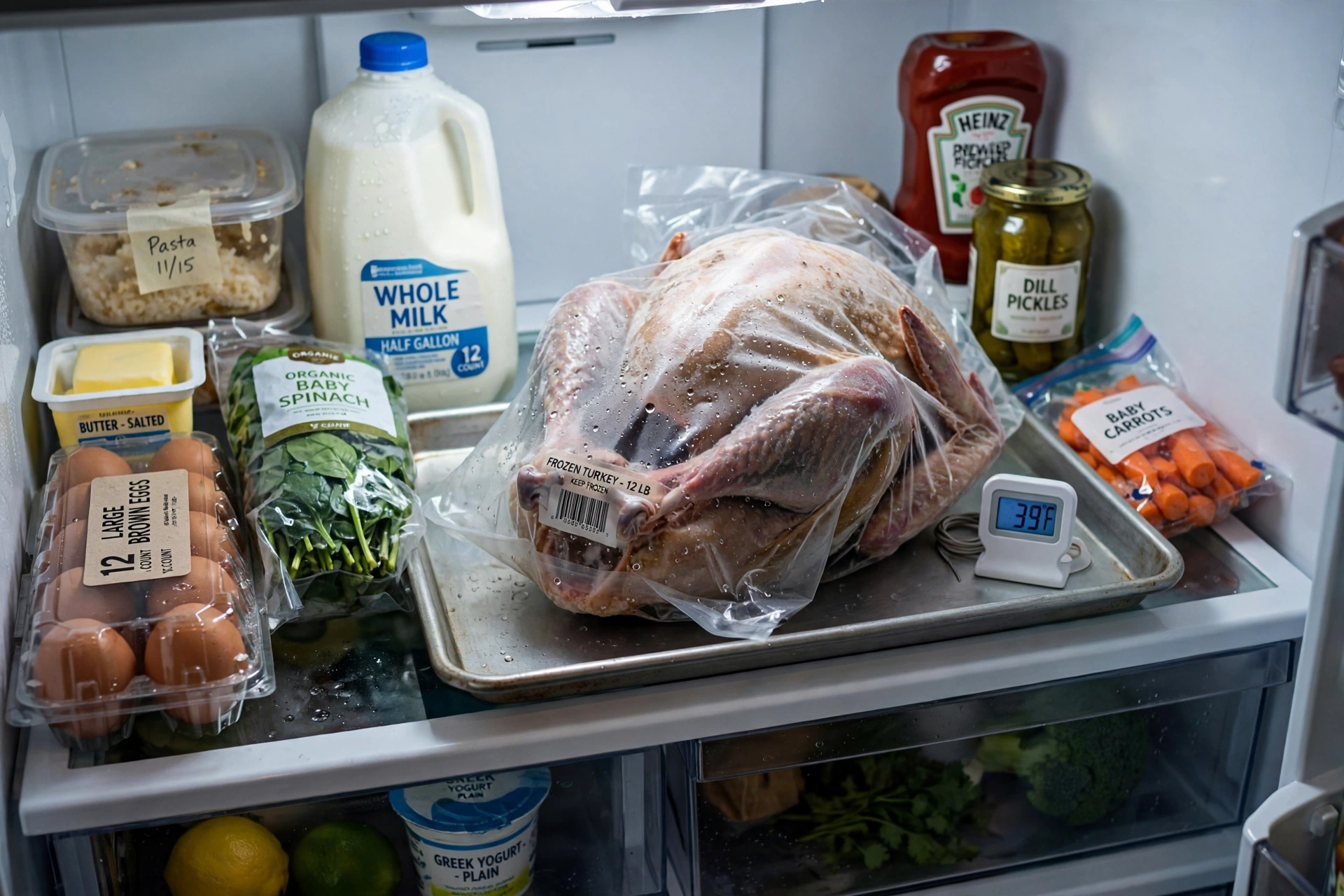
The refrigerator is the safest thaw because the bird stays at or below 40°F the whole time — no part of it ever sits in the temperature range where bacteria multiply. The cost is time, and the time is predictable: roughly 24 hours for every 4–5 pounds of turkey. Worked out by size, with the day to move the bird for a Thursday, November 26 Thanksgiving:
- 8–12 lb: about 2–3 days — move to the fridge by Monday, Nov 23
- 12–16 lb: about 3–4 days — move by Sunday, Nov 22
- 16–20 lb: about 4–5 days — move by Saturday, Nov 21 to Sunday, Nov 22
- 20–24 lb: about 5–6 days — move by Friday, Nov 20 to Saturday, Nov 21
Set the wrapped bird breast-side up on a rimmed pan or tray on the lowest shelf — it will weep liquid as it thaws, and the pan keeps raw turkey juice off everything below it. Once thawed, it keeps safely in the fridge for another 1–2 days before cooking, which is why moving it a day early beats moving it a day late every time.
Large Rimmed Sheet Pan, Half-Sheet Size
The thaw tray and the rest station in one — catches every drop of thaw liquid in the fridge, then carries the seasoned bird on cook day without a drip trail across the kitchen.
→ Click here to check price on Amazon
Step 2: The cold-water backup — when the fridge math has already slipped
It is Wednesday, the bird is still frozen in the middle, and dinner is tomorrow. The cold-water method is the legitimate rescue: keep the turkey in its original wrapper (or a leak-proof bag — a leaking wrapper waterlogs the meat), submerge it completely in a sink or pot of cold tap water, and change the water every 30 minutes so it stays cold. Budget about 30 minutes per pound: roughly 6 hours for a 12 lb bird, 8 for a 16 lb, 10 for a 20 lb. Two rules make it safe instead of sorry: the water must stay cold — that is the whole point of the changes — and the turkey gets cooked immediately once it is thawed. No putting a water-thawed bird back in the fridge to cook tomorrow.
Step 3: The overnight brine — salt, water, and one night
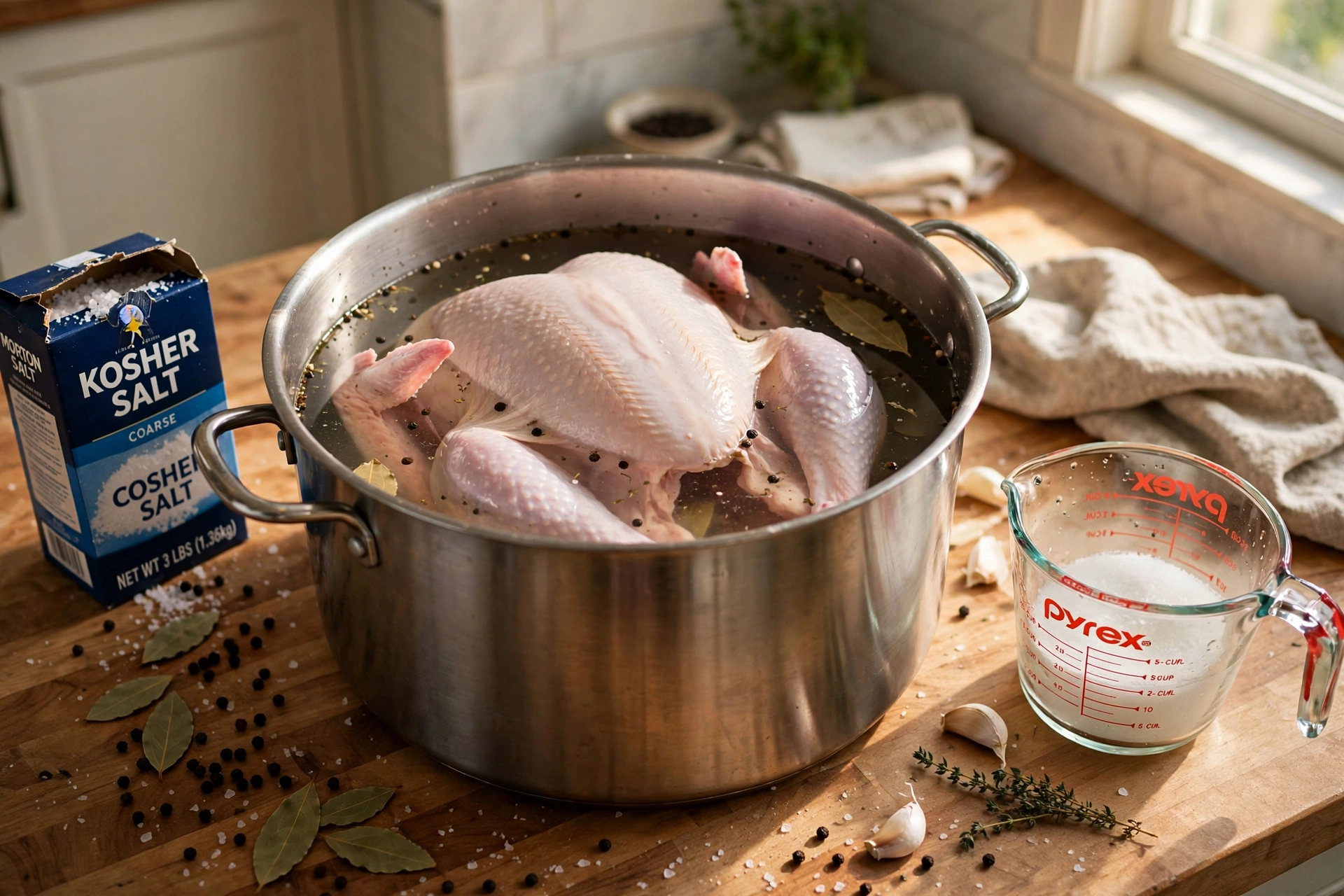
A thawed turkey plus one night in a brine is the cheapest flavor and moisture upgrade in the whole Thanksgiving playbook. The salt seasons the meat all the way through and helps it hold its juices through a long roast. The basic wet brine:
- Ratio: 1 cup of kosher salt and 1/2 cup of sugar per gallon of cold water — a 16–20 lb bird usually takes about 2 gallons to cover
- Timing: 12–18 hours, roughly 1 hour per pound — in the brine the evening before, out on Thanksgiving morning
- Temperature: the brining bird stays under 40°F the whole time — fridge space, or a cooler with ice packs checked and topped up
- Finish: rinse the bird, pat it completely dry (dry skin is what browns), and let it sit uncovered in the fridge for a few hours if you can spare them
A brining bag inside a stockpot or roasting pan is the setup that prevents the one brine disaster — a leaking bag loose in the fridge. Double-bag if your bags run thin, set the whole thing on that rimmed sheet pan from Step 1, and the worst case is a salty pan instead of a salty refrigerator.
Brining Bags, Extra-Large, Turkey Size, Set of 2
Heavy, leak-resistant bags sized for a whole turkey — the brine stays on the bird and off your fridge shelves, and the second bag is the double-bag insurance.
→ Click here to check price on Amazon
Large Stockpot with Lid, 16-Quart Stainless
The brine vessel that doubles as the cold-water thaw pot — tall enough to submerge a mid-size bird, and the same pot that handles the gravy-stock simmer on the day.
→ Click here to check price on Amazon
Step 4: Moving the bird — the step nobody plans for
A thawed, brined 18 lb turkey is slippery, heavy, and awkward, and it has to travel: out of the brine, into the roaster or fryer setup, and again when it comes off the heat. This is the step where birds get dropped and backs get hurt. Work over the sink or the pan, get a second pair of hands for anything over 16 lb, and use lifters instead of trying to palm a wet bird in paper towels.
Turkey Lifters, Stainless Poultry Forks, Set of 2
Wide pronged lifters that get under a hot or brined bird from both ends — a controlled lift instead of a slippery grab, and a steady hold for carving.
→ Click here to check price on Amazon
Already on this site’s hub: the turkey lifters are a pick in our Electric Roaster Oven guide too — listed once on the hub, on purpose.
Step 5: The safety rules that are not negotiable
- Never thaw on the counter. The outside of the bird reaches bacteria-friendly temperatures hours before the inside thaws. Fridge or cold water — there is no third safe option.
- Keep raw turkey and its juice away from everything else. Lowest fridge shelf, its own pan, its own cutting board, and hands and counters washed after every contact.
- Cook to temperature, not to the timer. The turkey is done at 165°F in the thickest part of the thigh (and the breast and stuffing, if you stuff — most food-safety guidance says cook stuffing separately). The pop-up timer is a rough hint, not a measurement.
- Leftovers get two hours, no more. Carve, refrigerate in shallow containers within two hours of serving, and eat within 3–4 days.
Instant-Read Meat Thermometer, Digital
Fast reads in the thigh and breast are how you know it is 165°F and done — the same thermometer our turkey fryer guide insists on, because the timer gets you close and this decides.
→ Click here to check price on Amazon
Already on this site’s hub: the instant-read thermometer is a pick in our Turkey Fryer guide too — listed once on the hub, on purpose.
The calendar, backwards from Thanksgiving
Count back from Thursday, November 26: brine goes on Wednesday evening, the bird comes out of the brine Thursday morning, and the thaw starts Saturday or Sunday for the sizes most families buy. Put the move day on the fridge door when you buy the bird — the whole method is just remembering one date. Every pick above — plus the rest of our Thanksgiving gear — lives in one place on our Recommended Gear page.
Leave a Reply