
Built & Backyard is reader-supported: we may earn a commission from qualifying purchases made through links on this page, at no extra cost to you.
Weatherstripping seals the gaps around a window — and if you haven’t done that yet, start with our garage insulation guide‘s principle: seal first, insulate second. But a sealed window can still be the coldest surface in the room. Single-pane and old double-pane glass radiates cold into the space, sets up a downdraft that feels exactly like a leak, and drags the thermostat up for the whole house. Window insulation is the second half of the job: a still-air layer over the glass, the sash cracks packed, and a fabric barrier for the night. None of it needs a contractor, all of it comes off or opens up in spring, and most houses can do the worst five windows in one Saturday.
Quick answer
Work in this order: pack the sash cracks with rope caulk, shrink-film the windows that stay shut all winter, hang thermal curtains over the glass you look through, and save cellular shades for the one or two rooms where you want a permanent fix. Verify with an infrared thermometer before and after — the glass-side air temperature near a filmed window typically rises several degrees, and the downdraft you feel on your ankles is what actually disappears.
Step 1: Find the worst windows — an infrared thermometer, not a guess
Every house has two or three windows doing most of the damage: the north-facing one, the one over the couch, the one whose storm window never quite latched. An infrared thermometer finds them in ten minutes. On a cold evening, scan the glass, the sash, and the wall around each frame and write the numbers on painter’s tape stuck to the trim. The coldest glass and any frame reading far below its neighbors go first — and the same scan afterward is your proof the fix worked, instead of a feeling. It is the same point-and-read logic as the instant-read thermometer in our turkey fryer guide: one cheap instrument ends the argument.
Infrared Thermometer Gun with Laser Targeting
Point-and-read surface temperatures for glass, sash, and trim — find the windows actually losing the heat before you spend a dollar insulating the wrong ones.
→ Click here to check price on Amazon
Step 2: Pack the sash cracks — rope caulk for gaps that move
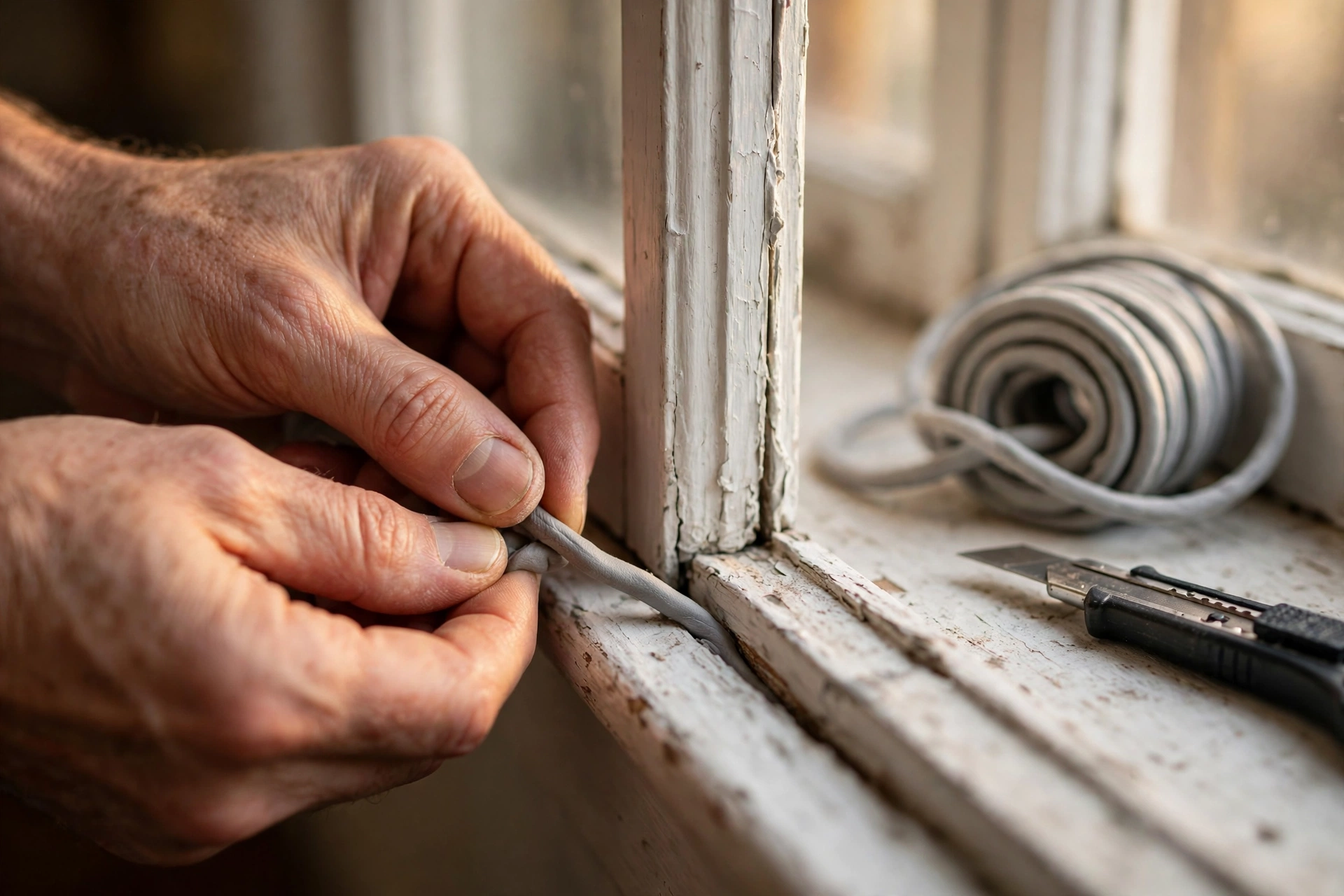
Old double-hung windows leak where the two sashes meet and where the sash rides in its channel — gaps that open and close with the seasons, which is why hard sealants crack out of them. Rope caulk is the old, correct answer: a soft, putty-like cord you press into the crack with a fingertip, where it seals all winter and peels out clean in spring without paint damage. It is also the right fix around storm-window frames and the attic hatch trim. Work it in warm — a cold garage roll is stiff — and press, don’t stretch: a stretched cord thins out and leaves the deep part of the crack empty.
Rope Caulk Window Seal, Removable Weatherstrip Cord
Finger-pressed putty cord that seals moving sash cracks all winter and peels out clean in spring — no adhesive, no paint damage, no tools.
→ Click here to check price on Amazon
Step 3: The windows that stay shut — a shrink-film kit is still the best value in winter
For any window you will not open until April, nothing at this price beats a shrink-film insulation kit: double-sided tape around the trim, a sheet of clear film over the opening, and two minutes with a hair dryer until it goes drum-tight and invisible. What you have built is a homemade storm window — a trapped layer of still air between film and glass, which is precisely how insulation works. The honest limits: it is one season per application, it needs the trim paint to be sound enough to hold tape, and you must do it before the room gets truly cold, because the tape will not stick to a freezing frame. Do the bedroom windows first; that is where the comfort shows up at 2 a.m.
Indoor Window Insulation Shrink Film Kit, 5-Window
Tape, film, and a hair-dryer finish that turns a leaky shut window into a clear, still-air storm panel for the season — the cheapest warmth in this whole guide, per window.
→ Click here to check price on Amazon
Step 4: The windows you look through — thermal curtains earn their keep at night
Film is for shut windows; living-room glass needs a fix that opens with the daylight. Thermal curtains — a dense face fabric bonded to an insulating, blackout backing — hang over the whole window, trim included, and trap a layer of room air against the glass. Two details decide whether they work: they must run wide and long enough to seal against the wall past the trim on both sides and pool slightly at the sill or floor, and they earn most of their keep closed from dusk to dawn, when the glass is coldest and nobody is looking out anyway. Open them on sunny days — south glass in winter sun is free heat, and the curtains’ job starts when the sun leaves.
Thermal Insulated Blackout Curtains, Grommet Pair
Dense insulated panels that close over the trim at night and stop the cold downdraft off big living-room glass — sized wide and long, they seal at the wall instead of framing the leak.
→ Click here to check price on Amazon
Step 5: The permanent fix for the worst room — cordless cellular shades
If one room is always five degrees behind — a nursery, a home office, the bedroom over the garage — a cordless cellular (honeycomb) shade is the buy-once version of everything above. The honeycomb cells are literally pockets of trapped air built into the shade, it raises and lowers daily without wearing out, and the cordless lift is the safe choice around kids and pets. Measure inside-mount width at the top, middle, and bottom of the frame and order to the smallest number; a shade that binds gets left half-open, and a half-open shade insulates nothing. This is the pick to do one window at a time, worst room first, rather than re-shading a whole house in one order.
Cordless Cellular Honeycomb Shades, Light Filtering
Built-in air-pocket insulation that works every day of the year, with a cordless lift that’s safe around kids — the permanent fix for the one room that never warms up.
→ Click here to check price on Amazon
Seal first, then cover the glass
Pack the moving cracks, film the shut windows, curtain the big glass at night, and put a cellular shade on the worst room’s window when the budget allows a permanent fix. Then run the thermometer scan again and keep the tape labels — next winter you will know exactly which windows earned a second look. Every pick above — plus the rest of our heating-season gear — lives in one place on our Recommended Gear page.
Leave a Reply