Built & Backyard is reader-supported: we may earn a commission from qualifying purchases made through links on this page, at no extra cost to you.
A damp basement announces itself politely at first — a musty smell in the laundry corner, cardboard boxes going soft, a white film on the foundation walls. Ignore it and it stops being polite: mold on stored furniture, rust on tools, and air that migrates upstairs and makes the whole house feel clammy. A dehumidifier is the fix, but it’s the most mis-bought appliance in the house. People buy by price, end up with a unit sized for a closet trying to dry 1,500 square feet, and conclude dehumidifiers don’t work. Sized right and drained right, one unit quietly holds a basement at the humidity mold can’t grow in. Here’s how to pick it.
Quick answer
Size by the space and how wet it is, not by price. A moderately damp basement (musty smell, no standing water) needs about 30 pints of daily capacity per 1,000 square feet; a wet basement (visible condensation, damp walls) needs 50 pints for the same space. Buy a model with a built-in pump or a gravity drain into a floor drain or sink — a unit you have to empty by hand twice a day is a unit that gets switched off. Set it to hold 45–50% relative humidity: dry enough that mold stalls, not so dry you waste electricity chasing desert air. Run the fan on continuous so air keeps moving between cycles.
Sizing, honestly
Pint ratings are a lab number. The pint figure is how much water the unit pulls in 24 hours under test conditions. Real basements are cooler than the test room, and cold air slows every dehumidifier down — which is why the same unit that keeps up in July falls behind in a 55-degree spring basement. When you’re between sizes, go bigger: an oversized unit cycles off when it hits the target, an undersized one runs forever and never gets there.
Dampness matters more than square footage. A basement that merely smells musty in August is a different job from one with condensation sweating the pipes and efflorescence blooming on the walls. The wetter the space, the more capacity per square foot you need — and if you have standing water after rain, that’s a drainage problem to fix first. A dehumidifier manages humidity; it is not a sump pump.
Cold basements need low-temperature operation. Standard units ice up below about 65 degrees and spend half their time defrosting themselves. If your basement sits in the 50s — most northern basements do all winter — look for a model rated for low-temperature use, or the coils frost and the bucket stays empty while the humidity stays put.
The picks
50-pint dehumidifier with built-in pump — The workhorse for a full, damp basement: enough capacity for the wet season, and a pump that pushes water up to a sink or out a window so you never carry a bucket. The pump is the feature that decides whether the unit still runs in year two.
→ Click here to check price on Amazon
30-pint compact dehumidifier — For a smaller or merely musty basement, a crawl space, or a finished lower level that’s more living room than cellar. Quieter and cheaper to run, and honestly sized for the spaces most people actually have.
→ Click here to check price on Amazon
Condensate pump and drain hose kit — The upgrade for a unit without a built-in pump: a small automatic pump plus hose turns any bucket dehumidifier into a set-and-forget drainer. Cheaper than replacing the unit, and it’s the difference between daily bucket duty and checking in monthly.
→ Click here to check price on Amazon
Digital hygrometer — Already on our gear hub: you cannot manage humidity you aren’t measuring. Put one at the far end of the basement from the dehumidifier — that’s the number that tells the truth about whether the unit is keeping up.
→ Click here to check price on Amazon
Humidifier (the winter partner) — Already on our gear hub from the Humidifier Guide: the same house often needs moisture added upstairs in January and removed downstairs in July. Running both, each in its season and its space, is how the whole house stays in the 40–50% band year-round.
→ Click here to check price on Amazon
Setup notes that decide whether it works
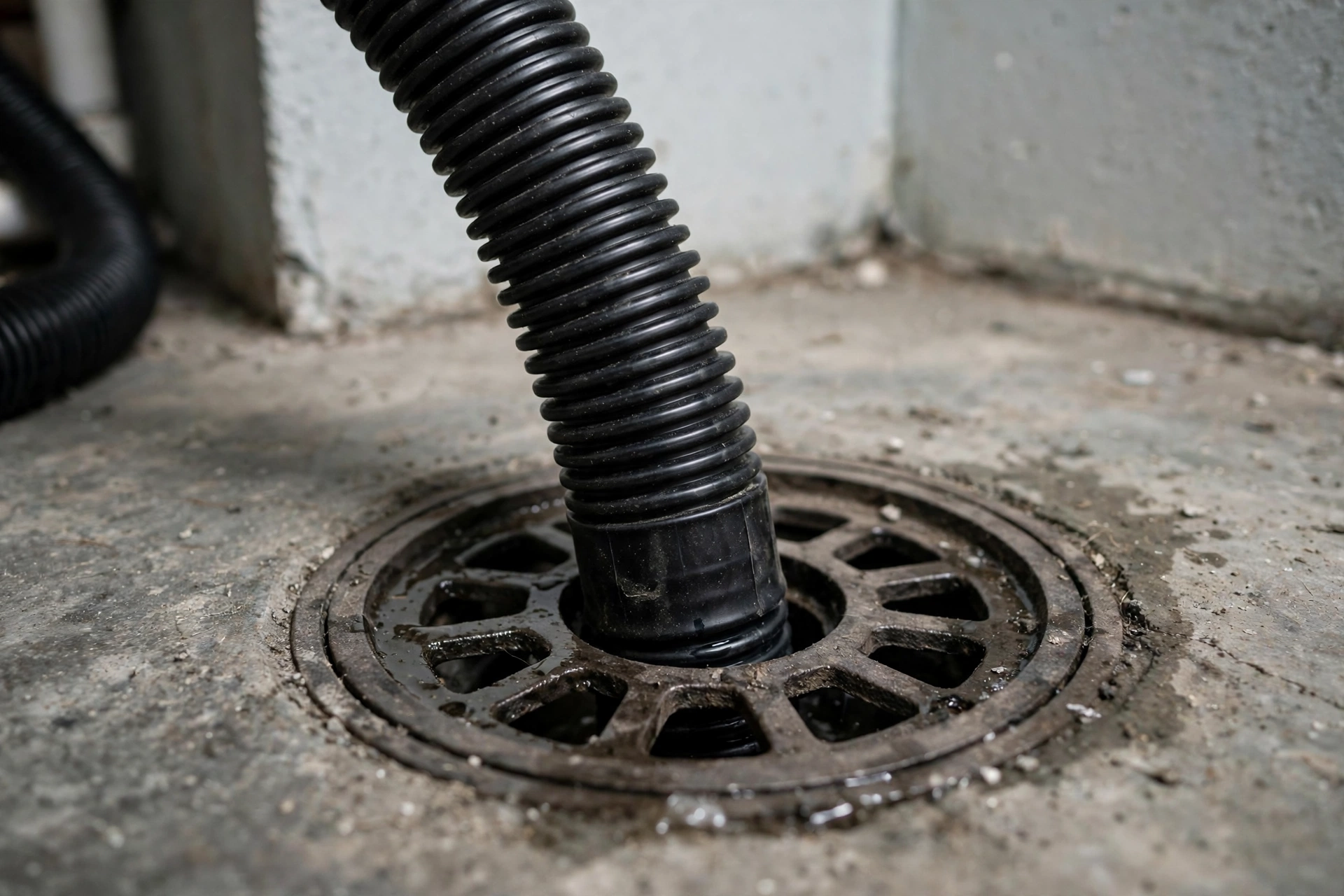
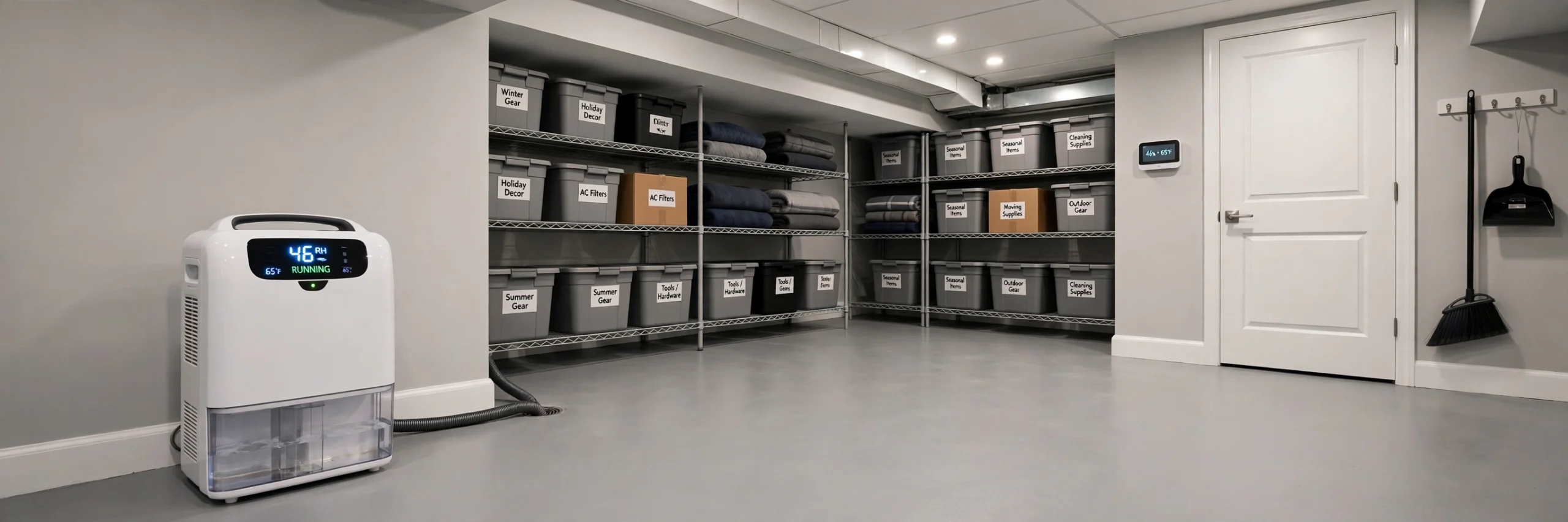
Drain it or it dies in a drawer. This is the whole ballgame. A bucket-only unit fills, switches off, and waits for someone to empty it — usually discovered three days later by the smell. Gravity-drain to a floor drain if you have one, pump to a sink if you don’t, and only accept bucket duty for a small space you’ll walk past daily.
Give it air and a level spot. Dehumidifiers pull air in and push it out; shoved into a corner against stored boxes, one dries its own little pocket and leaves the rest of the basement damp. Center it where you can, keep a foot of clearance around it, and set it level so the bucket switch reads honestly.
Clean the filter, check the coils. A clogged filter strangles airflow and quietly halves the unit’s real capacity. Rinse it monthly in the wet season. Once a year, look at the coils: dust and frost patterns there are the early warning before the unit stops pulling water altogether.
Leave a Reply