Built & Backyard is reader-supported: we may earn a commission from qualifying purchases made through links on this page, at no extra cost to you.
Winter closes a house up. The heat runs, the windows stay shut for months, and everything the house generates — cooking smoke, pet dander, dust, fireplace ash, whatever the dog tracked in — just circulates. An air purifier doesn’t fix a dirty house, but a good HEPA unit genuinely changes the air in the rooms you live in: less dust settling on the furniture, easier mornings for anyone with allergies, and a bedroom that smells like nothing at all, which is the point. The trap is buying by room-size claims on the box, which are measured at fan speeds too loud to live with. Here’s how to size one honestly, where the real costs hide, and which units to put in which rooms.
Quick answer
Buy for the room’s square footage at a livable fan speed, not the box’s maximum: a purifier should turn the room’s air over at least twice an hour on a speed you can stand, which usually means buying one rated for a room about twice your actual size. Put the big HEPA unit where the family lives, a small quiet one in the bedroom (sleep is where clean air pays off most), and budget the replacement filters before you buy — filters run $30–70 a year and are the real cost of ownership. Skip ionizers and anything that produces ozone; a sealed HEPA filter and a carbon pre-filter do the whole job.
What actually matters
HEPA is the whole game. A true HEPA filter traps 99.97% of particles down to 0.3 microns — dust, pollen, dander, mold spores, most smoke. “HEPA-type” and “HEPA-style” filters are marketing for “not HEPA.” If the box won’t say true HEPA (or H13/H14), keep shopping.
The carbon filter handles smells; the HEPA handles particles. Cooking odors, fireplace smoke and pet smell need activated carbon, ideally a substantial carbon bed rather than a carbon-dusted sheet. Pet and smoke households should weight this as heavily as the HEPA rating.
CADR is the honest number. Clean Air Delivery Rate tells you how much clean air the machine actually moves. As a rule of thumb, CADR should be at least two-thirds of the room’s square footage for the smoke rating. Bigger CADR at a quiet speed beats a huge number at jet-engine volume.
Noise decides whether it stays on. A purifier in a drawer purifies nothing. Bedroom units should run under about 30 decibels on their sleep setting; living-room units under 50 on the speed you’ll actually use.
The picks
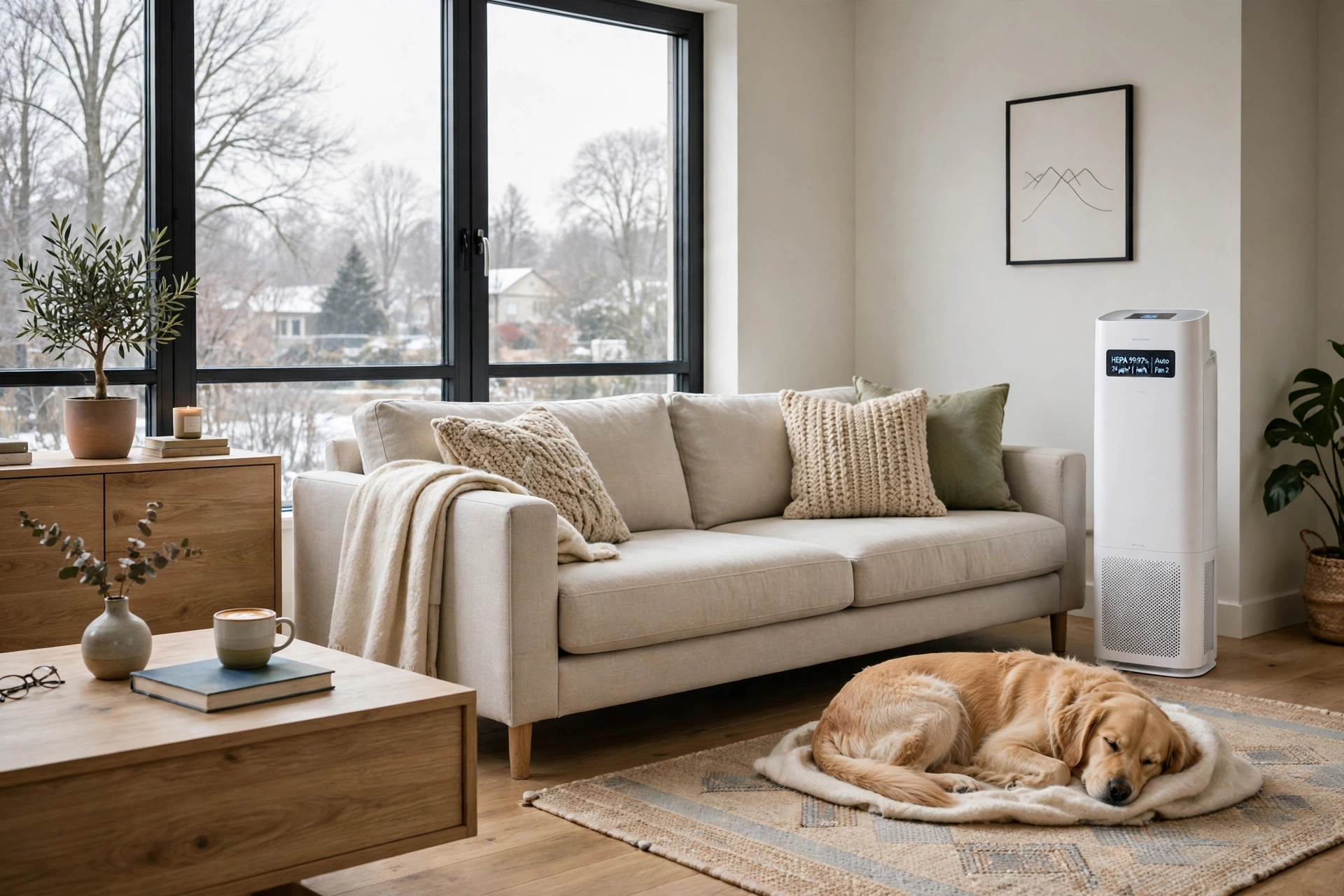
HEPA air purifier for large rooms — The living-area anchor: true HEPA plus a real carbon filter, CADR sized for open-plan spaces, and an auto mode that ramps up when the cooking starts and settles down after. Buy this one first; it covers the most air in the house.
→ Click here to check price on Amazon
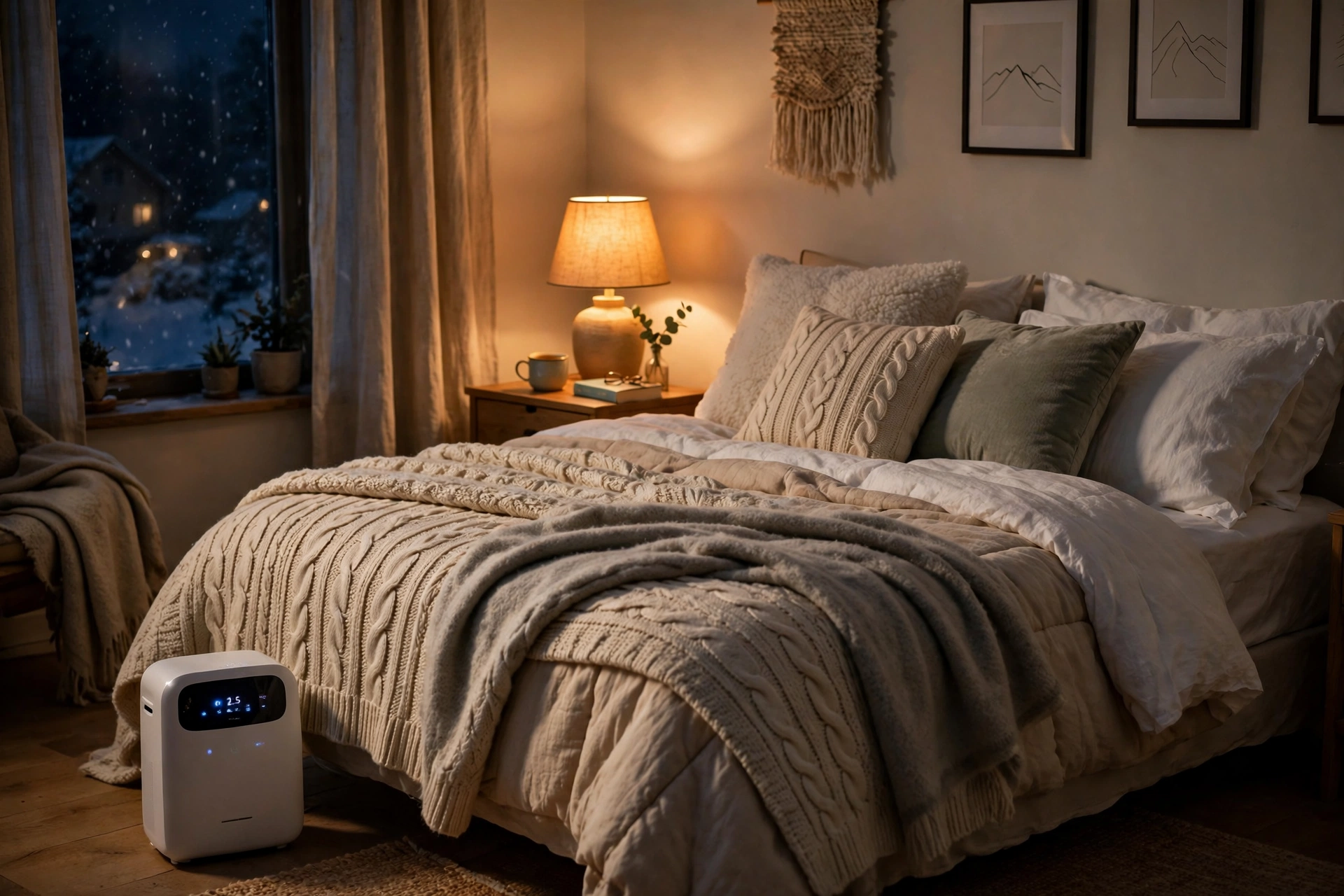
Quiet air purifier for bedrooms — The sleep unit: whisper-quiet sleep mode, a display that actually turns off (a glowing panel at 2 a.m. is a dealbreaker), and enough CADR for a closed-door bedroom. This is the one allergy sufferers notice by the second morning.
→ Click here to check price on Amazon
Air purifier for pets and smoke — The heavy-duty pick: a thick carbon bed for litter-box, dog and fireplace odors, plus a washable pre-filter that catches the hair before it loads the HEPA. If your house has animals or a wood stove, this is your living-room unit instead of the standard one.
→ Click here to check price on Amazon
Replacement HEPA filters (check your model first) — The ownership cost, listed as a pick on purpose: genuine filters run $30–70 a year depending on the unit, and a clogged filter quietly turns a good purifier into a fan. Price the filter for any model before you buy the machine — and be wary of no-name filters that don’t seal, because unfiltered air leaking around the edges defeats the point.
→ Click here to check price on Amazon
Humidifier (the other half of winter air) — Already on our gear hub from the Humidifier Guide: winter heating dries indoor air out, and dry air makes dust and throats worse. The purifier cleans the air; the humidifier puts the moisture back. Most closed-up winter houses need both.
→ Click here to check price on Amazon
Placement and habits that decide whether it works
Give it breathing room. A purifier shoved in a corner behind the couch cleans the corner. Keep a foot or so of clearance on the intake side and let it sit in the room’s actual airflow.
Run it before you need it. Purifiers maintain clean air far better than they rescue bad air. Run the bedroom unit for an hour before bed; run the living-room unit on auto all day — the electricity costs a few dollars a month.
Change filters on the indicator, not the calendar. The machine knows its filter loading better than a date does. When the light comes on, swap it — a loaded filter cuts CADR and makes the fan work (and sound) harder for less clean air.
Leave a Reply