Built & Backyard is reader-supported: we may earn a commission from qualifying purchases made through links on this page, at no extra cost to you.
A dehumidifier manages the water in the air. A sump pump handles the water that wants in — groundwater pushing up under the slab, storm runoff finding the foundation, the spring thaw looking for a way inside. It sits in a pit at the lowest point of the basement, and when the water rises, it throws the water out before the water reaches your floor, your furnace and everything you store down there. It is the least glamorous appliance in the house and the one whose failure costs the most: a flooded basement starts at thousands in damage and goes up from there. Here’s how to pick the pump, and — more important — how to make sure it runs on the one night it has to.
Quick answer
For most homes, a 1/2-horsepower submersible pump is the right primary: quiet, strong enough for a real storm, and sealed for life underwater. Size up to 3/4 HP only if your pit fills fast in heavy rain or the discharge has to climb more than about 10 feet. The pump itself is only half the system — a battery backup pump matters more, because the storms that flood basements are the same storms that knock out power, and a primary pump without power is a bucket with a cord. Add a high-water alarm so you hear about a failure while it’s still a puddle, and test the whole setup twice a year by pouring water into the pit.
The system, not just the pump
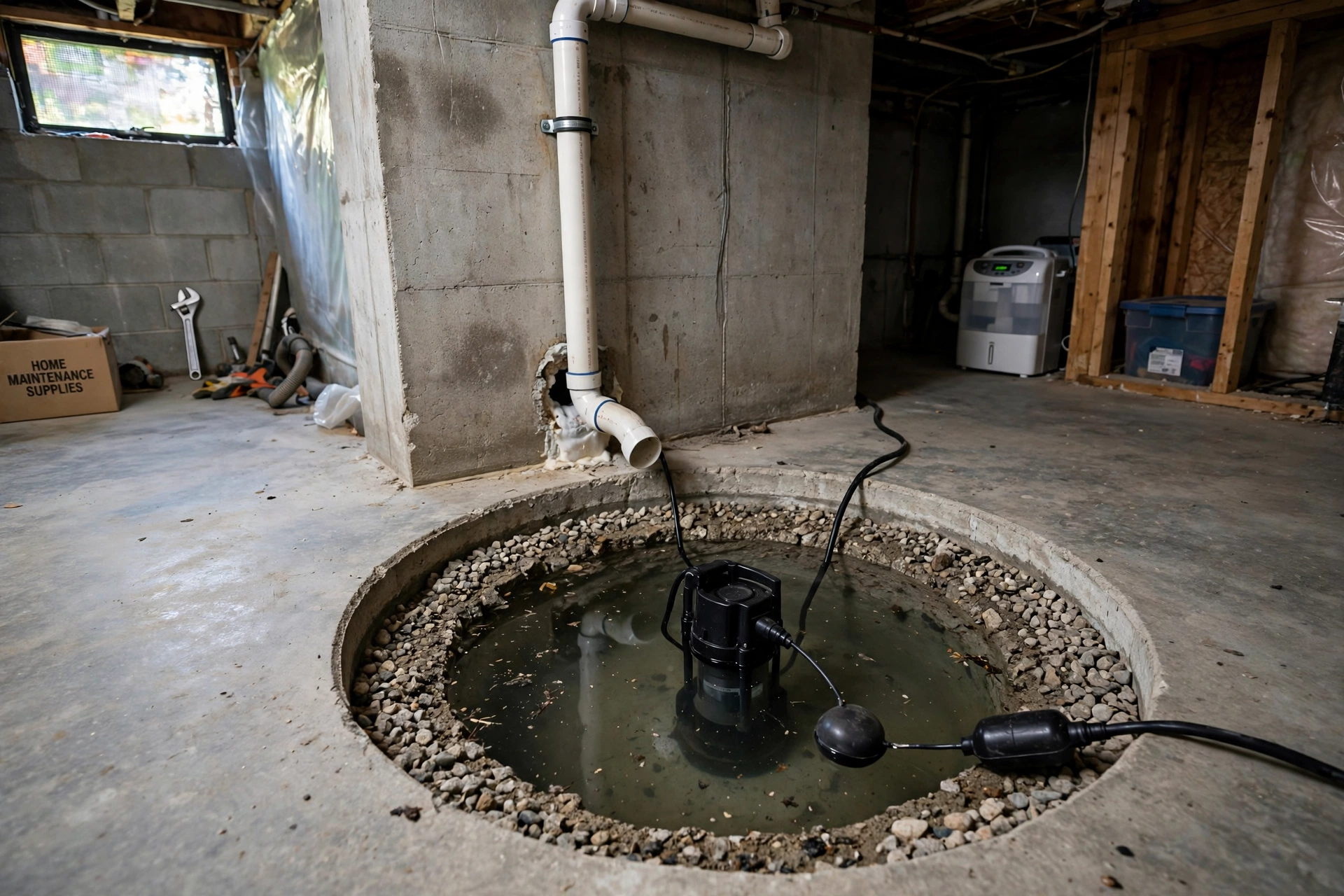
The primary pump does the daily work. Submersible models sit in the pit, run quiet and cool themselves with the water around them. Pedestal pumps stand above the pit — cheaper and easier to service, but louder and more exposed. For a finished basement or any pit that cycles often, submersible is the honest pick.
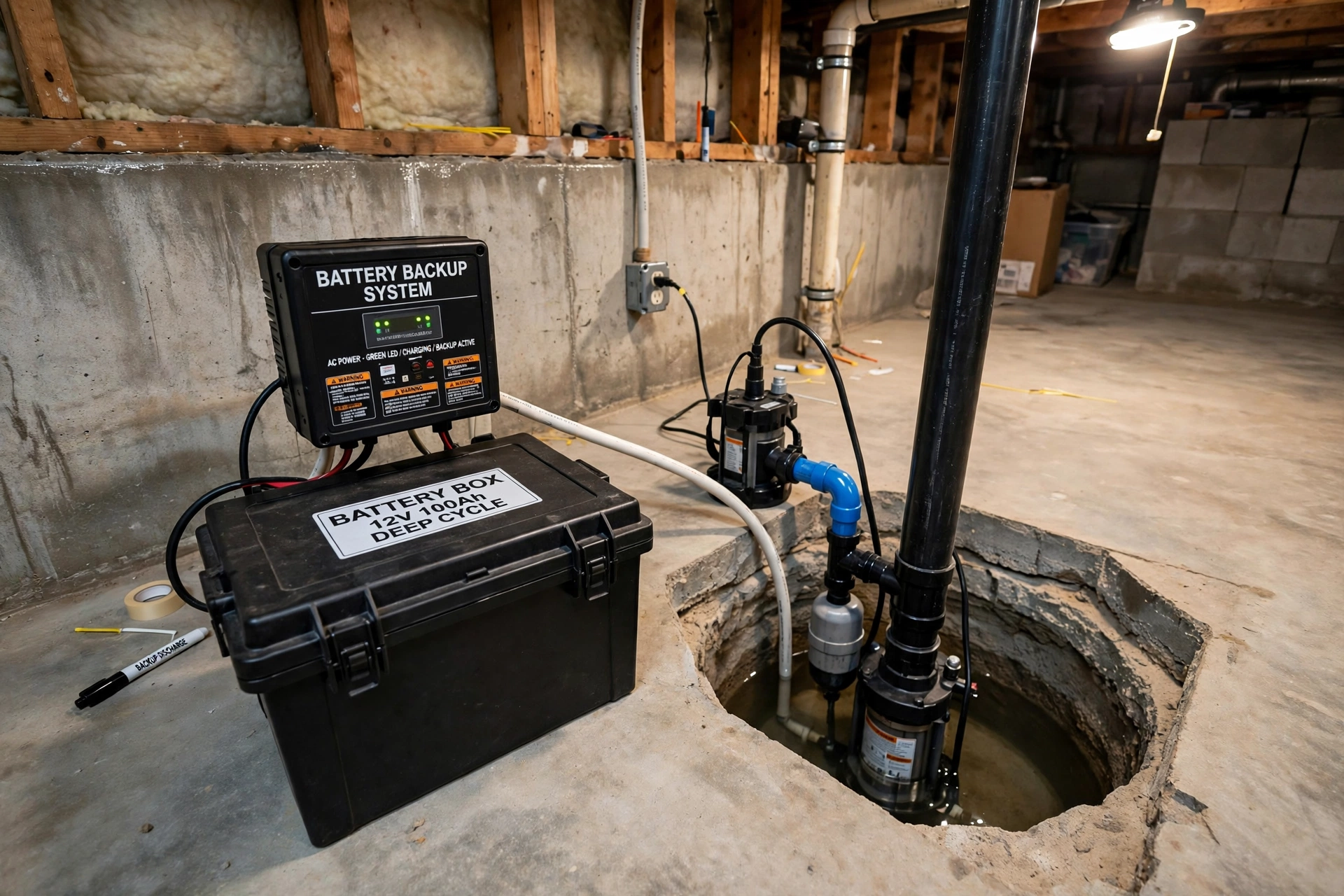
The backup is the insurance on the insurance. A battery backup pump takes over when the power dies or the primary fails, and it only has to hold the line until power returns. It is the difference between a storm story and a restoration bill. If you buy one upgrade beyond the primary pump, this is it.
The alarm is the early warning. A high-water alarm — ideally one that also sends a phone alert — tells you the water is rising faster than the system is handling it, while there’s still time to act. Water damage is a race; the alarm is how you find out the race started.
The picks
1/2 HP submersible sump pump — The workhorse primary: cast-iron or heavy thermoplastic body, a float switch that cycles it automatically, and enough lift for a typical basement discharge. Buy the pump you’d trust at 3 a.m. in a thunderstorm, because that’s when it works.
→ Click here to check price on Amazon
Battery backup sump pump system — The storm-proofing: a secondary pump, battery and charger that take over automatically when the power goes out or the primary can’t keep up. The single highest-value upgrade in this whole guide.
→ Click here to check price on Amazon
High-water alarm with phone alerts — A sensor in the pit that sounds off — and texts you — when water rises past the point it should. Cheap, installs in minutes, and turns a silent failure into a phone buzz wherever you are.
→ Click here to check price on Amazon
Basement dehumidifier — Already on our gear hub from the Basement Dehumidifier Guide: the pump handles liquid water, the dehumidifier handles the humidity that follows. A basement that has flooded once stays damp for weeks — the pair is the full recovery.
→ Click here to check price on Amazon
Smart water shutoff & leak sensors — Already on our gear hub from the Smart Water Shutoff Guide: the sump system guards against water coming up; leak sensors and an automatic shutoff guard against water coming from your own pipes. Basement water defense is both directions.
→ Click here to check price on Amazon
Setup notes that decide whether it works
Test it before the sky does. Twice a year, pour a bucket of water into the pit and watch the full cycle: float rises, pump kicks on, water drops, pump stops. A pump that hasn’t run in two years is a hope, not a system — and floats stick, switches fail and discharge lines clog quietly.
Know where the water goes. The discharge should exit well away from the foundation — dumping it two feet from the wall just recycles the same water back to the pit. Check local rules too: in many towns the discharge cannot go to the sanitary sewer.
Respect the pump’s lifespan. A hard-working primary pump lasts roughly 7–10 years, and it will not send you a warning letter before it quits. If yours is past that and cycles through every storm, replacing it on your schedule beats replacing it on the water’s.
Leave a Reply