Built & Backyard is reader-supported: we may earn a commission from qualifying purchases made through links on this page, at no extra cost to you.
Patio furniture rarely dies in the summer. It dies in the winter — cushions mildewed in a damp pile, covers blown into the neighbor’s yard in the first storm, metal frames rusting under a tarp that trapped every rain against them. The fix is an afternoon of work in November, while the patio heater is still getting weekend use, and it costs a fraction of replacing a set in March. Here’s the order that works.
Quick answer
Clean it, dry it completely, then split the storage: cushions go in a waterproof bag inside a deck box or garage, frames stay outside under a breathable cover strapped down at the legs. Never seal wet cushions in plastic, and never let a cover rest in standing water. Everything below is the details.
Step 1: Clean it and — this is the part everyone skips — dry it
Storage locks in whatever state you store things in. Dirt and moisture sealed up for three months come out as mildew and rust:
- Wash frames and cushions down with mild soap and water; a soft brush lifts the pollen and grime out of cushion fabric.
- Give it a full sunny day to dry. Not an hour — a day. Cushion foam holds water long after the surface feels dry.
- Check the frame feet and joints while it’s clean: touch up chips on metal now and you won’t find a rust bloom in spring.
Step 2: Cushions live indoors — in a bag, in a box
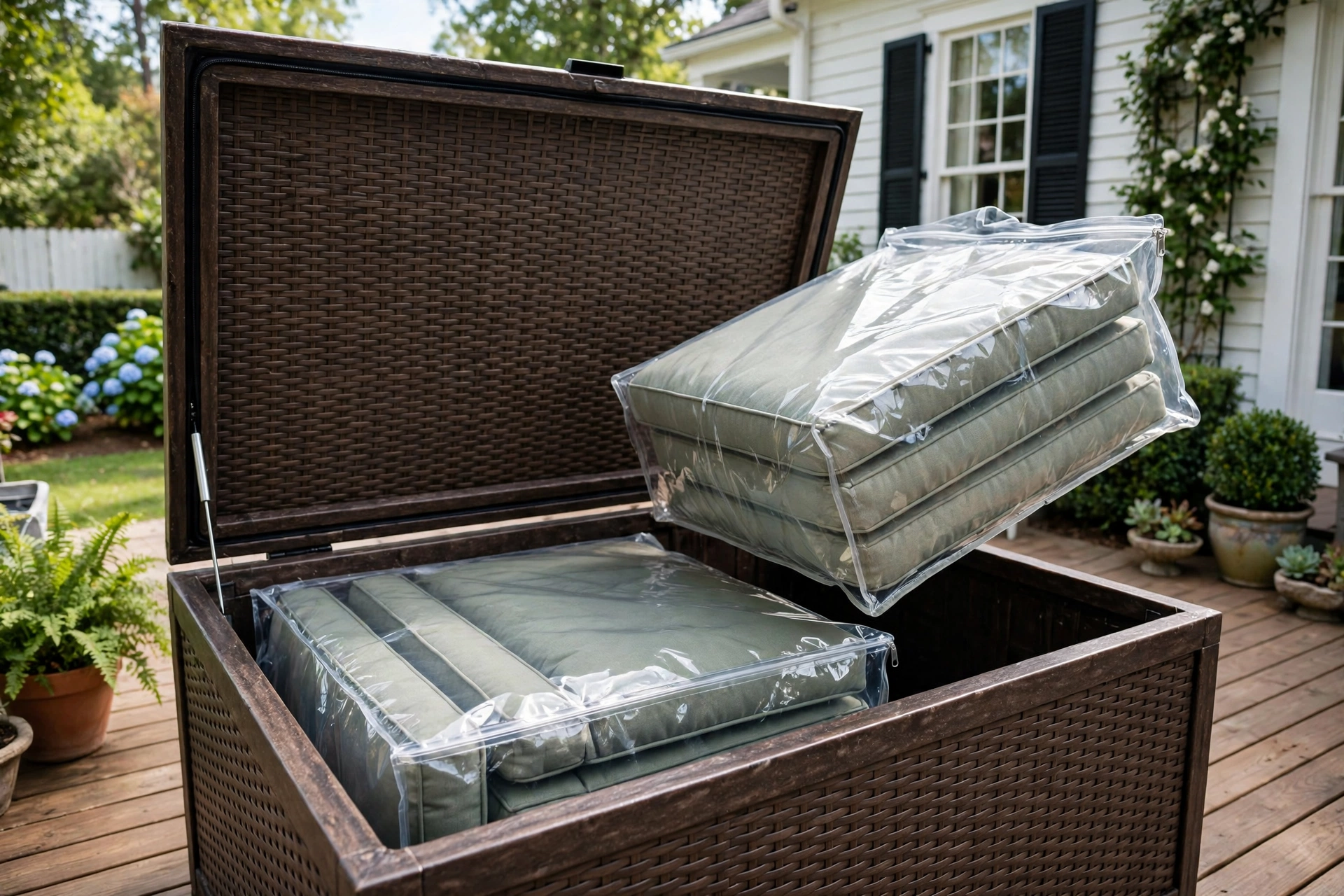
Cushions are the expensive half of any set and the half winter ruins first. They need dry, dark, and off the floor:
Waterproof Outdoor Cushion Storage Bag
A zippered, waterproof bag sized for a full set of cushions: keeps garage dust and attic moisture off the fabric, and the handles make the twice-a-year carry a one-trip job instead of six.
→ Click here to check price on Amazon
Resin Deck Box
The bag’s home base if garage space is tight: a weatherproof resin box that lives on the patio year-round, swallows the cushions in winter, and earns its keep in summer holding the outdoor TV remotes, covers, and grill tools.
→ Click here to check price on Amazon
Step 3: Cover the frames — with air underneath
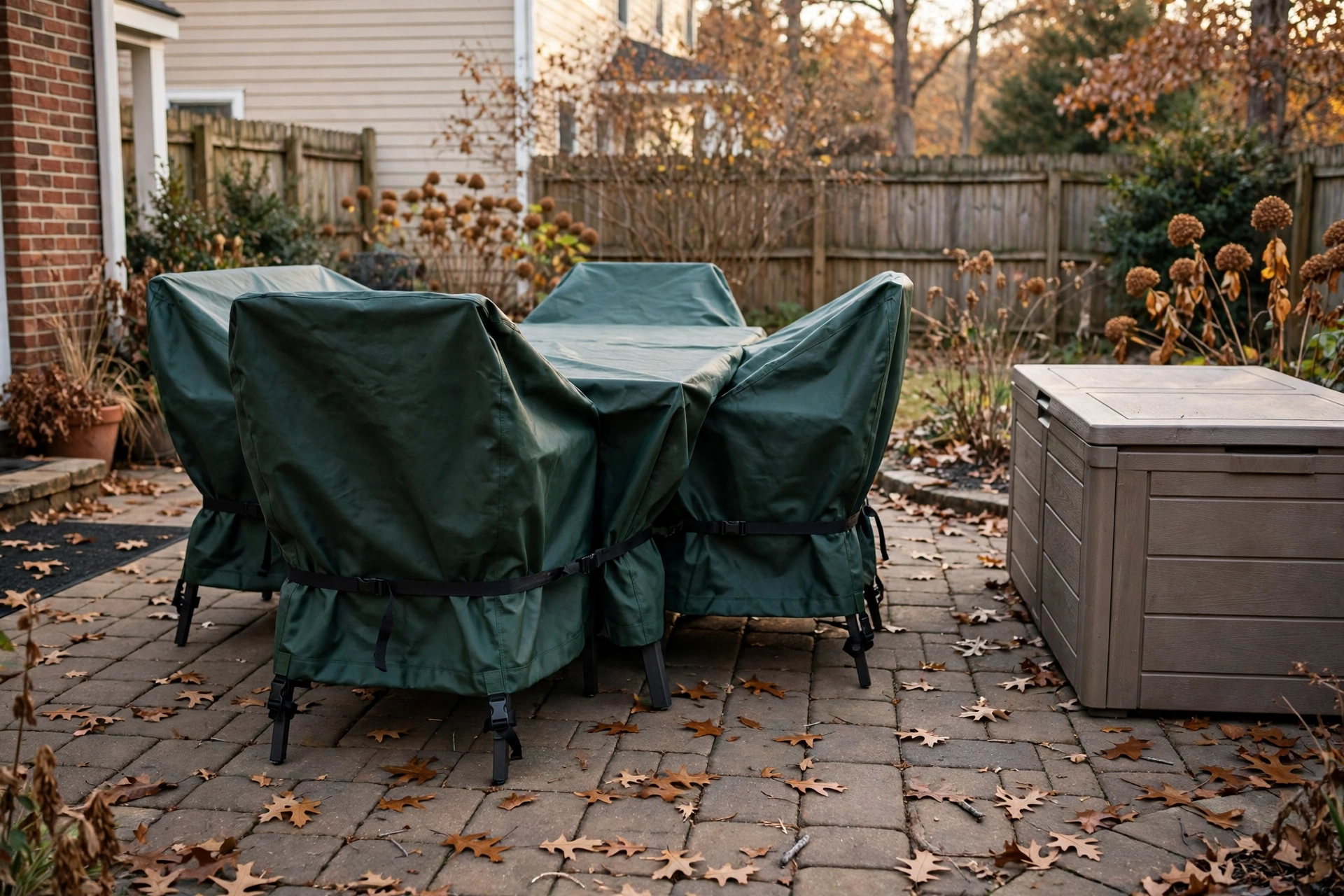
Bare frames can winter outside in the South, but a cover keeps sun, sap, and freezing rain off the finish. Two rules decide whether a cover helps or hurts:
- Breathable and vented, never a plain tarp. A tarp traps condensation against the metal; a proper cover vents it.
- Tent it in the middle. A ball or an upside-down bucket under the center stops rain pooling in a flat spot — standing water on a cover finds its way through eventually.
Waterproof Patio Furniture Cover Set
Heavy-duty covers sized for a table-and-chairs set or a sectional, with air vents and click-close leg straps. Measure your set before ordering — a cover two sizes too big is a sail, not a shelter.
→ Click here to check price on Amazon
Step 4: Strap it down before the first real storm
The cover you find in the yard after a December storm protected nothing. Southern winter storms arrive with real wind:
Patio Furniture Cover Straps with Clips
Wind straps that clip to the cover and cinch around the frame: cheap insurance that the cover is still on the furniture in the morning, and the difference between a cover that lasts three winters and one that shreds in January.
→ Click here to check price on Amazon
While you’re in storage mode, it’s the same weekend as the rest of the shutdown list — winterize the outdoor faucets before the first hard freeze and make sure the fall lawn winterizer is down.
Step 5: One coat of protection for next season
Outdoor Fabric Guard Spray
A water-repellent treatment for cushion fabric, sprayed on clean and dry before the cushions go into the bag: water beads off next season instead of soaking in, and stains hose off instead of setting.
→ Click here to check price on Amazon
The winter storage system, settled
Wash it, dry it for a full day, bag the cushions into a box, cover the frames with vents and straps, and treat the fabric before it sleeps. One November afternoon, and the set you uncover in March is the set you covered — not a mildew project with a price tag.
Leave a Reply