Built & Backyard is reader-supported: we may earn a commission from qualifying purchases made through links on this page, at no extra cost to you.
A fireplace is only as good as the wood you feed it. Wet, ground-stacked wood hisses, smokes, and coats your flue with creosote — which is exactly what our fireplace and chimney safety guide tells you to avoid. Dry wood lights fast, burns hot, and barely smokes. The difference isn’t the tree it came from; it’s how the wood was split, stacked, and stored. Here’s the system that works.
Quick answer
Split it, stack it off the ground on a rack, cover only the top, and let air move through the sides. Burn it when a moisture meter reads under 20%. That’s the whole formula. Everything below is the details that make it happen without a rotten, bug-ridden pile against your house.
Step 1: Get it off the ground and away from the house
Ground contact is how firewood rots and how termites find your siding. Two rules:
- Off the ground, always. Even a pair of landscape timbers beats bare dirt, but a real rack holds a face cord neatly, keeps the bottom row dry after rain, and doesn’t tip mid-winter.
- A few feet from the house, not against it. A stack tight to the wall traps moisture against your siding and gives pests a covered bridge indoors. Keep the main pile out in the yard; keep only a day or two of wood by the door.
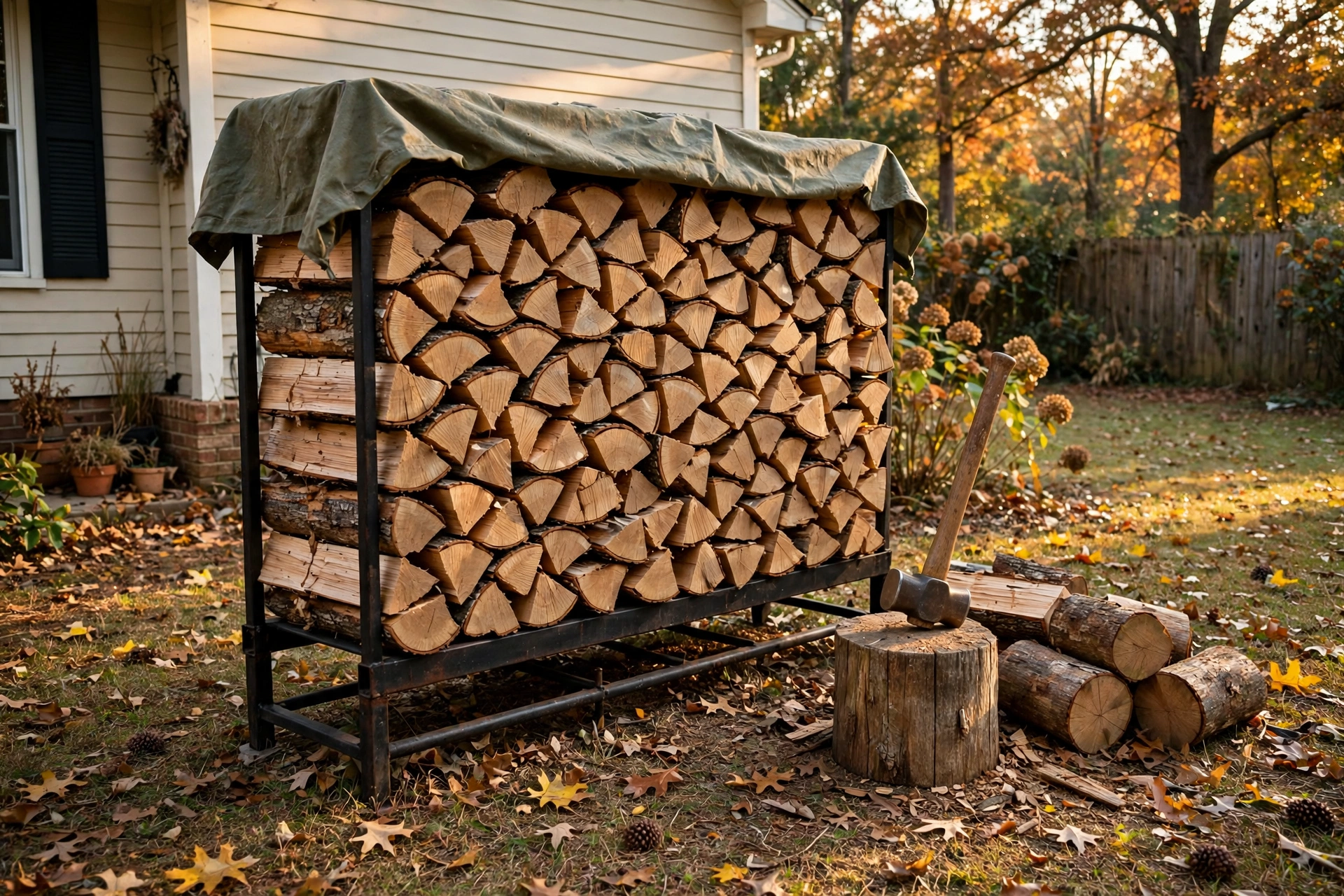
Outdoor Firewood Log Rack with Cover
A steel rack sized for a face cord, with a cover that shields the top while the sides stay open to the air — the exact combination green wood needs to season instead of stew.
→ Click here to check price on Amazon
Step 2: Split it to the size you’ll actually burn
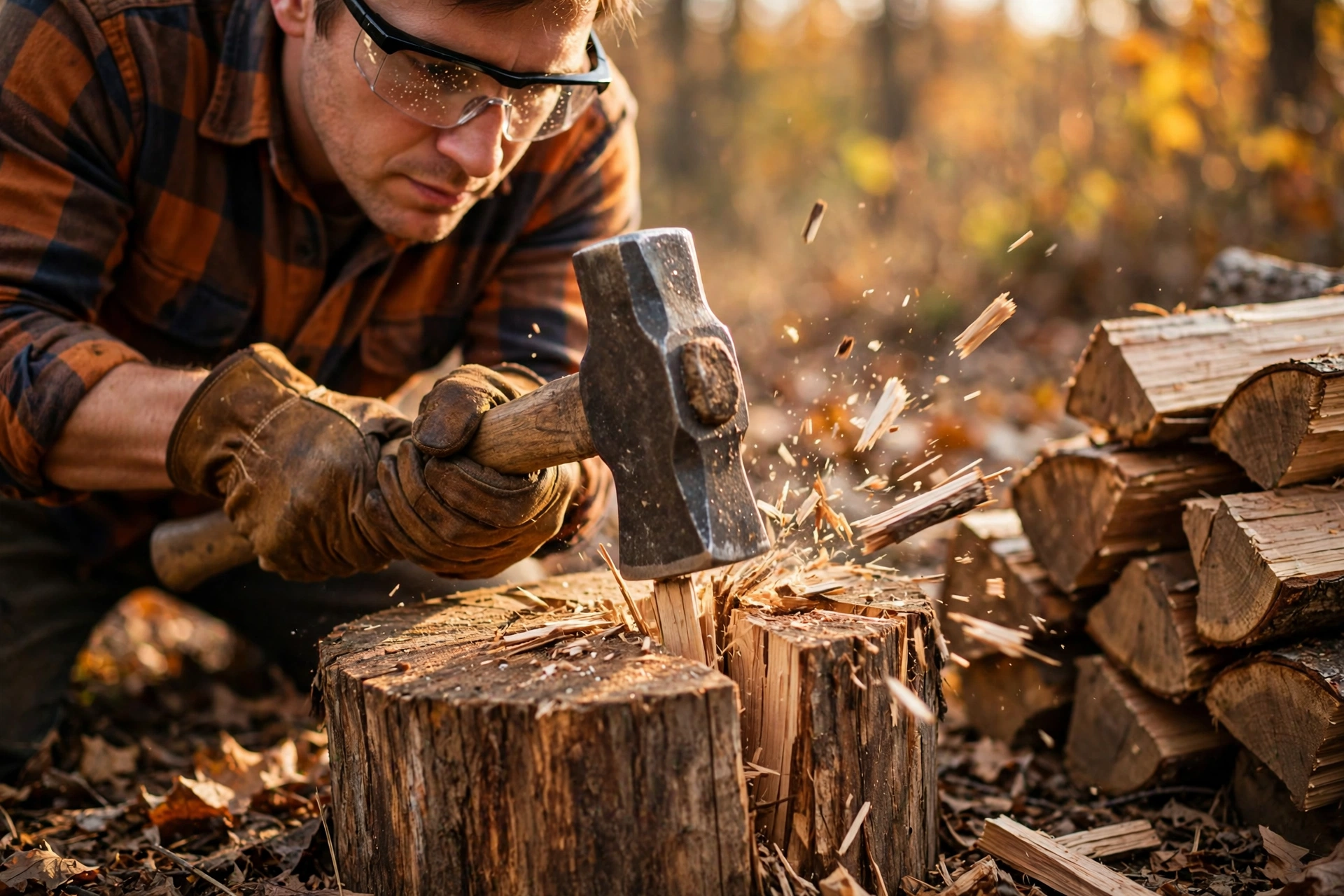
Wood seasons from the surface in, so unsplit rounds can stay wet in the middle for years. Splitting is the seasoning:
- Split green wood now, not in December. Fresh-split wood dries in 6–12 months depending on species — oak is patient, pine is fast. Split it the week it lands and next winter takes care of itself.
- Aim for 4–6 inch faces. Pieces that size light well, fit standard fireplaces and stoves, and stack tight. Keep a bucket of the thin splits and shards — that’s your kindling, and it’s free.
- Split on a block, at knee height. A wide stump round saves your back and your tool edges.
Manual Kindling Splitter
A fixed wedge in a cast-iron frame: set the piece, tap it with a mallet, done. It turns split wood into kindling with no swinging at all — safer than a hatchet, and the job kids and grandparents can actually help with.
→ Click here to check price on Amazon
Fiberglass-Handle Splitting Maul
For the rounds themselves: a maul’s wedge head and 8-pound weight do what an axe can’t on knotty oak and hickory, and the fiberglass handle shrugs off the overstrikes that snap wood handles.
→ Click here to check price on Amazon
Step 3: Stack for airflow, cover only the top
How you stack decides whether the pile seasons or molds:
- Bark up on the top row, bark down below. Sheds rain off the pile’s roof while the lower rows dry.
- Single rows dry fastest. A deep, tight cube looks tidy and seasons slowly in the middle. If you have the fence line, one row deep is the pro move.
- Cover the top only. A tarp wrapped down the sides traps every bit of moisture the wood gives off. Top cover, open sides — same principle as the rack cover above.
If your overflow pile lives in the garage, our garage insulation guide is worth a look before winter — but keep the main stack outside regardless; a cord of wood brings a season’s worth of bark, dust, and hitchhiking insects with it.
Step 4: Don’t guess — measure the moisture
“Seasoned” on a seller’s word is how people end up burning 35%-moisture wood all winter. The check takes five seconds:
- Split a piece fresh and press the meter pins into the newly exposed middle — the outside of any log reads dry.
- Under 20% burns clean. 20–25% is workable. Over 25%, stack it back up and wait.
Firewood Moisture Meter
Pin-style meter with a firewood range: one reading tells you whether tonight’s fire will roar or hiss, and whether that “seasoned” cord you just bought was worth the money.
→ Click here to check price on Amazon
Step 5: The last ten feet — getting it inside clean
The trip from rack to hearth is where the bark, splinters, and mess land on your floors:
Canvas Log Carrier Tote
A heavy canvas sling with reinforced handles: carries an armload in one trip, keeps bark and dirt off your clothes and floors, and folds flat next to the fireplace between runs.
→ Click here to check price on Amazon
One safety note to close the loop: bring in only what you’ll burn in a day or two, and if your Christmas tree stands anywhere near the hearth, keep the indoor wood pile on the far side of the fireplace — three feet from heat applies to firewood too.
The firewood system, settled
Split it early, stack it on a rack with the top covered and the sides open, measure before you burn, and carry it in a tote. Do that and every fire this winter lights on the first match — and your chimney stays cleaner for it, which your fireplace safety check will thank you for.
Leave a Reply