Built & Backyard is reader-supported: we may earn a commission from qualifying purchases made through links on this page, at no extra cost to you.
A security camera is only worth owning if it’s watching the place something actually happens — and for most houses, things happen in three places: the driveway, the back yard, and the front door. The mistake is buying one camera, pointing it at the door, and calling the house covered. The driveway is where cars get tried and packages get scouted; the back yard is where someone who doesn’t want to be seen comes in; the door is where they knock first to see if anyone’s home. Cover those three angles and you have a system. Everything else — the nursery cam, the garage cam — is a bonus. Here’s what to buy for each angle, in the order that covers the most house soonest, and the subscription question to settle before you buy anything.
Quick answer
Start with a battery-powered outdoor camera over the driveway — no wiring, up in ten minutes, and a small solar panel means you never climb a ladder to charge it. Add a floodlight camera for the back yard, because light is the one thing that makes most prowlers leave before they try a door. Put the video doorbell at the front door (it sees faces and packages better than any camera mounted above them), and finish with one indoor camera for the dog, the kids’ arrival, and the “did I leave the stove on” check. Decide about the subscription before you buy: every brand records motion clips free for a few days, but person-detection and long cloud history are the paid tier almost everywhere — price the year, not just the camera.
The three angles, and what covers each
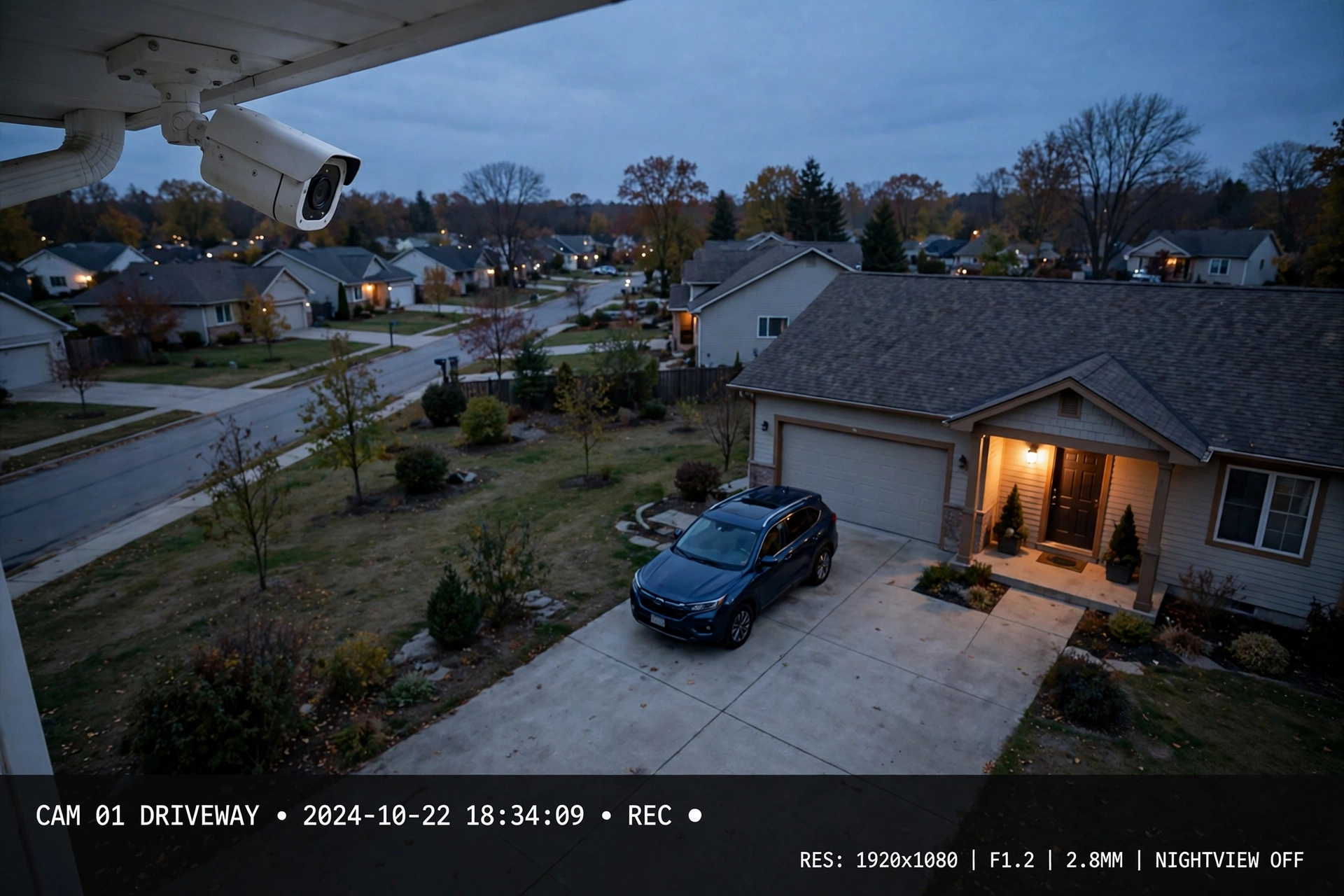
The driveway wants height and a wide view. Mount it under the eave or on the garage, eight to ten feet up, angled down the drive. Battery cameras win here because driveways rarely have an outlet where you need one — and with a solar panel trickling charge, the battery stops being a maintenance chore entirely.
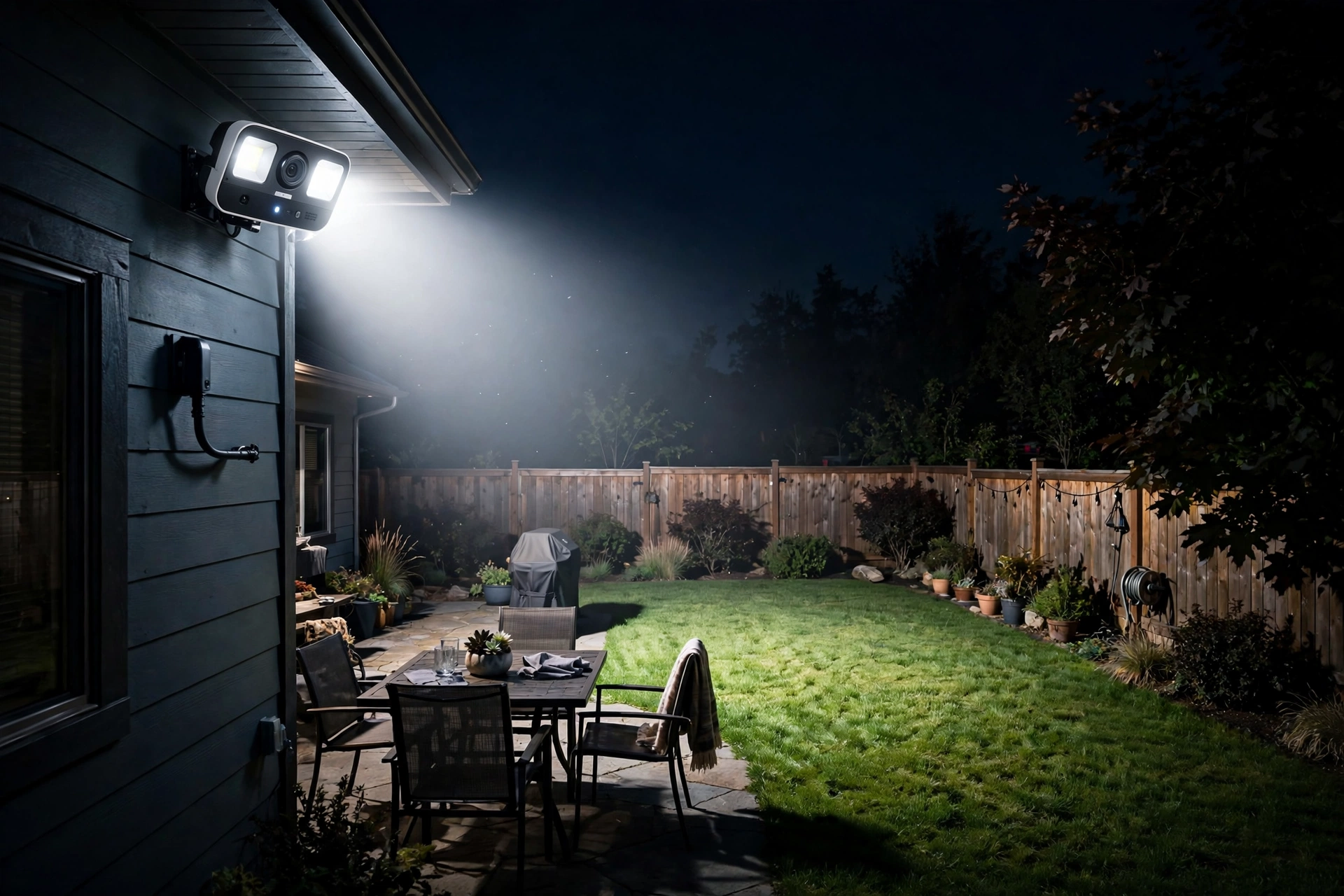
The back yard wants light, not just a lens. A floodlight camera does two jobs: it records, and it announces. Two bright heads snapping on at midnight change a prowler’s plans faster than any siren. This is the one camera worth wiring or placing near power, because floodlights eat batteries.
The door wants a face-level camera. That’s the doorbell’s job, and it’s why the doorbell and the driveway camera aren’t redundant: one reads license plates and vehicle descriptions, the other reads faces at conversation distance.
Indoors wants one camera, placed honestly. Living room or entry, aimed at the door the family actually uses. It confirms the kids got home, watches the dog, and settles the stove question. Skip bedrooms and bathrooms entirely — a camera system the family resents is a system that gets unplugged.
The picks
Outdoor wireless security camera (battery + solar panel) — The driveway anchor: wire-free mounting anywhere, motion clips to your phone, night vision, two-way talk, and a small solar panel that keeps the battery topped up so it goes a year without a ladder trip.
→ Click here to check price on Amazon
Floodlight camera (wired, motion-activated) — The back-yard deterrent: bright dual floodlights, a camera, a siren you can trigger from the app, and color night video lit by its own lights instead of grainy infrared. The camera that prevents the incident instead of just recording it.
→ Click here to check price on Amazon
Indoor security camera (pan/tilt, pet and family check-ins) — The inside eye: pans to follow the dog, two-way talk for the kids, and a privacy shutter for when everyone’s home. One covers the main living space honestly; that’s all most houses need.
→ Click here to check price on Amazon
Video doorbell (battery, no-drill options) — Already on our gear hub from the Video Doorbell Guide: the face-level half of the front-of-house story. The driveway camera sees them arrive; the doorbell sees who it is.
→ Click here to check price on Amazon
Smart lock (Wi-Fi deadbolt) — Already on our gear hub from the Smart Lock Guide: cameras show you the attempt; the lock is what the attempt runs into. A deadbolt that logs every entry and locks itself is the other half of the same system.
→ Click here to check price on Amazon
Setup notes that decide whether it works
Turn on person detection and turn off everything else. A camera that alerts for every shadow, spider and headlight sweep trains you to ignore it within a week. Person-only alerts (the paid tier on most brands) are the difference between a security system and a nature feed.
Aim for the approach, not the area. A camera pointed straight out at the street records everyone passing and no one approaching. Angle it so anyone heading for the door or the cars crosses the frame — crossing movement triggers motion detection far more reliably than movement toward the lens.
Put the “camera here” sign where it can be read. A small yard sign and a window sticker do quiet work: most residential break-ins are opportunistic, and a house that advertises cameras gets passed for the one that doesn’t. The recording is the backup plan; the deterrent is the plan.
Leave a Reply