Built & Backyard is reader-supported: we may earn a commission from qualifying purchases made through links on this page, at no extra cost to you.
Smart lighting is where most smart homes actually start, and it’s also where most people buy the wrong thing first. A box of color-changing bulbs feels like the obvious entry point, right up until someone flips the wall switch out of habit and your smart lamp goes dumb and offline. The honest secret of smart lighting is that there are three different products for three different jobs — bulbs for lamps and accents, in-wall switches for ceiling lights you control from the wall, and smart plugs for anything with its own switch already on it — and the houses that love their setup almost always run a mix. Here’s how to pick the right tool for each light in the house, in the order that makes the difference soonest.
Quick answer
Start with smart plugs and bulbs in lamps, and put in-wall smart switches on the ceiling lights you use every day. Bulbs are the cheapest way in and the only way to get color, but they die the moment someone kills the wall switch. An in-wall smart dimmer replaces the switch itself, so the wall control, the app, and voice all agree — it’s the permanent fix for kitchen, hall and porch lights. Smart plugs are the quiet overachievers: they make string lights, Christmas trees, table lamps and the garage work light run on schedules and sunsets for the price of a pizza.
Bulbs, switches or plugs: which job is which
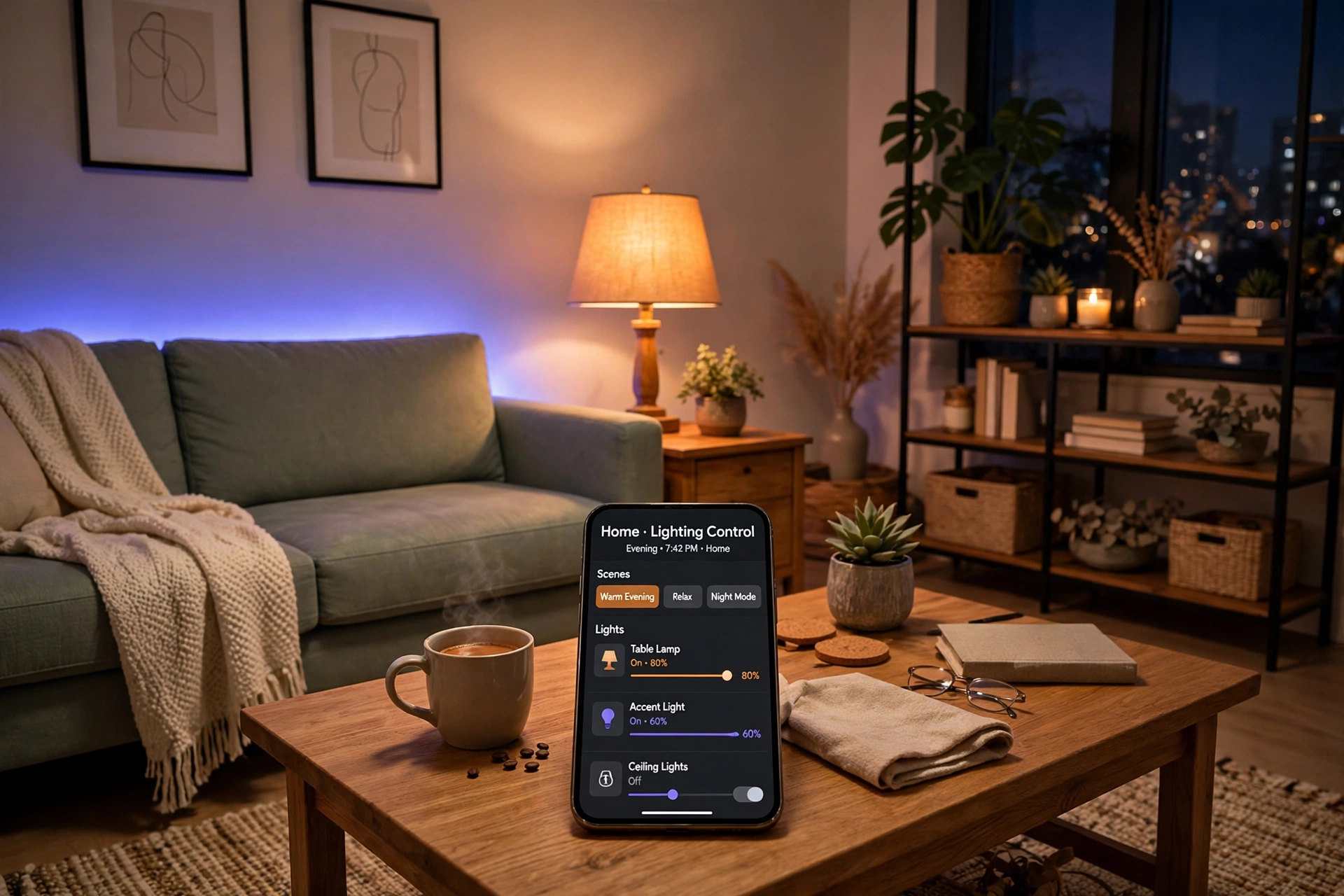
Bulbs are for lamps and mood. A smart bulb in a table or floor lamp gives you dimming, warm-to-cool white, and color for movie night — no wiring, five minutes a lamp. The catch is the wall switch: power off means the bulb is unreachable. Bulbs shine where the lamp’s own switch stays on and the bulb does the work.
Switches are for ceiling lights and sanity. An in-wall smart dimmer takes over the circuit, so the paddle on the wall, the schedule in the app, and a voice command all do the same thing and nobody can break it by flipping a switch. Most need a neutral wire in the box (common in houses built since the mid-1980s); if yours lacks one, buy the no-neutral models made for older wiring.
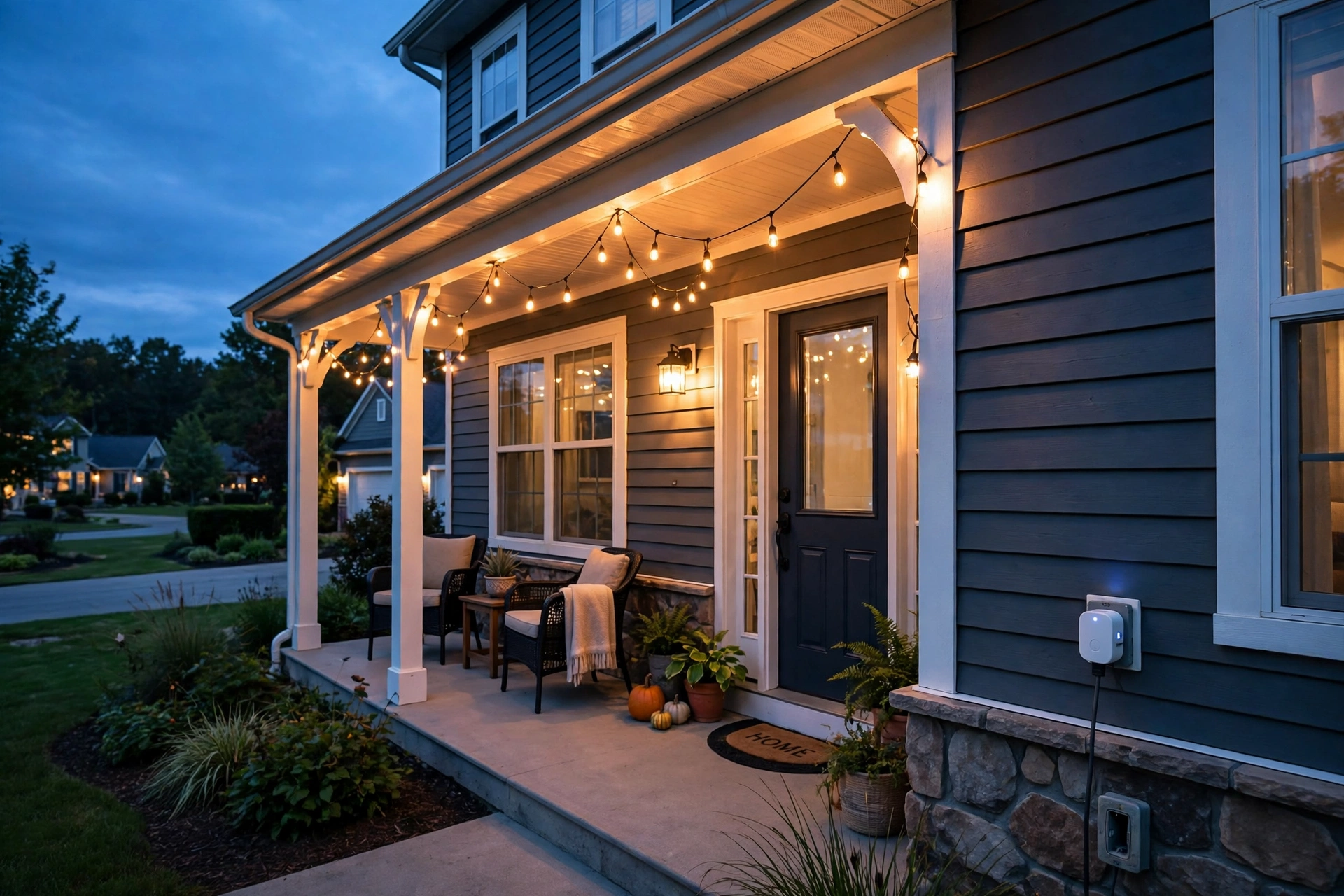
Plugs are for everything with a cord. Outdoor string lights, the Christmas tree, a box fan, the dehumidifier — a smart plug turns any of them scheduled and remote-controlled. Outdoor-rated plugs run the yard and porch; indoor plugs with energy monitoring tell you what the old fridge in the garage is really costing you.
The picks
Smart LED bulbs, color + white multi-pack — The starter buy: standard A19 bulbs that screw into any lamp, dim from an app, shift from candlelight-warm to daylight, and do full color when the occasion calls for it. Buy the multi-pack; one smart bulb in a house is a demo, four is a system.
→ Click here to check price on Amazon
In-wall smart dimmer switch — The permanent upgrade for ceiling lights: replaces the wall switch, keeps manual control exactly where everyone’s hand already goes, and adds schedules, away-mode randomization, and voice control that survives guests. Get the version that matches your wiring — neutral-required for newer homes, no-neutral for older ones.
→ Click here to check price on Amazon
Smart plugs with energy monitoring (indoor + outdoor) — The schedule-anything pick: indoor plugs that report what a device costs to run, and a weatherproof outdoor plug for string lights and holiday displays. Sunset-to-midnight on the porch lights, tree on at dusk, off at bedtime — set once, forget forever.
→ Click here to check price on Amazon
Permanent outdoor lights kit — Already on our gear hub from the Permanent Outdoor Lights guide: the roofline end of the same story — app-controlled, year-round exterior lighting you install once instead of hanging strings every December. The smart plugs handle the yard; these handle the house itself.
→ Click here to check price on Amazon
Smart thermostat — Already on our gear hub from the Smart Thermostat Guide: the other half of the starter smart home. Lights on a schedule and a thermostat that learns one are the two upgrades guests actually notice — and the two that quietly pay for themselves.
→ Click here to check price on Amazon
Setup habits that separate a system from a gimmick
Automate by sunset, not by clock. Schedules tied to local sunset adjust themselves all year — porch lights that come on at 6 PM are wrong by June. Every platform offers sunset offsets; use them for anything outdoors.
Make the away mode boring and believable. When you travel, lights should mimic a lived-in evening — living room till ten, a bedroom lamp after — not strobe the whole house at once. Randomize by a few minutes so it doesn’t look programmed, because it shouldn’t.
Name rooms, not bulbs. “Porch,” “Kitchen,” “Reading lamp” — voice control and apps both work on names, and a house full of “Bulb 7” is a house that stops using the system by February.
Leave a Reply