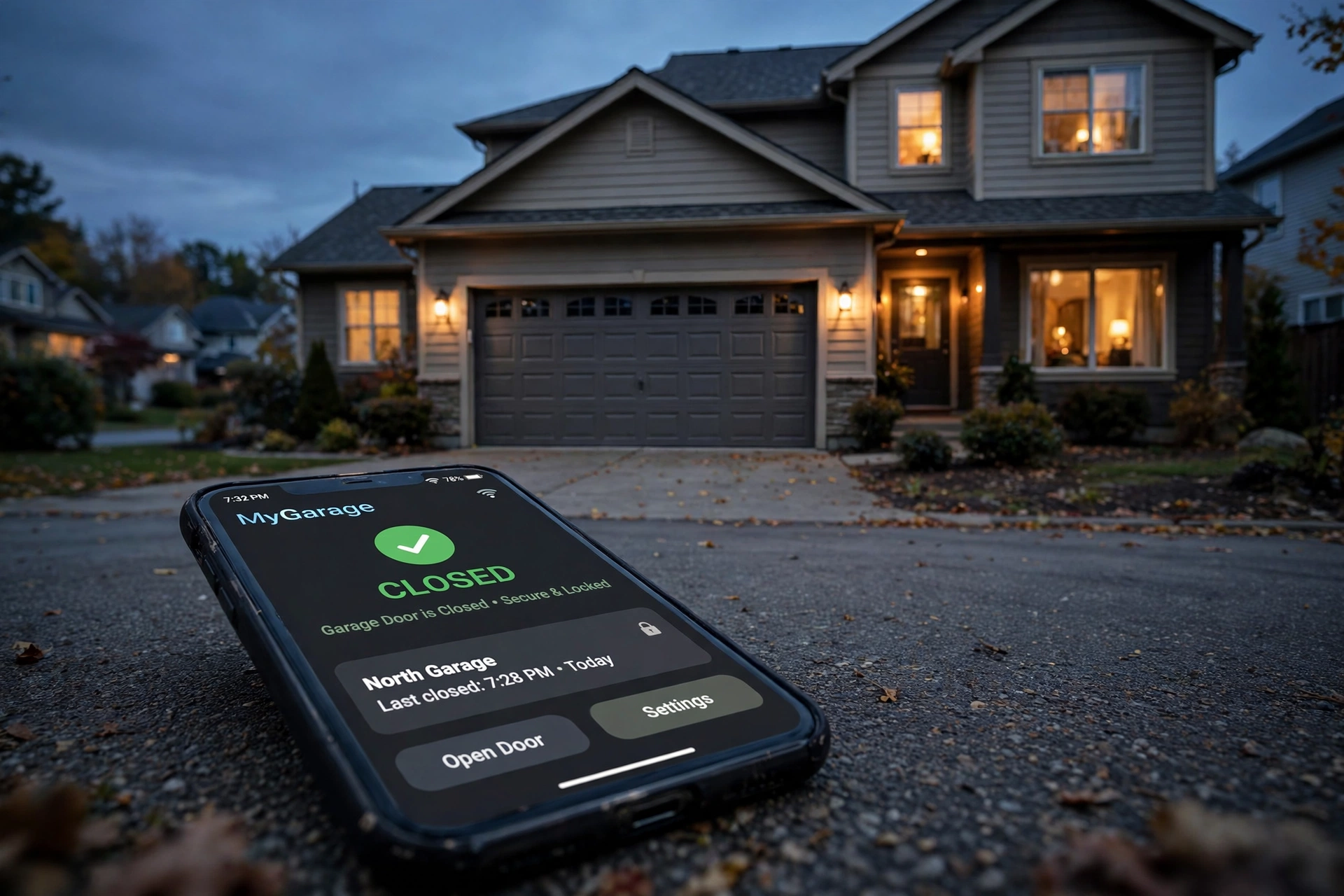
Built & Backyard is reader-supported: we may earn a commission from qualifying purchases made through links on this page, at no extra cost to you.
The garage door is the biggest door in the house and the one most often left open — overnight, through a workday, through a whole vacation. It’s also the door thieves check first, because an open garage is an invitation and a closed one with an opener is a wall. Smart garage gear fixes both halves of that: it lets you close the door from anywhere, and — the part that actually brings peace of mind — it proves to you that the door is shut, with a sensor on the door itself rather than a guess. Most houses don’t need a new opener to get there. A small controller retrofits onto the opener already hanging from your ceiling and adds app control, alerts, and auto-close for less than a tank of gas. Here’s the order to buy in, and when a full opener replacement earns its money instead.
Quick answer
If your opener works, don’t replace it — retrofit it. A smart garage door controller wires into your existing opener in about half an hour and adds phone control, open-door alerts, scheduled closing, and delivery access. Replace the opener itself only if yours is loud, chain-driven and aging, or you want the upgrades a controller can’t add: a built-in camera that watches the garage, battery backup that works through a power outage, and a belt drive quiet enough for a bedroom over the garage. Either way, add the wireless keypad — it’s the cheapest end to the hide-a-key and the locked-out teenager.
Retrofit or replace: the honest split
A controller adds brains to the opener you own. It connects to the same terminals as your wall button, pairs with a tilt sensor on the door, and from then on the door reports its real position to your phone. You get alerts when it opens, a warning when it’s been open too long, and the ability to close it from the couch or from another state. If your opener was made in the last twenty-odd years, it almost certainly works with one.
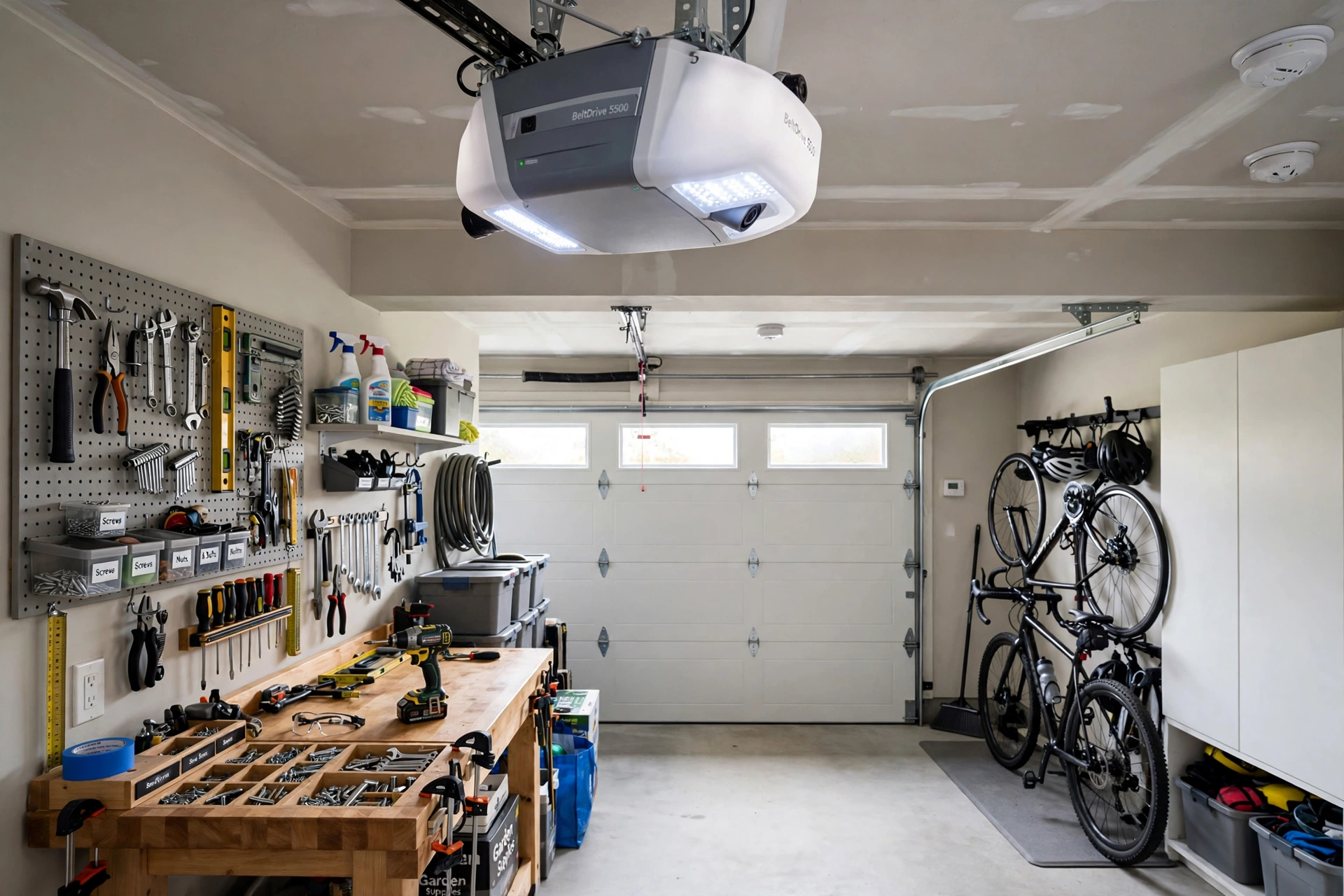
A new opener adds muscle and senses a controller can’t. Belt drive instead of a rattling chain. A camera with two-way talk watching the garage interior — the room where the tools, the bikes, and the second fridge live. Battery backup, so a dead-quiet power outage doesn’t leave the biggest door in the house stuck open or shut. If your opener is pre-2000s, struggles, or sounds like a freight elevator, the replacement is the buy; if it hums along fine, it’s money spent twice.
The keypad is the unglamorous pick that gets used daily. A wireless entry pad outside the door means the kids, the dog walker, and you-with-groceries all get in without a remote or a hidden key under a fake rock everyone knows about. Modern pads take fingerprints or temporary codes you can hand a contractor for one day and kill that night.
The picks
Smart garage door controller (myQ style retrofit) — The centerpiece: a hub and door sensor that make your existing opener app-controlled in about thirty minutes — open and close from anywhere, alerts the moment the door moves, auto-close on a schedule, and guest access you can revoke. The highest-value smart-home dollar on this page.
→ Click here to check price on Amazon
Belt-drive smart opener with camera and battery backup — The full replacement: whisper-quiet belt drive, a wide-angle camera with two-way talk watching the garage, and a battery that keeps the door working through an outage. The right buy when the old opener is loud, tired, or older than the car parked under it.
→ Click here to check price on Amazon
Wireless garage door keypad (fingerprint / code entry) — Mounts outside the door, opens it by code or fingerprint, and takes temporary codes for guests and contractors that expire when you say. Ends the hide-a-key, the left-in-the-car remote, and the locked-out phone call in one small box.
→ Click here to check price on Amazon
Smart lock (Wi-Fi deadbolt) — Already on our gear hub from the Smart Lock Guide: the garage-to-house door is the one intruders actually try once they’re in the garage, and it’s the door most people leave on a 1970s knob lock. A smart deadbolt there closes the last gap the opener can’t.
→ Click here to check price on Amazon
Video doorbell (battery, no-drill options) — Already on our gear hub from the Video Doorbell Guide: it watches the driveway end of the same story — who pulled in, when the package landed, whether anyone tried the cars before the garage. The doorbell sees them coming; the controller proves the door stayed shut.
→ Click here to check price on Amazon
Setup notes that decide whether it works
Put the sensor on the top panel of the door. The tilt sensor reads the door’s angle, and the top panel tilts first and furthest. Mount it low and it can report “closed” while the door is still feet off the ground.
Turn on the open-too-long alert, not just the open alert. An alert every time the door opens becomes noise inside a week and gets muted. The alert that matters is the one that fires when the door has been open for 30 or 60 minutes — that’s the one that catches the overnight mistake.
Set a nightly auto-close. A schedule that closes the door at 10 PM whether or not anyone remembered is the single feature owners end up loving most. It’s the garage door equivalent of the lock that locks itself — the house puts itself to bed.
Leave a Reply