Built & Backyard is reader-supported: we may earn a commission from qualifying purchases made through links on this page, at no extra cost to you.
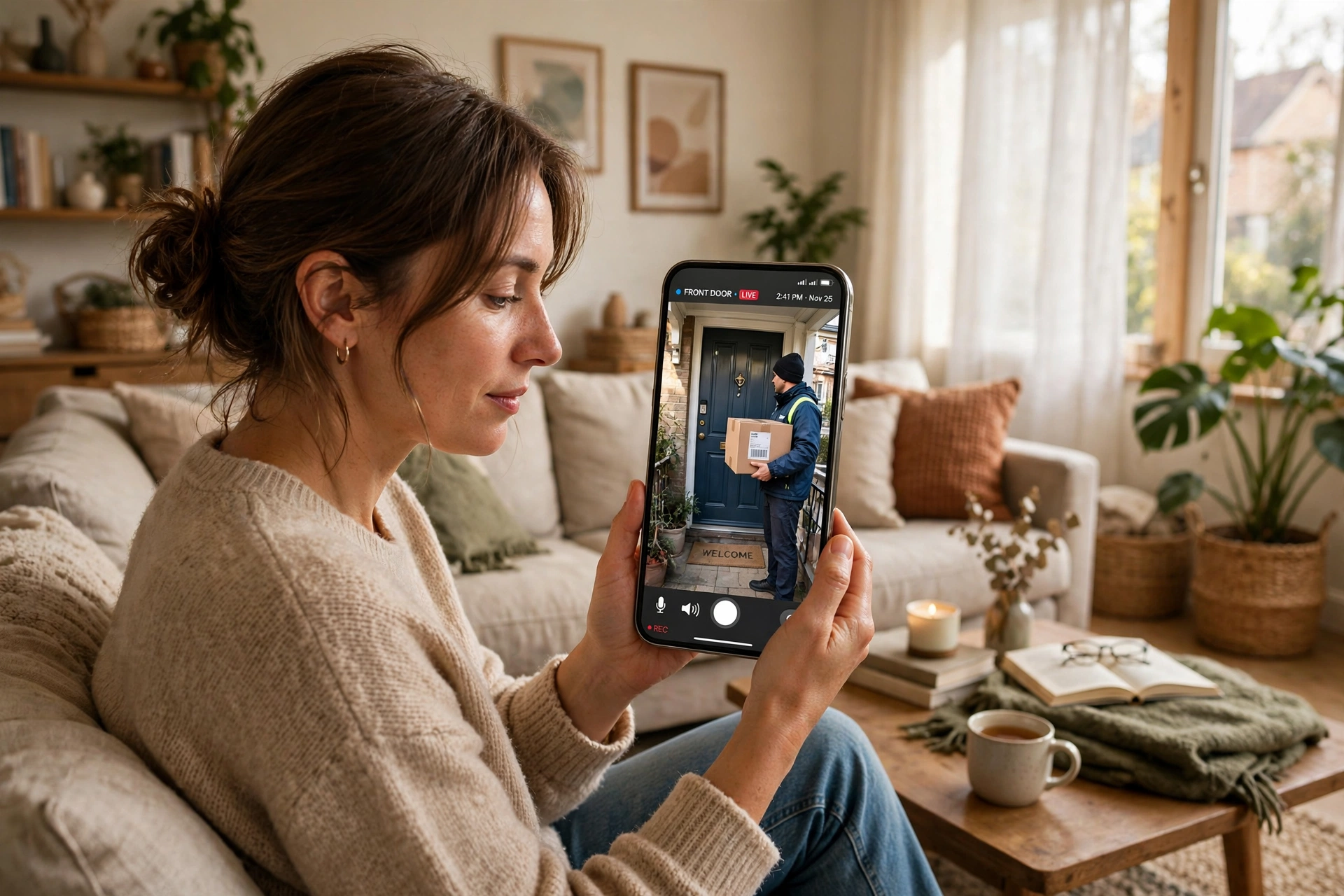
The front door is the one part of the house that talks to strangers while you’re not looking. Deliveries land, neighbors knock, porch pirates scout — and the old doorbell’s whole report is a ding. A video doorbell changes the arrangement: you see who’s there from the couch or from another state, you talk to the step through the speaker, and every approach gets recorded whether or not anyone presses the button. Heading into the heaviest delivery season of the year, it’s the smart-home upgrade with the most daily payoff. Here’s how to choose between battery and wired, what the subscription question really costs, and the five pieces that cover every house — including apartments where you can’t drill a single hole.
Quick answer
For most houses, buy a battery video doorbell with package alerts and mount it at chest height beside the door — no wiring, ten minutes, done. Go wired instead if you have working doorbell wires and hate charging things: wired models never need a battery swap and record more reliably. Renters and apartment doors get the peephole camera below, which installs from inside with no holes at all. And decide the subscription question before you buy: some brands store video in the cloud only for a monthly fee, others record locally free — the doorbell is cheap, the ten years of fees are the real price.
The three decisions that matter
Battery vs. wired is really about your existing wires. If your house has a working mechanical doorbell, its transformer probably powers a wired camera doorbell with no charging ever — check the transformer rating, because old 16V/10VA units starve modern cameras and cause the random disconnects people blame on Wi-Fi. No wires, or dead wires? Battery models run one to six months per charge depending on traffic, and a solar mount (below) can end charging almost entirely on a sunny porch.
The subscription is the second purchase. Cloud recording plans run a few dollars a month per doorbell, forever, and without one some brands show you a live view but keep no history — the missed pirate is a notification you can’t rewind. Local-storage models record to a hub or card in your house with no fee. Neither is wrong; just price the doorbell plus five years of plan against the no-subscription option before the sale price decides for you.
Field of view and package alerts matter more than resolution. Porch pirates and packages live at the bottom of the frame: a tall, head-to-toe field of view (or a second downward-facing package camera) sees the box on the step that a wide, short view crops out. Package detection alerts are the feature you’ll actually use daily in December. 2K vs. 1080p is a spec-sheet fight; seeing the package is the job.
The picks
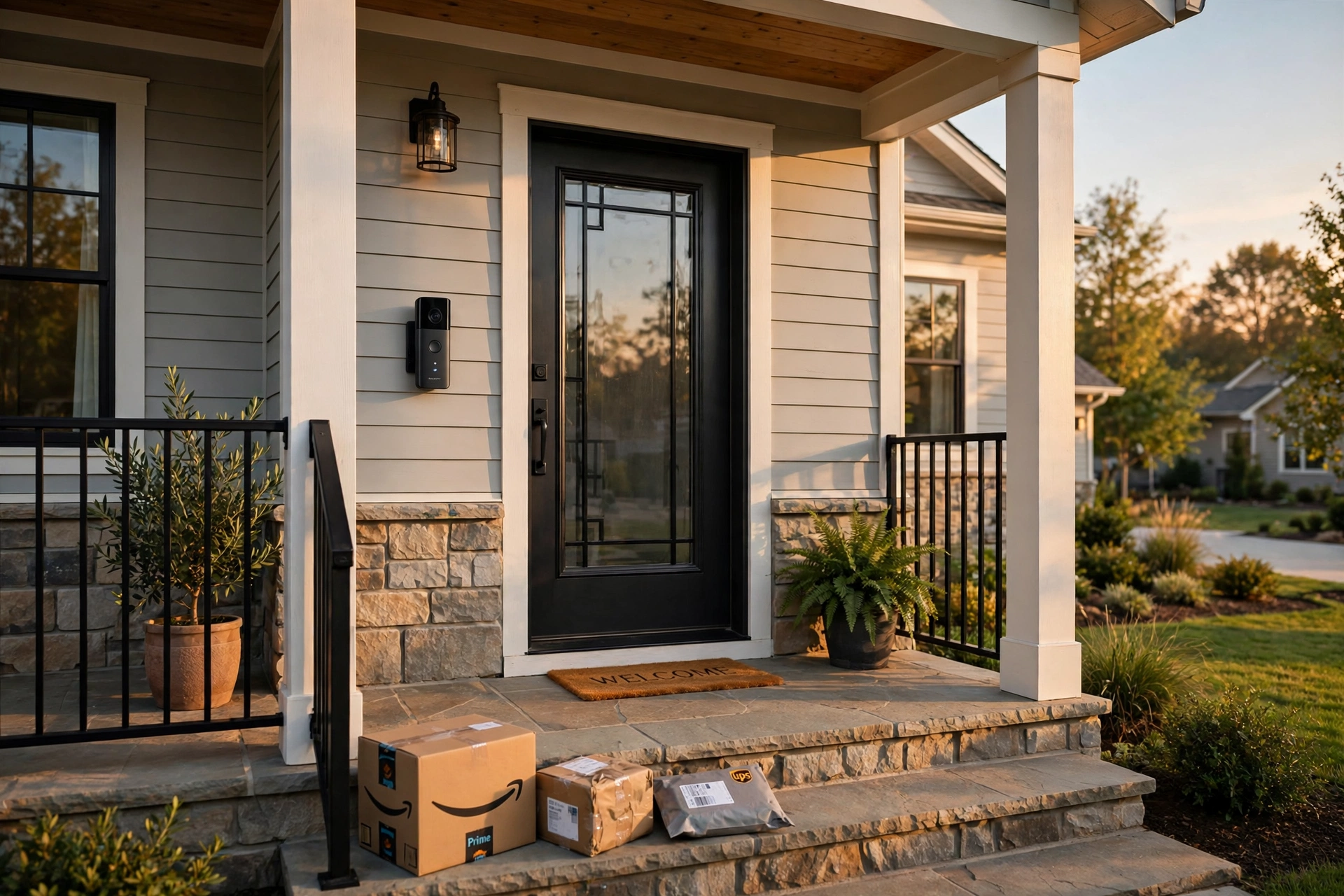
Video doorbell (battery or wired) with package alerts — The foundation pick, already on our gear hub from the porch protection guide: it sees every delivery, sends a package alert, files the police-report clip, and lets you speak to anyone on the step from anywhere. If you buy one thing on this page, it’s this one, in whichever power version your house supports.
→ Click here to check price on Amazon
Peephole camera for renters and apartments — The no-drill answer: it replaces the peephole from inside the door, so the landlord never knows and the deposit never suffers. You get the same motion alerts, recording and two-way talk as a mounted doorbell, and it moves with you when the lease ends. The only real option for doors you don’t own.
→ Click here to check price on Amazon
Solar charger mount for battery doorbells — A small panel that frames the doorbell and trickle-charges it from daylight. On a south or west-facing porch it stretches a two-month battery to most of a year, and it ends the dead-doorbell-because-you-forgot week entirely. Check your doorbell brand’s connector before ordering — they’re model-specific.
→ Click here to check price on Amazon
Plug-in wireless chime — The fix for the house where the camera works but nobody inside hears anything: it plugs into any outlet, pairs with the doorbell, and rings where people actually live instead of relying on phone alerts alone. Also the answer when an old mechanical chime buzzes or won’t ring with a wired camera — bypass it and plug this in.
→ Click here to check price on Amazon
Doorbell transformer and wired chime kit — The unglamorous part that makes wired installs actually work: a 16V/30VA transformer replaces the weak original that came with the house, feeding the camera steady power and ringing a real chime. Half the “my wired doorbell keeps disconnecting” reviews on the internet are this twenty-dollar part, un-replaced.
→ Click here to check price on Amazon
Install notes that save the return
Mount it at 48 inches, and use the wedge. Chest height catches faces instead of foreheads, and most kits include an angled wedge — use it whenever the door sits in an alcove or the approach comes from the side, or your footage is mostly the wall across the porch.
Test your Wi-Fi at the door before you mount anything. The front door is the far edge of most homes’ coverage, through the worst wall in the house. Stand on the step with your phone: if the signal is one bar, the doorbell will struggle no matter whose logo is on it — a mesh node near the front of the house is the real fix.
Turn on package alerts and set the motion zone on day one. Out of the box, most doorbells alert for every passing car. Five minutes drawing the zone to the porch and walkway turns a noise machine into a tool you’ll still have enabled in March.
Leave a Reply