Built & Backyard is reader-supported: we may earn a commission from qualifying purchases made through links on this page, at no extra cost to you.
Louisiana does not really do winter — it does about eight weeks of perfect fire pit weather. The nights drop into the 40s and 50s, the mosquitoes finally clock out, and the backyard that was unusable in August becomes the best room in the house. A fire pit is how you cash that in, and it pairs with wood you have already got stacked and seasoned from our firewood storage and splitting guide. Get the setup right once — the right pit, in the right spot, with seating and safety gear that match — and every cool night from November to March is handled. If your patio also needs heat away from the fire, our patio heater guide covers that half of the yard.
Quick answer
For most Southern backyards, a smokeless wood-burning fire pit in the 19- to 22-inch range is the sweet spot: big enough for real firewood and four to six chairs, small enough to store under a cover between burns. Set it on a level, noncombustible surface at least 10 feet from the house, fences, and anything overhead, keep a spark screen on it while it burns, and never light it on a windy night or under a burn ban. The pit is the purchase — the screen, tools, seating, and cover are what make it a setup instead of a campfire in the yard.
Step 1: Pick the pit — smokeless is worth it in the South
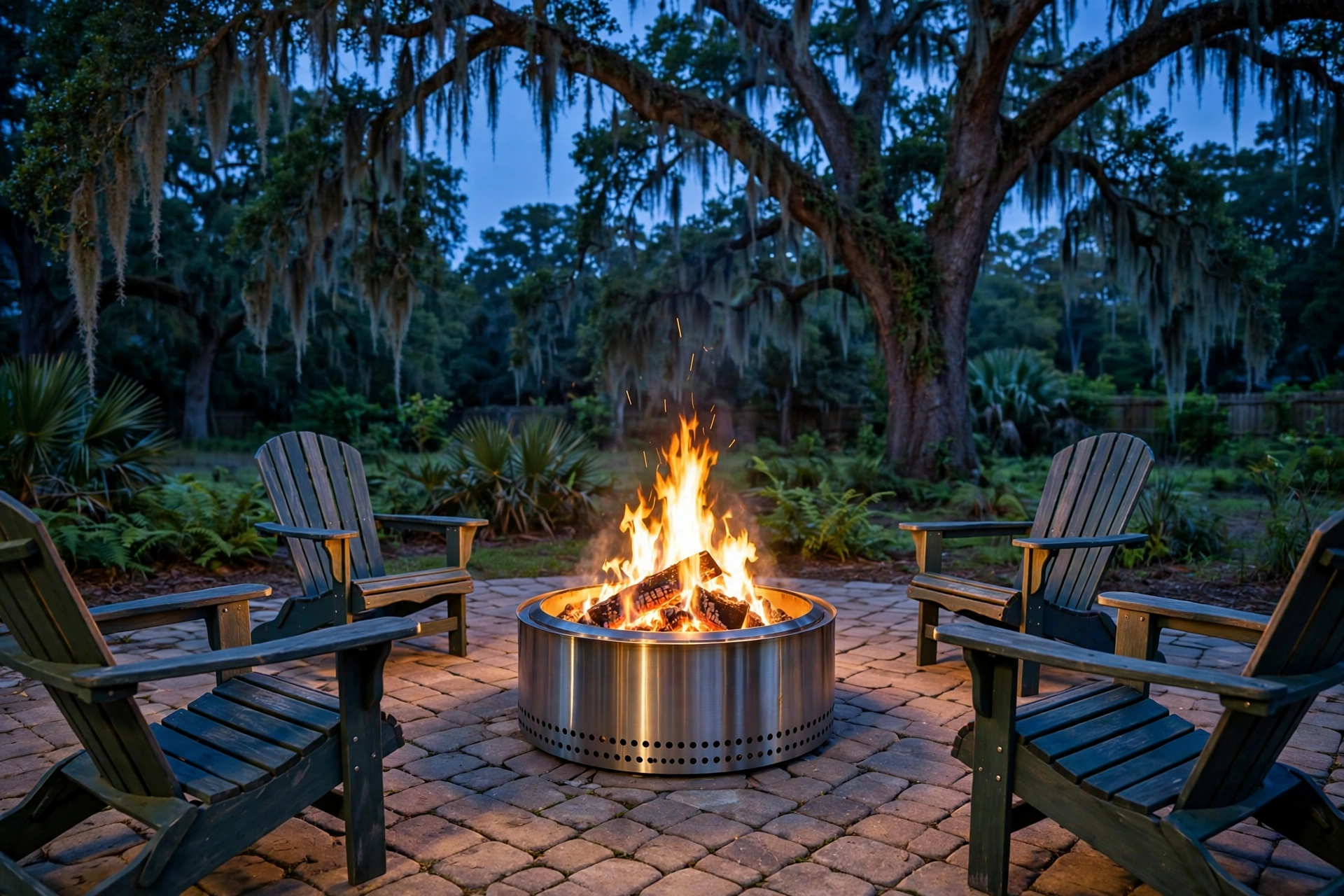
The old steel bowl works, but it smokes like a chimney and sends everybody home smelling like a bonfire. A modern smokeless pit fixes that with a double wall: air feeds in at the base, heats as it rises, and burns off the smoke at the top vents before it reaches your face. You get the wood fire — real logs, real crackle, real heat — without the dodge-the-smoke chair shuffle every time the breeze shifts. Size it honestly: 19 to 22 inches takes standard split firewood and seats a family; go bigger only if you regularly host a crowd, because a bigger pit burns more wood to look right. Stainless steel is the finish to buy in Louisiana humidity — painted steel rusts through in a couple of wet winters.
Smokeless Wood-Burning Fire Pit, Stainless Steel (19–22 inch)
Double-wall airflow that burns the smoke off before it reaches the chairs — a real wood fire without the campfire smell in everybody’s clothes, in stainless that shrugs off Southern humidity.
→ Click here to check price on Amazon
Step 2: Place it safe, then keep the sparks in
Placement decides whether a fire pit is relaxing or a liability. The rules are simple and none of them bend:
- At least 10 feet from the house, fence, shed, and any structure — 15 or more is better if your yard allows it.
- Nothing overhead. No tree limbs, pergola roofs, patio umbrellas, or string lights above the pit. Heat and sparks rise.
- A level, noncombustible base. Pavers, concrete, gravel, or bare packed ground. Never straight on a wood deck, and never on dry grass or leaves.
- Check before you light. No burn bans, no high wind, and no drought-cured yard. A gusty night turns a contained fire into a spark distribution system.
- Water or an extinguisher within reach, every single burn — not “in the garage somewhere.”
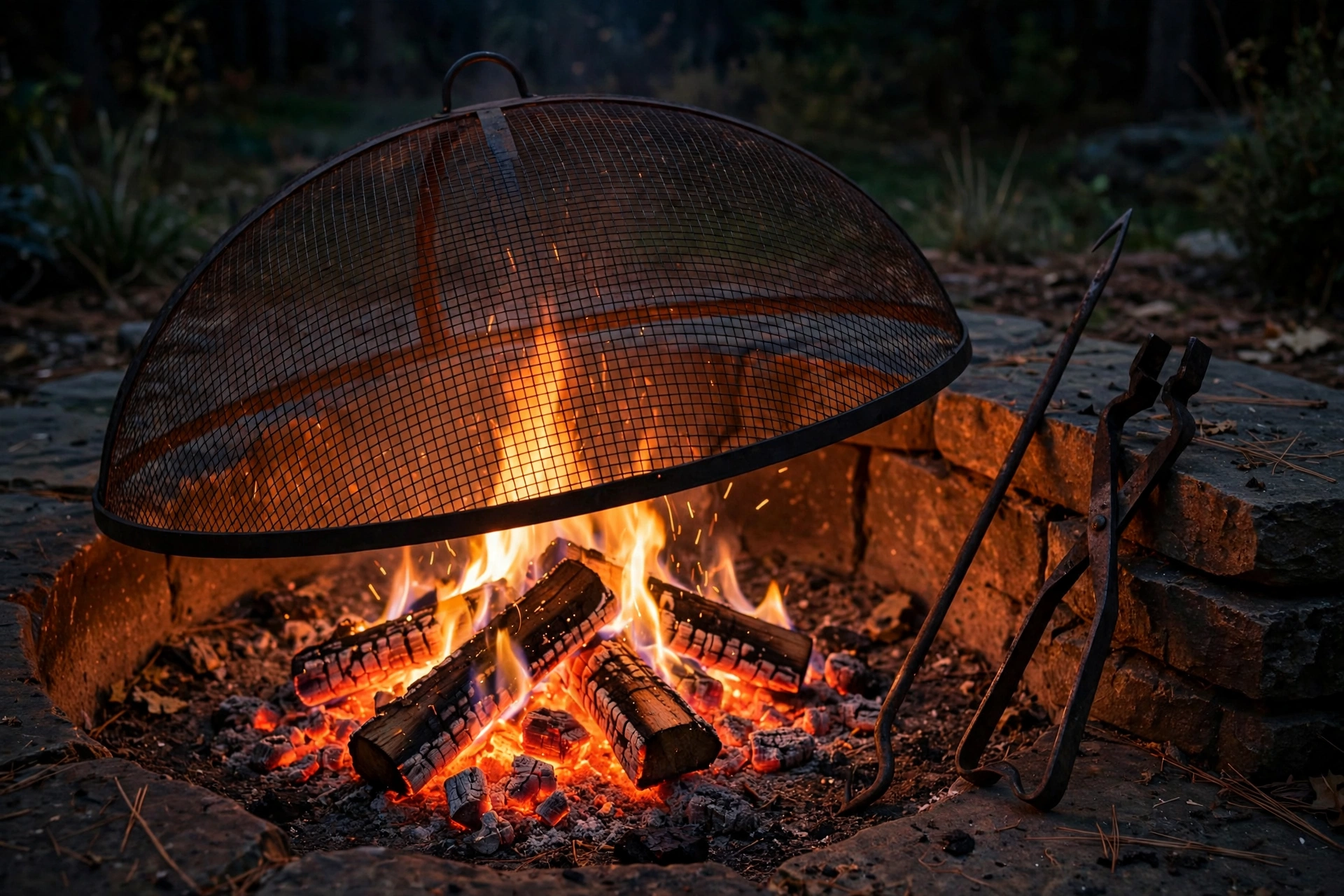
While it burns, a fitted spark screen is the cheapest safety upgrade there is: it keeps popping embers — and Southern hardwoods like oak and pecan pop plenty — inside the pit instead of on the patio, the chairs, and the dog.
Fire Pit Spark Screen, Mesh Dome Cover
A hinged mesh dome sized to the pit that traps popping embers while the fire breathes — the one accessory that should be on the pit every time it is lit.
→ Click here to check price on Amazon
Step 3: Seat it like a room, not a campfire
Fire pit seating fails two ways: chairs too close and wobbling on grass, or chairs so far back nobody feels the heat. Set the front legs roughly 3 to 4 feet from the pit’s edge — close enough for heat and conversation, far enough that knees are not cooking — on the flattest ground you have, and leave a clear walkway behind the chairs so nobody trips over a chair leg carrying drinks in the dark. For the chairs themselves, wide-arm Adirondacks are the Southern default for a reason: the recline points you at the fire, the arms hold a drink, and resin versions survive Louisiana rain, humidity, and hose-downs without the repainting wooden ones demand every other year.
Resin Adirondack Chairs, Set of 2
Weatherproof resin in the classic reclined shape, with wide arms that hold a glass — they live outside all season and hose clean in a minute.
→ Click here to check price on Amazon
Step 4: Tend it with real tools, not a stick
Every fire needs tending — logs shifted, embers raked, a fresh split laid on — and the stick-from-the-yard method ends with a burned hand or a log rolled somewhere it should not be. A proper fire pit tool set gives you a long poker for adjusting from chair distance and heavy log tongs that actually grip a split instead of squeezing it out like a watermelon seed. Look for handles 30 inches or longer, steel rather than aluminum, and a stand or hanging loop so the set lives by the pit instead of migrating to the garage.
Fire Pit Tool Set with Poker & Log Tongs
A long poker and gripping log tongs in heavy steel — tend the fire, place a log exactly where you want it, and keep your hands a full arm’s length plus a handle away from the heat.
→ Click here to check price on Amazon
Step 5: Put it to bed right — ashes, then cover
A fire pit is not done when the last guest goes inside. Let the fire burn down to ash, keep the spark screen on while it cools, and never — ever — dump ashes the same night. Ashes hold live coals for 24 to 48 hours; when you do clean out, shovel into a metal bucket with a lid and set it on concrete, away from the house — the same galvanized ash bucket system from our fireplace and chimney safety guide works just as well out here. Once the pit is fully cold and clean, a fitted waterproof cover keeps Louisiana rain from pooling in the bowl and rusting it from the inside out. A covered pit lights in two minutes next weekend; an uncovered one is a rust project first.
Waterproof Fire Pit Cover, Fitted
A heavy, vented cover sized to the pit that sheds rain instead of pooling it — the difference between a pit that lasts a decade and one that rusts out in three wet winters.
→ Click here to check price on Amazon
Cool nights, handled
Smokeless pit in stainless, ten clear feet on every side, a spark screen on every burn, chairs at conversation distance, real tools, and a cover when it is cold. That is the whole setup — and in Louisiana, where the best backyard weather of the year is just starting, it will earn its space every single weekend. Every pick above — plus the rest of our outdoor gear — lives in one place on our Recommended Gear page.
Leave a Reply