Built & Backyard is reader-supported: we may earn a commission from qualifying purchases made through links on this page, at no extra cost to you.
Water damage is the quiet budget-killer of home ownership. A supply line lets go at 2 AM or while you’re on vacation, and by the time anyone sees it, the water has been running for hours — floors, drywall, cabinets, and a deductible, all from a fitting that cost four dollars. Insurance data puts the average water-damage claim in five figures, and almost all of that damage happens in the gap between the leak starting and somebody noticing. Smart water gear exists to close that gap: sensors that shout the second water touches them, and shutoff valves that close your main automatically before a puddle becomes a flood. Heading into freeze season — when burst pipes do their worst work — this is the protection upgrade that pays off exactly once, enormously. Here’s how the layers fit together, and the pieces worth buying.
Quick answer
For real protection, pair detection with shutoff: put leak sensors at the water heater, the washing machine, and under the kitchen sink, and put a smart shutoff valve on the main line that closes the water automatically when a sensor trips or flow runs abnormally long. Sensors alone only help if you’re home and awake to hear them; a shutoff valve protects the house at 2 AM and on vacation, which is when the expensive leaks happen. If you buy one thing, buy the main-line shutoff valve — it’s the only piece on this page that stops the water by itself.
The three layers that matter
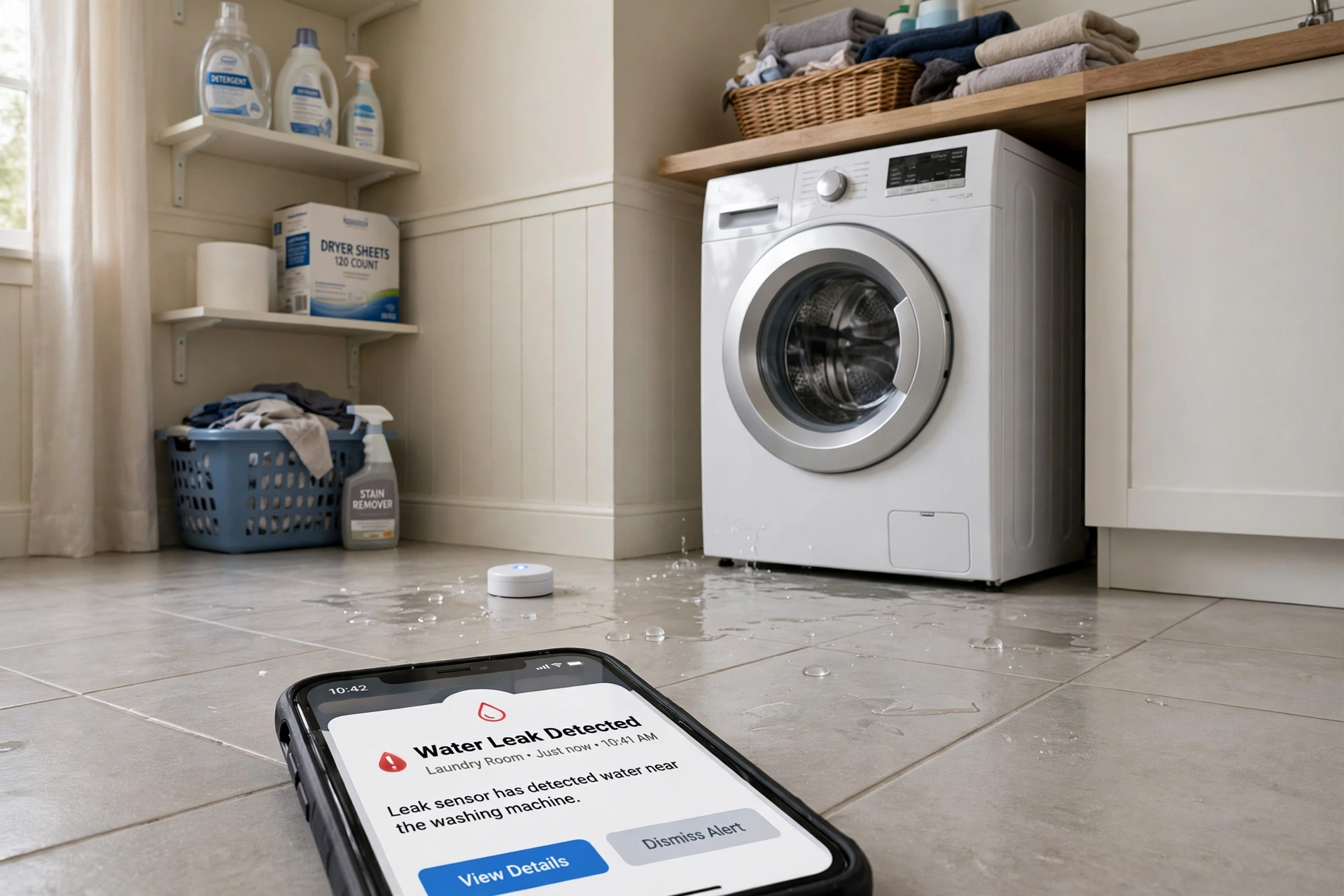
Detection is cheap and instant — but it only notifies. Battery leak sensors sit flat on the floor at the usual suspects and scream (and ping your phone) the moment water bridges their contacts. They cost little, install in seconds, and catch slow leaks early. Their limit is simple: an alarm doesn’t close a valve. If nobody’s home, a sensor just gives you a front-row seat to the flood on your phone.
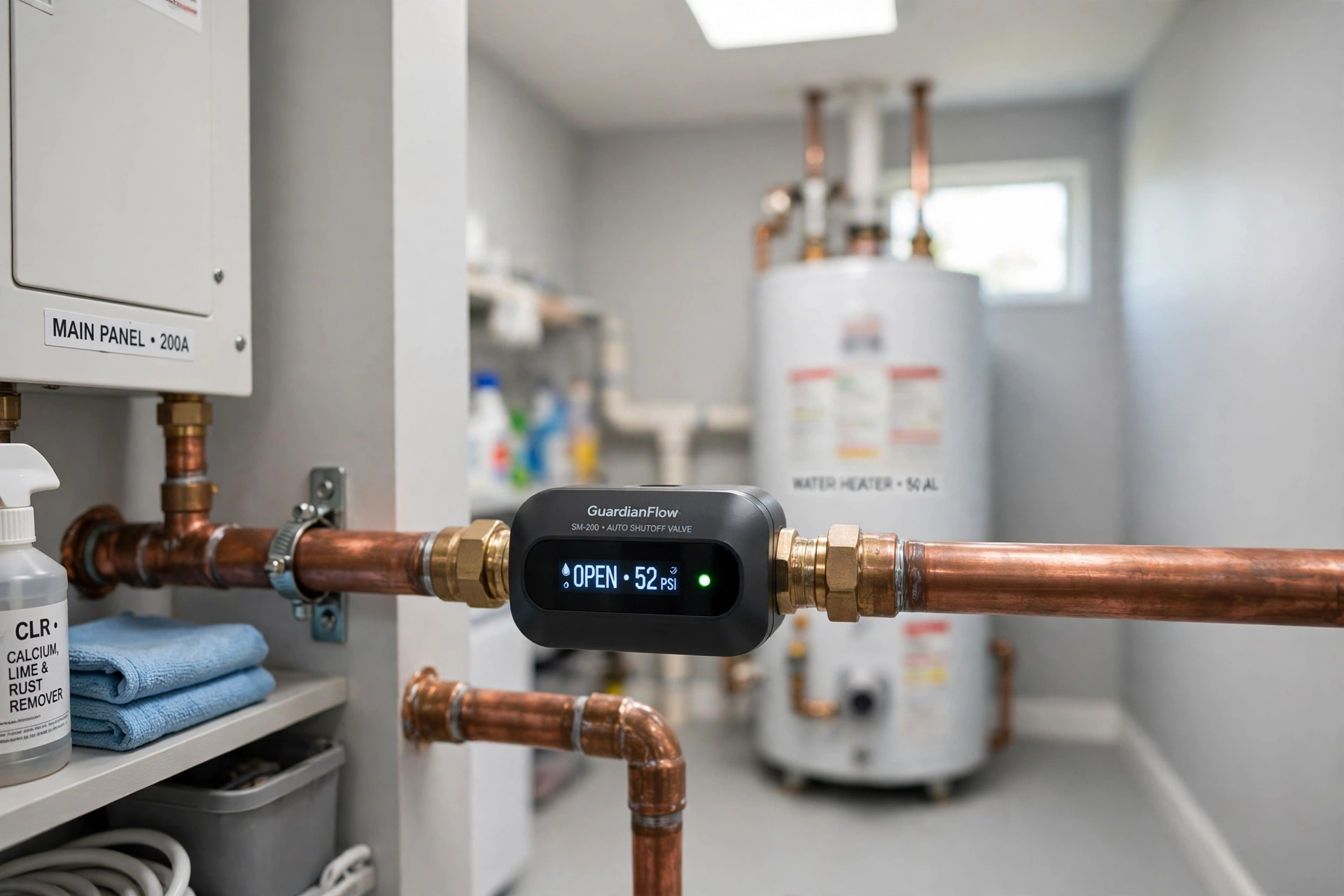
Automatic shutoff is the layer that saves the house. A smart shutoff mounts on your main water line — motorized ball-valve models clamp or plumb in and physically close the line. The better ones also learn your home’s flow pattern and close the valve on their own when flow runs too long or at hours it never should, catching leaks no sensor was sitting next to. This is the piece insurers like enough that some offer a premium discount for having one — worth a call to ask.
The washing machine deserves its own shutoff. Laundry supply hoses are among the most common flood sources in the house, and they fail under full pressure, often in a room nobody checks daily. A dedicated laundry shutoff — a valve box or smart sensor-valve pair at the washer connections — closes those lines specifically, without waiting for the main-line system to figure it out. Cheap insurance for the room that floods most.
The picks
Whole-home smart water shutoff valve (Moen Flo style) — The centerpiece: a motorized valve on the main line that watches flow, pressure and temperature around the clock, runs automatic leak tests, and closes the water itself when something’s wrong — with a phone alert telling you it did. Plumber-installed in most homes, and the one upgrade that turns a burst pipe from a catastrophe into a wet hour.
→ Click here to check price on Amazon
Washing machine smart shutoff kit — A sensor-and-valve pair made for the laundry room: water on the floor or a burst hose closes the washer’s supply lines on the spot. The laundry room is the most common flood origin in the house and the least visited — this is the shutoff that earns its keep quietly for a decade.
→ Click here to check price on Amazon
Leak sensor cable for long runs — A sensing rope instead of a point sensor: run it around a water heater pan, along the back of a cabinet run, or around a basement perimeter, and it detects water anywhere along its length. The right answer for big or odd-shaped risk zones where a single puck sensor covers one lucky spot.
→ Click here to check price on Amazon
Wi-Fi water leak detectors, 3-pack with hub — The detection layer, already on our gear hub from the holiday travel prep guide: battery sensors with a phone alert the moment water touches them — one at the heater, one at the washer, one under the sink. Start here if the shutoff valve has to wait for the next budget round.
→ Click here to check price on Amazon
Water leak alarm detector, 3-pack (battery) — The no-app, no-hub version from our water heater guide: loud local alarms that need nothing but a battery. The right pick for rentals, parents’ houses, and anywhere Wi-Fi is more trouble than the leak would be.
→ Click here to check price on Amazon
Placement notes that decide whether it works
Sensors go where water lands, not where it’s convenient. Flat on the floor at the lowest point beside the appliance, contacts down — behind the water heater, under the sink’s trap, behind the washer, beside the fridge’s ice-maker line. A sensor on a shelf is decor.
Know your main shutoff before the valve arrives. Find the house’s main water shutoff and turn it once, today, while nothing is wrong. Old gate valves seize; if yours won’t budge, that’s a plumber visit worth having before it’s an emergency at midnight.
Test the system the week you install it. Drip water on each sensor, confirm the alert lands on your phone, and watch the valve close. A protection system you’ve never seen work is a hope, not a system.
Leave a Reply