Disclosure: This post contains affiliate links. If you buy through them, Built & Backyard may earn a commission at no extra cost to you.
Quick answer
Small driveway or walks only (under ~40 feet, light snow): a single-stage electric blower, 18–21 inches wide, is enough.
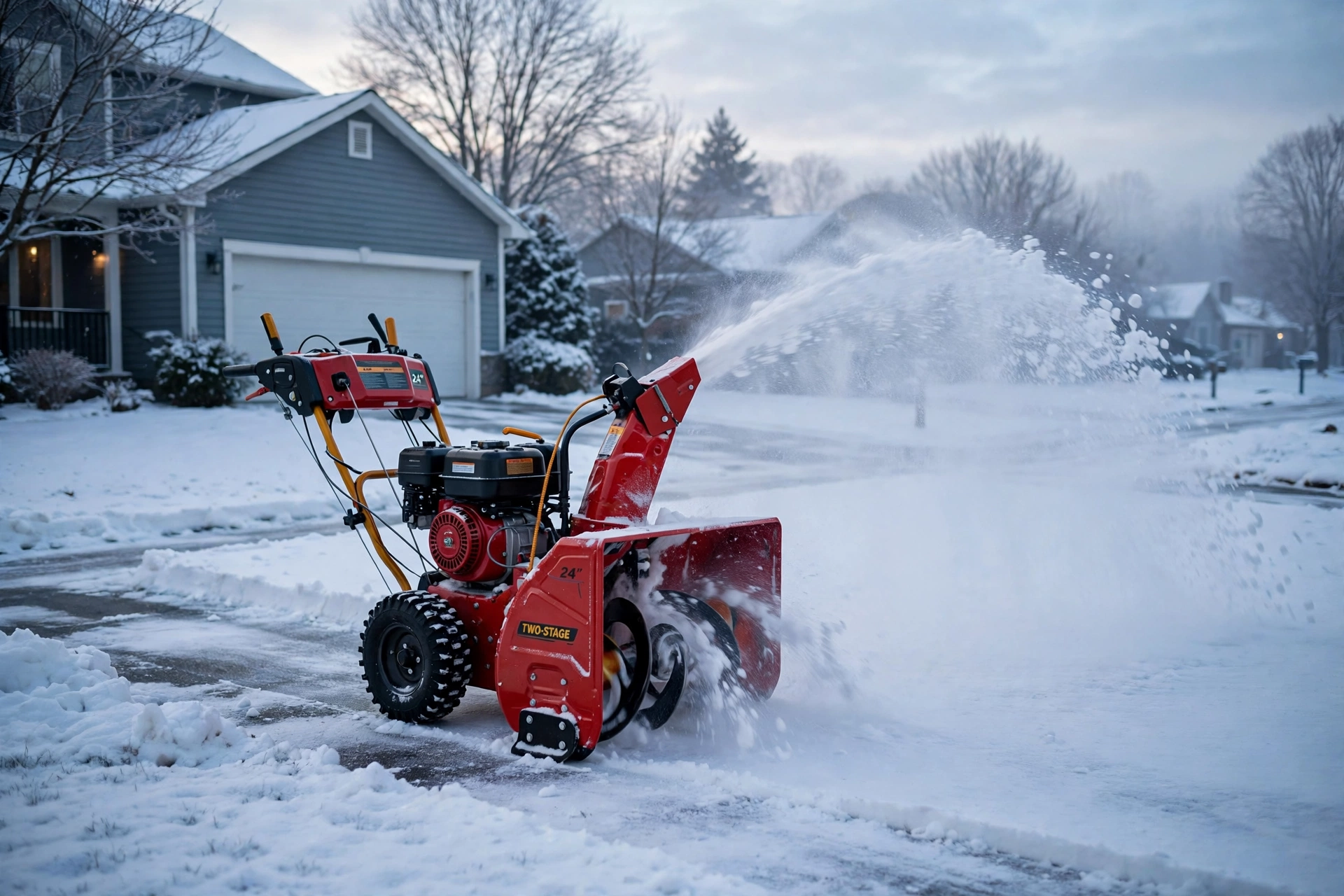
Medium driveway (40–80 feet, or regular snow over 8 inches): step up to a two-stage gas blower, 24–28 inches wide.
Long or steep driveway, heavy wet snow, or a gravel drive: a 28–30 inch two-stage (or three-stage) gas blower — and don’t buy smaller hoping it will cope.
The mistake most people make is buying for an average snowfall. Buy for your worst storm, not your typical one — because the blower only has to fail once, in the storm you actually need it for, to be the wrong purchase.
Step 1: Measure your driveway (the only number that matters first)
Forget horsepower for a minute. Clearing width and driveway length decide the class; everything else refines it.
- Under 40 feet long, mostly flat, paved: single-stage. You’ll clear it in a few passes and store the machine on a shelf or wall hook.
- 40–80 feet, or a two-car width: two-stage, 24–28 inches. A single-stage will do it, but slowly, and it will struggle with the plow pile at the end of the drive.
- Over 80 feet, steep, or unpaved/gravel: two-stage, 28 inches or wider, with adjustable skid shoes so the auger rides above the gravel instead of throwing it.
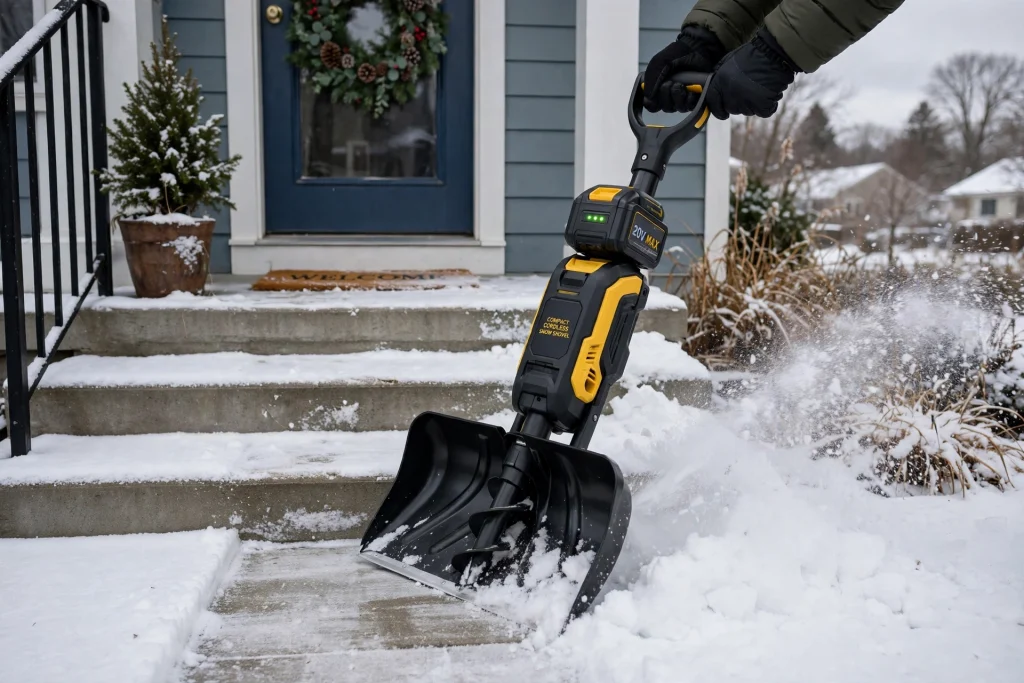
- Sidewalks and steps only: a single-stage electric, or even a battery snow shovel — a big two-stage is overkill and awkward on a walk.
Count passes, not minutes: a 21-inch blower on a 20-foot-wide drive takes about 12 passes; a 28-inch takes about 9. Over a long driveway, that difference is real, especially in wet snow.
Step 2: Single-stage vs. two-stage vs. three-stage
Single-stage: one auger scoops and throws. Light, cheap, easy to store, and fine for snow under about 8 inches. It cannot handle the heavy, icy ridge the plow leaves at the end of your driveway — that’s where most single-stage owners get stuck.
Two-stage: an auger feeds snow into a separate impeller that throws it farther. This is the workhorse class. It handles 8–18 inches, wet snow, and plow piles, and throws far enough to actually clear a wide drive instead of piling snow back onto it.
Three-stage: adds an accelerator that breaks up packed snow before the impeller. Faster on deep, heavy snow, but more expensive and more to maintain. Worth it only for very long drives or regions that regularly get 12-plus inches at a time.
Step 3: Electric vs. gas
Battery electric is now genuinely good for small and medium jobs: quiet, no gas or oil, starts with a button, and stores anywhere. The limit is runtime and deep snow — a battery single-stage will not chew through a foot of wet snow the way a gas two-stage will.
Gas still wins for big drives and heavy snow: more power, no battery to run down mid-driveway, and a wider range of sizes. The trade-off is maintenance — fuel stabilizer, oil changes, and a pull start on a cold morning.
Rule of thumb: if your driveway fits the single-stage size above, electric is the easy choice. If it fits the two-stage size, gas is still the safer bet unless you already own batteries on a compatible outdoor-power platform.
Step 4: The snow you actually get
- Light, dry, powdery snow: almost anything works. Don’t overspend.
- Wet, heavy snow (the kind that breaks shovels): two-stage, and favor a wider intake height — a tall intake swallows a deep drift in one pass instead of skimming it.
- The plow pile at the end of the drive: this is the real test. It’s dense, icy, and often a foot tall. Single-stage machines bounce off it; two-stage machines chew through it. If your street gets plowed, factor this in even if your driveway is small.
- Gravel drives: adjustable skid shoes are non-negotiable. Without them, a blower will pick up gravel and throw it — at your windows, your car, and your neighbor’s car.
Picks by driveway size
Small driveway / walks: battery single-stage, 18–21 inches
Light enough to carry up steps, stores on a shelf, and clears light snow fast. Pair it with a good ice melt for the steps — the blower handles snow, not ice.
Click here to check price on Amazon
Medium driveway: gas two-stage, 24–28 inches
The sweet spot for most suburban drives. Wide enough to finish in reasonable passes, strong enough for wet snow and plow piles, and the class with the most options.
Click here to check price on Amazon
Long / steep / heavy-snow driveway: gas two-stage or three-stage, 28–30 inches
Buy the width once. A 30-inch machine on a long drive saves a pass on every row, and in a big storm that is the difference between finishing and quitting halfway.
Click here to check price on Amazon
Steps, decks, and tight spots: battery snow shovel
Not a blower — a powered shovel for the places a blower can’t reach. Cheap, light, and the tool that keeps you from hand-shoveling the porch after you’ve already cleared the drive.
Click here to check price on Amazon
Before you buy: 4 things people forget
- Storage. A 28-inch two-stage is garage-floor real estate. Measure the spot before ordering — and if your garage is unheated, see our guide on how to insulate a garage and what size heater a 2-car garage needs before you spend a winter working in it.
- Fuel. Gas machines bought in fall should get fuel stabilizer in the first tank. Old gas is the number-one reason a blower won’t start in January.
- The first storm is the deadline, not Black Friday. Snow blowers sell out before the first big storm, not after it. If your area’s first snow is typically in November, buy in October — this article’s timing is not an accident.
- Seal the garage door gaps before winter, too. Snow melt and wind find every gap; our weatherstripping guide covers the fixes that cost less than a tank of gas.
The 30-second decision
Small, flat, paved, light snow → single-stage electric, 18–21 inches.
Medium drive or regular 8-inch-plus snow → two-stage gas, 24–28 inches.
Long, steep, gravel, or heavy wet snow → two-stage or three-stage gas, 28–30 inches, with adjustable skid shoes.
Buy for your worst storm, store it where you can actually reach it, and put stabilizer in the gas. Your future self, standing in a driveway at 6 a.m. in a snowstorm, will be grateful.
Leave a Reply