Disclosure: This post contains affiliate links. If you buy through them, Built & Backyard may earn a commission at no extra cost to you.
Quick answer
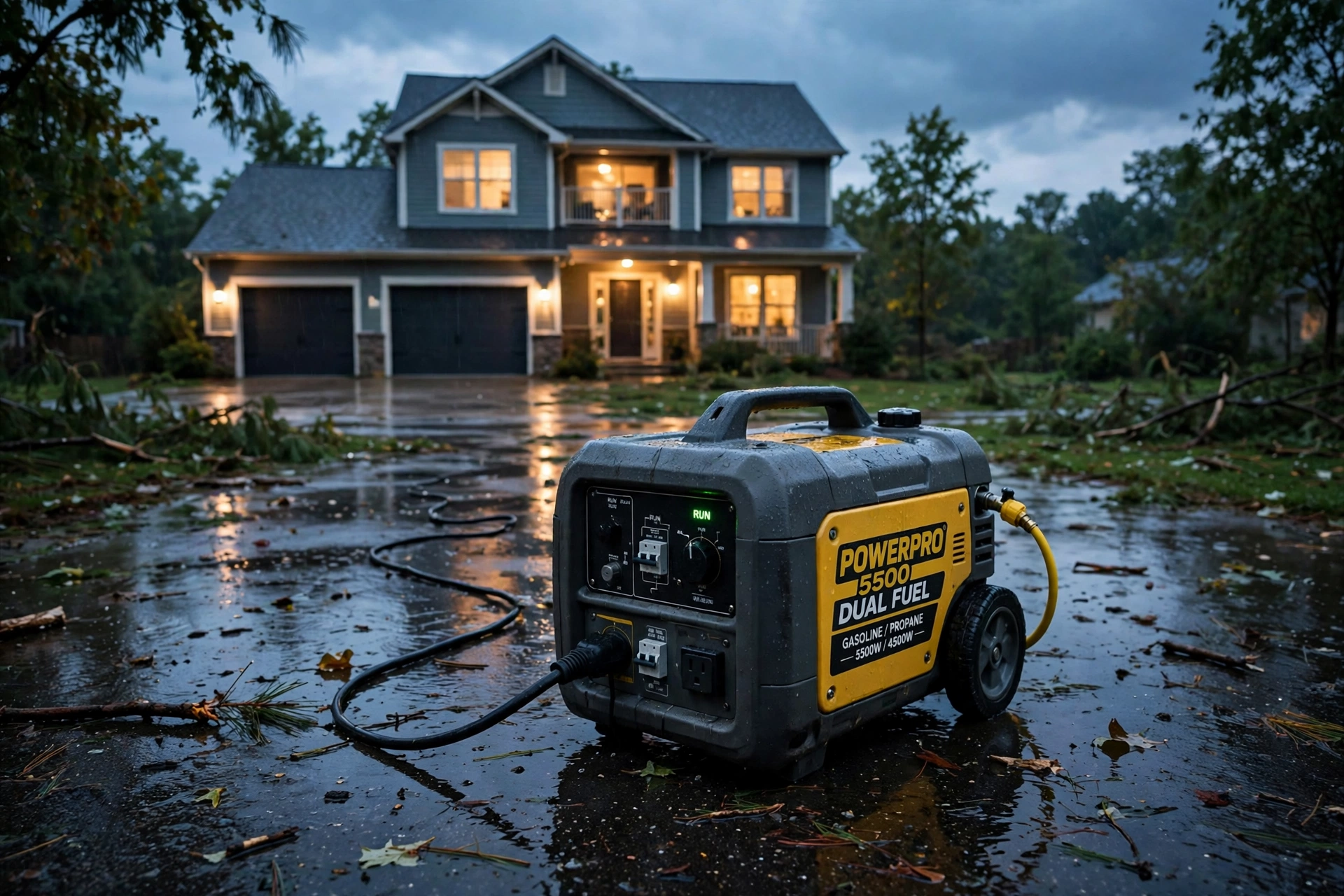
Keeping a fridge cold, phones charged, and a few lights on: a quiet inverter generator around 2,200 watts is enough.
Running most of a home’s essentials — fridge, furnace blower, sump pump, well pump, lights, TV: a 5,500–7,500 watt portable.
Central air, an electric range, or “I don’t want to think about it”: 10,000+ watts in a portable, or a standby whole-house unit.
The mistake most people make is shopping by the big number on the box. That number is usually the starting (surge) wattage. What decides whether your generator actually carries your house is running watts — and whether it can survive the surge when your fridge or pump kicks on.
Step 1: Running watts vs. starting watts
Everything with a motor needs a burst of extra power to start. A fridge might cruise at 150 watts but demand 1,200 for a second when the compressor kicks in. Your generator has to handle both numbers.
Typical draws (check your appliance labels for exact figures):
- Refrigerator: ~150 running / ~1,200 starting
- Sump pump (1/2 hp): ~800 running / ~1,300 starting
- Well pump (1/2 hp): ~1,000 running / ~2,000 starting
- Furnace blower (gas furnace): ~300–800 running / up to 1,600 starting
- Window AC (10,000 BTU): ~1,200 running / ~1,800 starting
- Microwave: ~1,000 running (no real surge)
- LED lights, TV, phone/laptop chargers: ~20–300 total
- Electric space heater: 1,500 running — a generator-eater; plan around it, not for it
Step 2: The 2-minute sizing worksheet
- List the things you refuse to lose in an outage. For most people: fridge, furnace blower or a few fans, sump/well pump, lights, phones, internet router.
- Add up the running watts of everything that runs at the same time.
- Find the single biggest starting number on the list and add the difference (starting minus running) on top.
- Add 20% headroom. A generator running flat-out at 100% is loud, thirsty, and short-lived — 75–80% load is the sweet spot.
Worked example: fridge (150) + furnace blower (500) + sump pump (800) + lights/router/TV (250) = 1,700 running watts. Biggest surge: the sump pump needs 500 extra to start. Total ≈ 2,200, plus headroom ≈ 2,750. That’s a mid-size inverter or small portable — not the 10,000-watt monster the salesperson points at.
Skip the worksheet reality check and you’ll buy twice: once too small, once too big.
Step 3: Inverter vs. conventional portable
Inverter generators produce cleaner power (safe for laptops, phones, and modern furnace control boards), run much quieter, and sip fuel because the engine throttles down at light loads. They cost more per watt and top out at lower wattages, though large 7,000–9,000 watt inverters now exist.
Conventional portables give you the most watts per dollar and cover the 5,000–12,000 watt range most homes land in. The trade-offs: louder, heavier, hungrier, and the power is rougher — fine for motors and lights, less ideal for sensitive electronics.
Dual-fuel models (gasoline/propane) are worth a hard look: propane stores forever without going stale, so the generator that’s sat in your garage for two years will actually start on it.
Step 4: The things nobody thinks about until the power’s out
- Carbon monoxide kills. Run a generator outside, at least 20 feet from the house, exhaust pointed away from windows. Never in the garage — not even with the door open.
- Fuel math: a mid-size portable burns roughly 0.5–0.75 gallons per hour at half load. A 3-day outage is 35–50 gallons. Store what you reasonably can, safely, and rotate it.
- How will you connect it? Extension cords through a window are the starter method. A transfer switch or interlock kit (installed by an electrician) is the grown-up method — it powers hardwired things like your furnace and well pump safely and legally.
- Cold house math: if the outage is in winter, keeping heat in matters as much as making power. Our weatherstripping guide and garage insulation guide are the cheap half of outage prep.
Picks by outage plan
Just the essentials, quiet: inverter generator, ~2,200 watts
Fridge, phones, lights, router, a fan — through the night without keeping the neighbors (or you) awake. Also the one you’ll actually take camping, so it earns its keep all year.
→ Click here to check price on Amazon
Most of the house: dual-fuel portable, 5,500–7,500 watts
The sweet spot for a typical home: fridge, furnace blower, sump pump, lights, TV, and a microwave in rotation. Dual-fuel means it starts on propane even after sitting, and electric start means anyone in the house can fire it up.
→ Click here to check price on Amazon
Whole-house ambitions: portable, 10,000+ watts, transfer-switch ready
Central air, well pump, electric water heater territory. Look for a 240V outlet and an electric start; at this size, pull-starting in the dark is nobody’s plan. Pair it with a transfer switch install and a storm stops being an event.
→ Click here to check price on Amazon
Apartment, condo, or CPAP-and-phones backup: battery power station
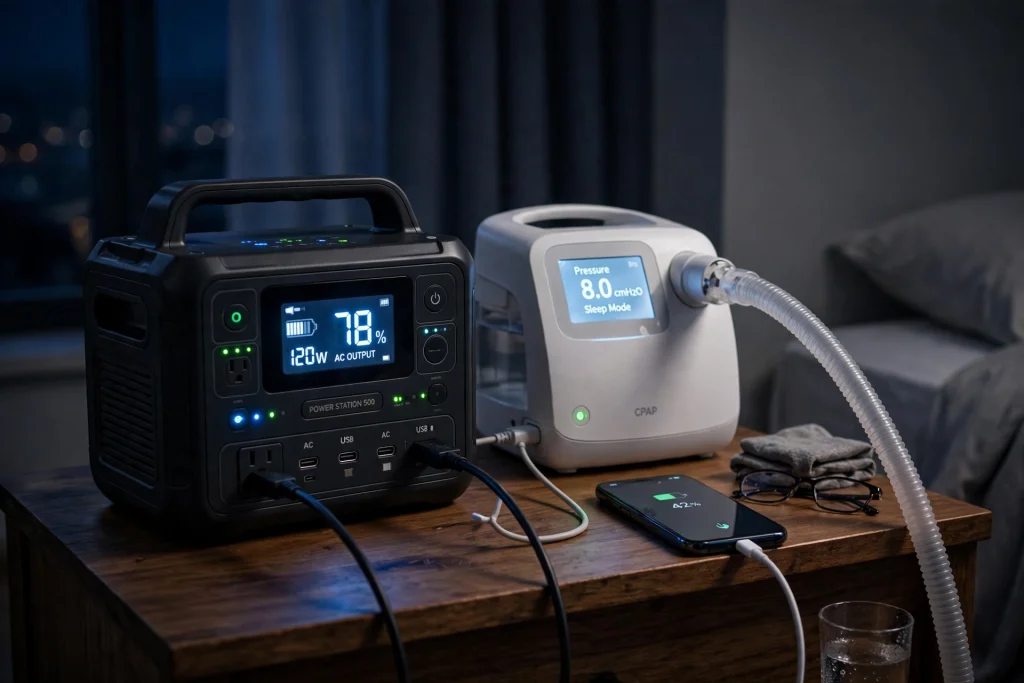
No fuel, no fumes, safe to run indoors next to the bed. It won’t run your furnace, but it will quietly carry a CPAP all night, keep phones and a laptop alive for days, and run a fridge for stretches between charges. The right answer when a gas engine isn’t allowed or isn’t practical.
→ Click here to check price on Amazon
Before you buy: 4 things people forget
- Buy before storm season, not during it. Generators sell out the week a storm is forecast and restock after. Ice storms and hurricane season don’t care about shipping times.
- Run it once when it arrives. Ten minutes under load in your driveway on a calm Saturday beats discovering a dead unit at 2 a.m. in the dark.
- Oil is the warranty. Small engines ship dry. The included bottle goes in before the first start — skipping it is the fastest way to own a very expensive paperweight.
- A generator is not a space-heating plan. If your outage plan leans on electric space heaters, size up a class or rethink: our guide to what size heater a 2-car garage needs shows why resistive heat eats watts alive.
The 30-second decision
Fridge + phones + lights, quietly → inverter, ~2,200 watts.
Fridge + furnace blower + pump + lights → portable, 5,500–7,500 watts (dual-fuel if you can).
Central air or everything, no compromises → 10,000+ watt portable or a standby unit.
No gas allowed → battery power station, sized up.
Count your watts honestly, buy for the outage you actually fear, and test it on a sunny day. Future you, warm and lit during the storm, says thanks.
Leave a Reply