Disclosure: This post contains affiliate links. If you buy through them, Built & Backyard may earn a commission at no extra cost to you.
Quick answer
In the South, the enemy isn’t just heat — it’s humidity. The tech that actually helps, in order of payoff:
- A dehumidifier (or a thermostat that controls humidity) — dry air at 77° feels cooler than damp air at 74°, and it costs less to make.
- A smart thermostat — schedules, geofencing, and humidity control stop you from cooling an empty house all day.
- Air movement — smart ceiling fans and a solar attic fan cut how hard your AC works.
- Shade you control — smart blinds on west-facing glass kill the afternoon heat load before it gets in.
- A mini-split for the garage or bonus room — cool the space you use without freezing the whole house.
Everything below is picked for Gulf South conditions: months of 90°+ days, dew points in the 70s, and air you can wear.
Why southern houses fight a different fight
Up north, cooling is about temperature. Down here, your AC is really a dehumidifier that also cools — and on mild-but-muggy days it can hit the set temperature and shut off while the house still feels like a swamp. That’s when you get the clammy feeling, musty smells, and mold in the closets.
The numbers that matter:
- Indoor humidity goal: 45–55%. Above 60%, mold and dust mites throw a party. Below 40% feels dry and can irritate sinuses.
- Dew point over 70° = oppressive, no matter what the thermometer says. That’s most of a Louisiana, Texas, or Gulf Coast summer.
- Every degree you raise the thermostat saves roughly 3% on cooling costs — and with southern cooling seasons running 6+ months, small tech wins stack up.
The gadgets below work because they attack humidity, timing, and heat load — not just the temperature number.
The core four
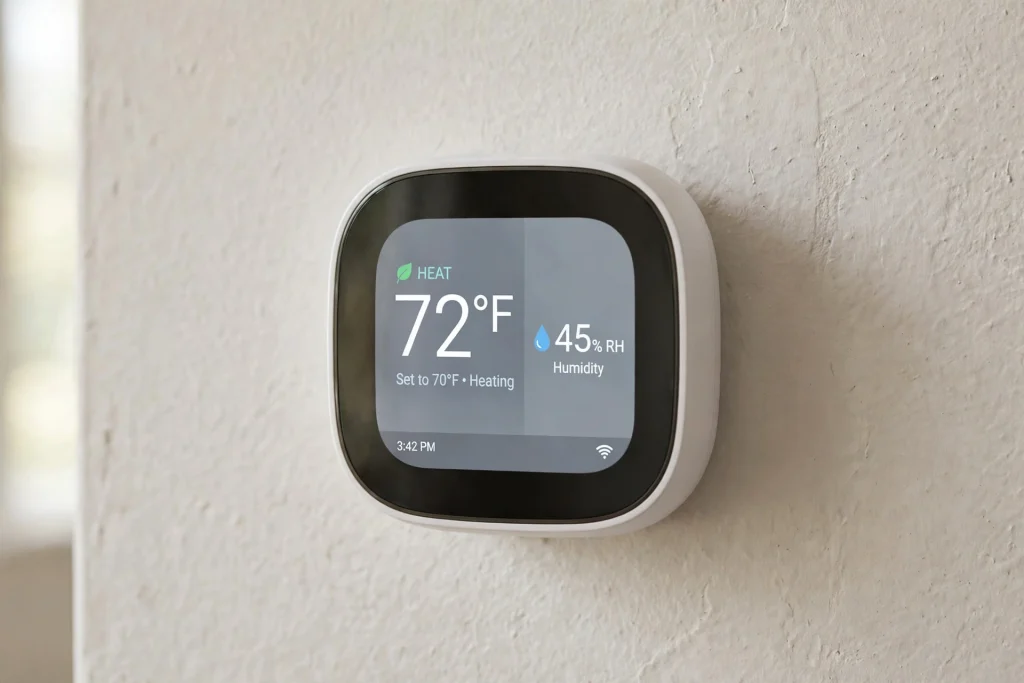
1. Smart thermostat with humidity control
The single best upgrade for most southern homes. Look for:
- A dehumidify mode that overcools slightly or slows the fan to wring more moisture out — this is the feature that matters most down here, and the cheapest models often skip it.
- A remote room sensor for the bedroom or the hot end of the house, so the thermostat stops lying about the temperature where you actually sleep.
- Geofencing and schedules, so you’re not paying to refrigerate an empty house from 8 to 5.
- Filter and humidity alerts — a clogged filter in August is an AC repair bill waiting to happen.
Click here to check price on Amazon
2. A real dehumidifier (sized right)
If your house feels clammy even when it’s cool, this is the fix your AC can’t give you.
- 30-pint: one room or a small apartment.
- 50-pint with a built-in pump: the southern default — covers a living area or whole small home, and the pump pushes water up into a sink or out a window so you’re not emptying a bucket twice a day. No pump and no floor drain nearby? You’ll stop using it. Buy the pump.
- Whole-house dehumidifiers (installed in the ductwork) are the premium route — worth it if you’re already doing HVAC work, overkill as a first step.
Keep the door closed on the space it’s drying, and watch indoor humidity drop into the low 50s. Your AC runs less, and 77° suddenly feels fine.
Click here to check price on Amazon
3. Smart ceiling fans (and running them right)
Fans don’t cool rooms — they cool people, with wind chill on skin. That one fact changes how you use them:
- Counterclockwise in summer, pushing air down. A good fan lets you raise the thermostat 3–4° and feel the same.
- Smart controls matter because fans only save money when they run while you’re in the room — scheduling and app control mean the porch and bedroom fans aren’t spinning all day in empty rooms.
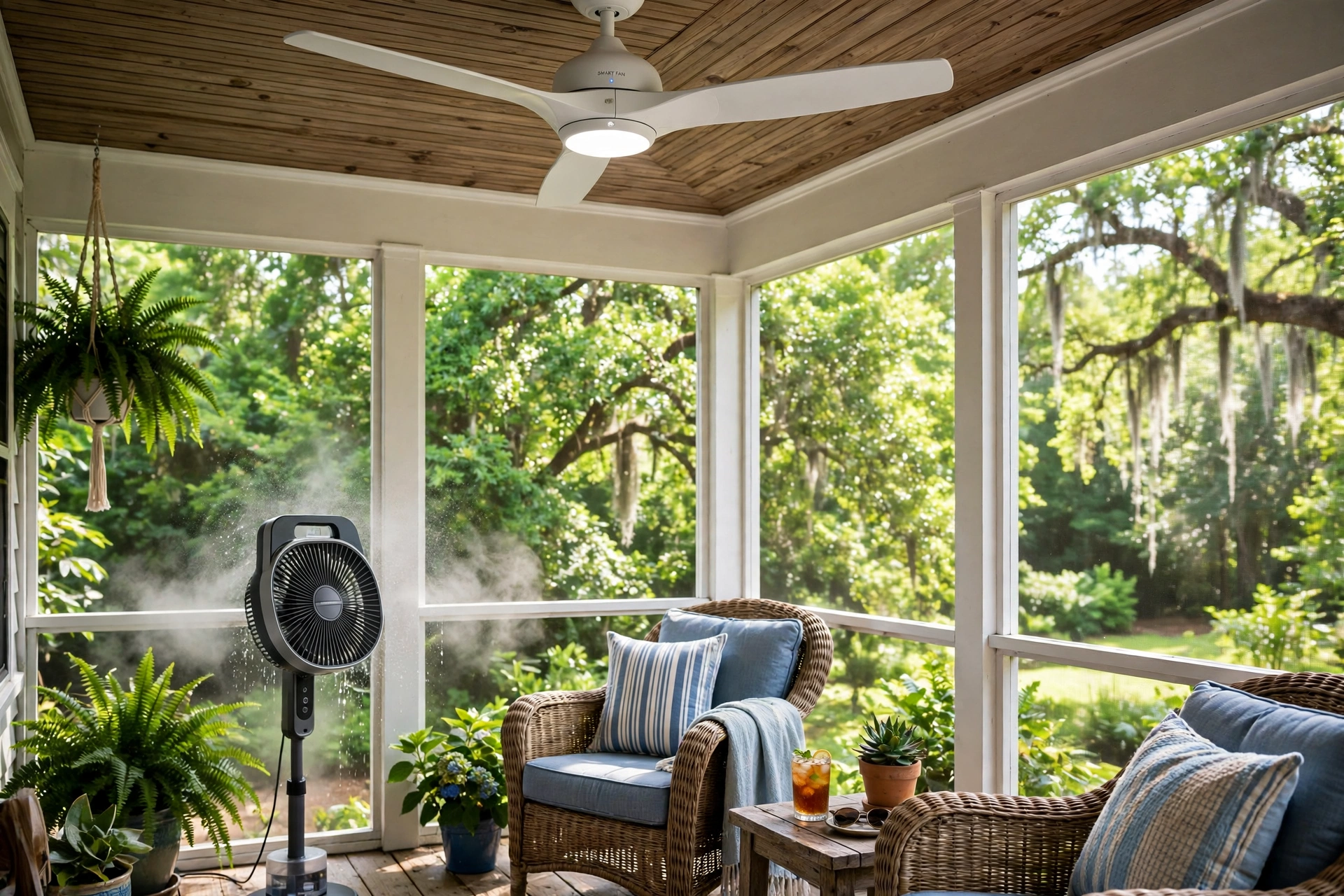
- Big rooms and porches want big blades: 52″+ indoors, 60″+ or damp/wet-rated models outside. A porch fan in the South needs a wet rating, not just damp — it will get rained on sideways eventually.
- Pair with our garage insulation guide logic: moving air over a well-sealed space beats brute-force cooling every time.
Click here to check price on Amazon
4. Solar attic fan
Your attic on a July afternoon can hit 140–150°, and that heat radiates down through the ceiling all evening — long after the sun’s gone, your AC is still fighting the attic. A solar attic fan vents that heat without adding a dime to the power bill (it runs hardest exactly when the sun is beating down, which is the whole point).
- One fan typically covers up to ~1,200 sq ft of attic; big roofs may want two.
- It also pulls moisture out of the attic in winter and shoulder seasons — a quiet mold-prevention bonus in humid climates.
- No wiring to run if you go solar, which keeps it a genuine weekend DIY for most roofs. (Comfortable on a roof? This is a half-day job. Not comfortable? It’s a cheap handyman call.)
Click here to check price on Amazon
Cool the spaces your central air gives up on
5. Ductless mini-split for the garage, shop, or bonus room
The room over the garage, the workshop, the sunroom — central air was never going to win there. A 12,000 BTU ductless mini-split is the southern answer: efficient, quiet, cools and dehumidifies one zone, and most are heat pumps, so it takes the chill off in January too.
- Size it like any AC: roughly 400–450 sq ft per 12,000 BTU in a sunny southern room; insulate first or you’re cooling the outdoors. Our weatherstripping guide is the cheap first step.
- DIY-friendly kits with pre-charged lines exist and are popular for garages; anything else is a pro install, and that’s fine — it still usually lands cheaper than extending ductwork.
- Garage gyms and workshops become usable in August. That alone sells it for a lot of southern households.
Click here to check price on Amazon
6. Outdoor misting fan (with honest limits)
Misting works by evaporative cooling — great in Arizona, limited in Louisiana humidity. Honest take: on a 95° day with a 74° dew point, a mister won’t drop you 20°. But a misting fan in the shade of a porch still moves air and takes the edge off enough to keep a patio usable, especially late afternoon when the dew point starts falling. Set expectations right and it’s a good buy; expect desert performance and you’ll be disappointed.
- Fan-first models (misting ring on a pedestal or mounted fan) beat mist-only lines in humid climates.
- Use a filter if your water is hard, or the nozzles clog with scale by midsummer.
- It pairs perfectly with the patio setup in our outdoor TV guide — game day in September stops being a sweat decision.
Click here to check price on Amazon
Shade and sensors: the quiet wins
7. Smart blinds for west-facing windows
The afternoon sun through west glass is the single biggest heat load most houses have — and the cheapest cooling is stopping heat before it’s inside. Motorized blinds or retrofit blind drivers on a schedule (“close at 2 p.m., open at sunset”) do it automatically, every day, whether you remember or not. Solar shades that block UV while keeping the view are the patio-door version of the same trick.
Click here to check price on Amazon
8. Wi-Fi temperature & humidity sensors
You can’t fix what you don’t measure. A couple of inexpensive Wi-Fi hygrometers — one in the living area, one in the problem room or attic — tell you whether your humidity is actually in the 45–55% zone, and alert you when it isn’t. Bonus southern use: put one near the AC drain line and water heater. Slow leaks and clogged condensate drains are how southern homes grow mold colonies, and a sensor that pings your phone at 70% humidity catches it in days instead of months.
Click here to check price on Amazon
Two southern-specific warnings
- Storm season: all this tech is only as good as your power. A smart thermostat and router on a small battery backup ride out the flickers without losing settings, and when a real outage hits, our generator sizing guide covers what it takes to keep a window unit or portable AC — and the fridge — alive until the lights come back.
- Skip the gimmicks: “energy saver” plug-in boxes that promise to halve your bill, and personal neck fans as a home-cooling strategy, don’t move the needle. Humidity control, shade, air movement, and insulation do. Every pick above works on one of those four levers.
The bottom line
Start with measurement (sensors), fix the humidity (dehumidifier + a thermostat that controls it), then add air movement and shade. Most southern homes feel dramatically better for the price of the first two picks alone — and the mini-split can wait until the garage gym guilt kicks in.
More field-tested picks live on our Recommended Gear page.
Follow along: every guide we publish goes up on the Built & Backyard Facebook page — follow us there so you don’t miss the next one.
Leave a Reply