Built & Backyard is reader-supported: we may earn a commission from qualifying purchases made through links on this page, at no extra cost to you.
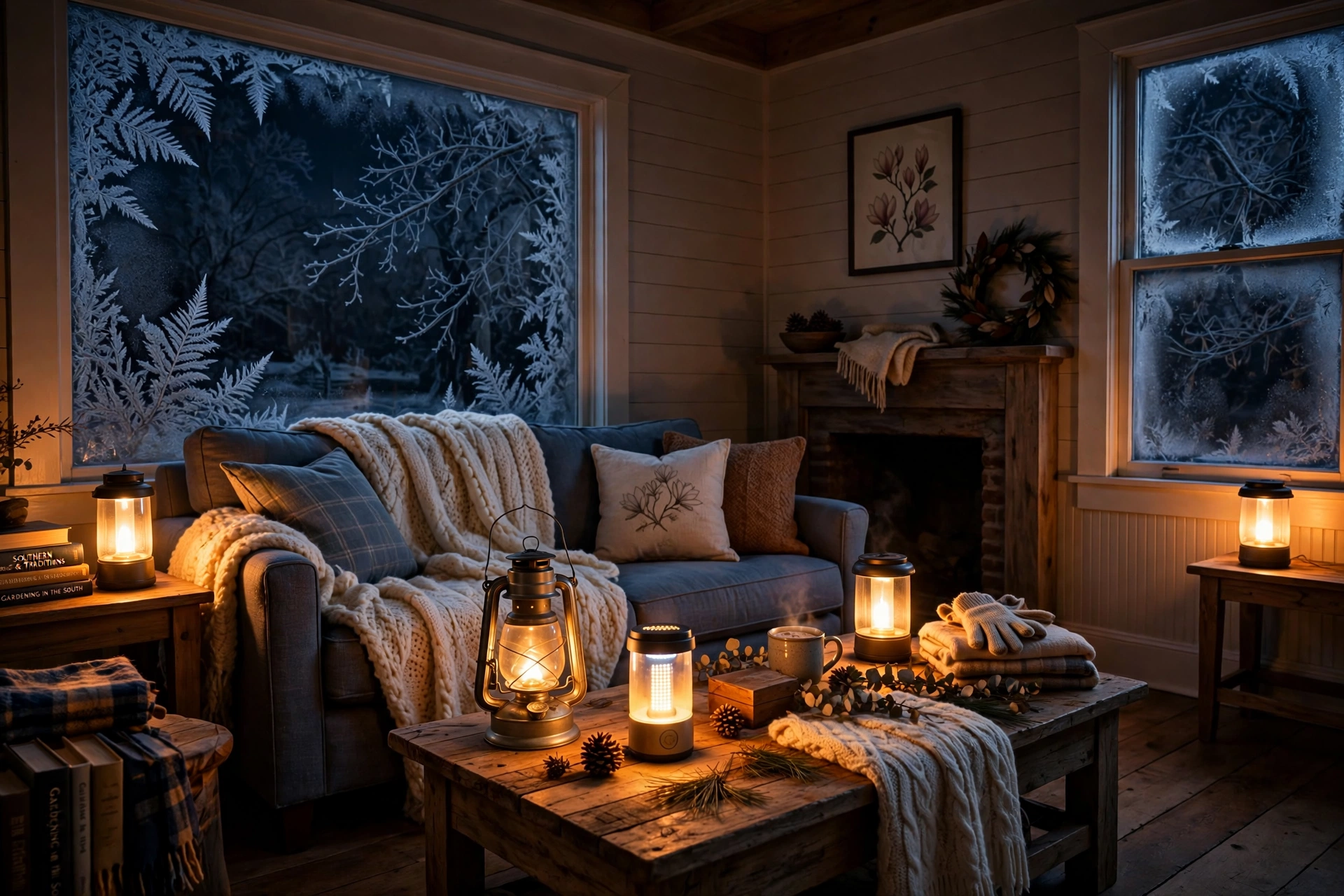
A Southern winter outage rarely arrives as a blizzard. It arrives as an ice-loaded pine limb on a line at 9 PM, and by midnight the house is dark, cooling, and quieter than it has ever been. The gear that matters in that night is not exotic — it is light you can carry, heat that cannot poison you, food rules you already know, and information that does not depend on a cell tower. Our generator sizing guide covers the houses running real backup power; this guide covers everybody, including the hours before a generator starts and the homes that do not have one.
Quick answer
Stage rechargeable lanterns in the rooms you actually move through, keep one weather radio with hand-crank backup, never heat with a grill, oven, or unvented fuel burner indoors, and treat the fridge as a 4-hour clock and the freezer as a 48-hour one if the doors stay shut. A small power station for phones and a CPAP is the highest-value electric backup most houses can buy.
Step 1: Light first — lanterns, not candles
The first problem of an outage is not cold, it is dark: stairs, a toddler, a breaker panel in the garage. Rechargeable LED lanterns beat candles on every count that matters — no open flame in a house already stressed, light that lasts the whole outage on one charge, and a lantern a kid can carry safely. Stage one in the kitchen, one in the hall, one by the breaker panel, and recharge them the day the forecast turns, not the night the lights do.
Rechargeable LED Lanterns (multi-pack)
USB-rechargeable lanterns with enough runtime for a multi-night outage — one staged per room, no batteries to hunt for in the dark.
→ Click here to check price on Amazon
Rechargeable Headlamps (2-pack)
Hands-free light for the breaker panel, the generator start, and every two-handed job an outage invents — the flashlight you do not have to hold in your teeth.
→ Click here to check price on Amazon
Step 2: Information that does not need a tower
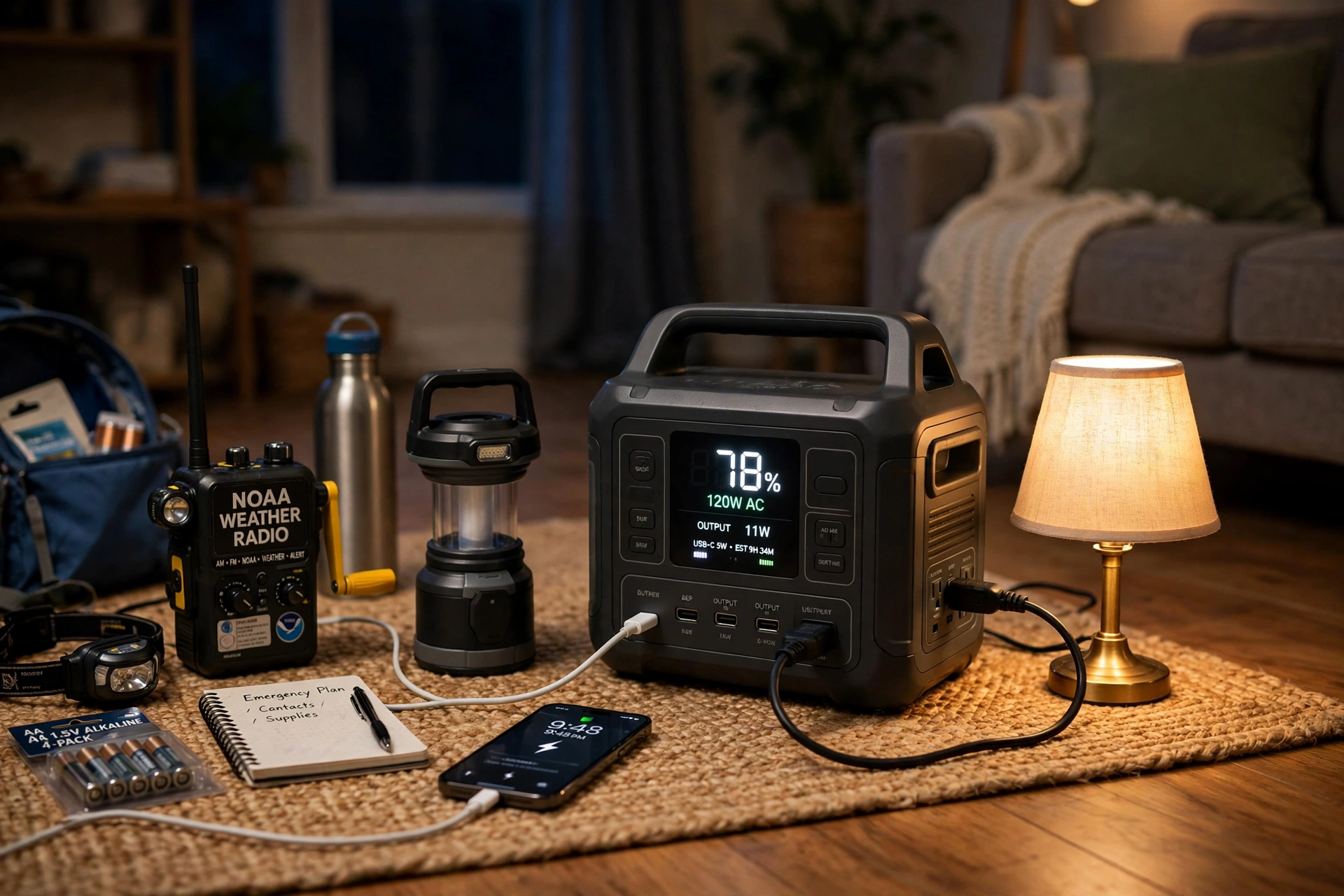
When the power goes, the phone becomes a flashlight with a dying battery and a rumor feed. A battery NOAA weather radio with a hand crank is the old technology that still wins: road closures, boil-water notices, restoration estimates, and the next band of ice, straight from the source, for days on a set of batteries. Keep it with the lanterns, preset to your local station before you need it.
Battery & Hand-Crank NOAA Weather Radio
AM/FM and NOAA weather bands, battery power with a hand-crank backup — the outage information source that never needs a signal.
→ Click here to check price on Amazon
Step 3: Heat without the poison
This is the step that kills people in Southern outages, so it gets said plainly: never bring a grill, camp stove, or charcoal inside, never heat with a gas oven, and never run a generator in a garage, carport, or near a window — carbon monoxide is odorless, and it fills a house faster than the house warms up. Our smoke and CO detector check is the companion read, and battery CO detectors matter most on exactly this night. Safe heat is the heat you already own used carefully: one room closed off and lived in, a vented fireplace from our fireplace safety guide, or an electric space heater run by the rules in our space heater guide once generator power is up.
Step 4: The electric backup most houses actually need
Between candles and a whole-house generator sits the purchase that covers 90% of an outage’s real pain: a battery power station sized for phones, a CPAP, a laptop, and a lamp. It is silent, safe indoors, and recharges from the car or a wall outlet when power flickers back. The sizing math lives in our generator guide, where the same power station is the apartment-and-CAP pick — buy it once, and it serves both plans.
Portable Power Station (phone / CPAP / lamp class)
Silent indoor backup for the loads that actually matter overnight — phones, a CPAP, a light — with no fuel, no fumes, and no startup routine.
→ Click here to check price on Amazon
Step 5: Food safety runs on two clocks
An unopened fridge holds safe temperature for about 4 hours; a full, unopened freezer for about 48 (24 if it is half empty). Every door opening spends that time, so the rule is simple: decide what you need, take it out, close the door. A cheap fridge-and-freezer thermometer pair removes the guessing the next morning — food kept at or below 40°F is fine; above that for more than 2 hours, it goes, however much it cost.
Fridge & Freezer Thermometers (2-pack)
One dial in each box, readable at a glance — the morning-after answer to “is any of this still good?” without guessing.
→ Click here to check price on Amazon
Outages, settled
Lanterns staged and charged, a radio that works without a tower, heat that cannot poison the house, a power station for the small loads that matter, and two clocks running on the food. None of it is expensive, all of it is bought on a calm weekend, and the night the pine limb falls it is the whole difference between a story and an emergency.
Leave a Reply